


Caution: Do not allow antifreeze to come into contact with your skin or the painted surface of your vehicle. Rinse off any stains immediately with plenty of water. Antifreeze is highly toxic, so never leave antifreeze in open canisters, jars, etc. on the floor; children and animals, attracted by its pleasant smell, may drink it. Never pour used antifreeze on the ground or down the drain.
- The car is equipped with a sealed recovery system (regeneration) coolant. The coolant expansion tank is located at the front of the engine compartment and is connected by a hose to the radiator filler neck. When the engine heats up, the coolant expands, passes through the valve in the radiator cap and flows through a hose into the reservoir. As the coolant cools, it contracts and returns to the cooling system to maintain the proper level.
- The coolant level in the reservoir should be checked regularly.
Caution: Do not remove the radiator cap to check the coolant level when the engine is warm.
If you need to check a hot engine, use a rag or glove to remove the radiator cap by turning it counterclockwise until it reaches the first latch. Let all the steam out. When the steam stops escaping, remove the lid. If the fluid level is low (below the neck tube), add equal parts water and antifreeze.
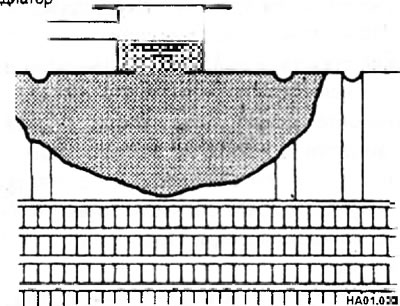
Radiator
The level in the tank changes with changes in engine temperature. When the engine is cold, the coolant level should be either at or slightly above the MIN mark. Once the engine has warmed up, the level should be at or near the MAX mark.
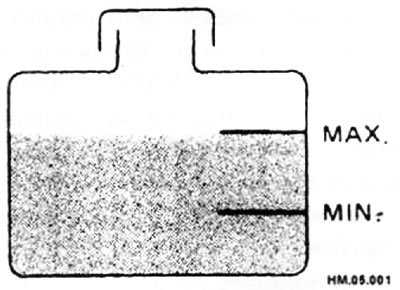
If not, allow the engine to cool, then remove the reservoir cap and add a 50:50 mixture of ethylene glycol-based antifreeze and water. Do not use rust inhibitors or additives.
[The original is available on the web page: nissanbook.ru]
- Take the vehicle for a drive and check the coolant level again. If a small amount of fluid is needed to bring the system level to normal, add water. However, adding water again will dilute the antifreeze and water solution. To maintain the correct ratio, always top up the system to the correct level with the correct mixture. An empty plastic bottle works well for making coolant.
- If the coolant level drops continually, there may be a leak in the system. Check the radiator, hoses, filler cap, drain plugs and coolant pump. If no leaks are found, take the radiator cap to a service station for a pressure test.
- If you need to remove the radiator cap, wait until the engine has cooled completely, then wrap the cap with a thick cloth and turn it to the first stop. If coolant appears from underneath, let the engine cool for a while, then remove the cap.
- Check the condition of the coolant as well. It should be relatively clean. If it is brown or rusty in color, it must be drained from the system, and the system itself must be flushed with running water and refilled with coolant. Even if the fluid appears normal, the corrosion inhibitors in its composition are depleted, so after a certain period of time it still needs to be replaced.