


To check the cooling system, the engine must be cold, so begin this operation the day before you plan to drive the car or at least three hours after the engine has been turned off.
- Remove the radiator cap and thoroughly rinse it inside and out with clean water.
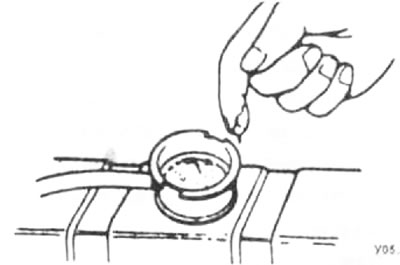
- Also check and flush the radiator filler neck. The presence of corrosion or rust on the filler neck indicates that the coolant needs to be replaced. The coolant inside the radiator should be relatively clean and clear. If it has a rust stain, drain the system and fill it with new coolant.
- The radiator cap seals and the sealing surfaces of the radiator filler neck should be inspected for any deposited corrosion. The radiator cap must be replaced if its seals are deformed or damaged.
- It is good practice to check the coolant system hoses at every oil change. Check them for cracks, swelling and softening. When checking the hoses, make sure to check the condition of the lower radiator hose as it is easy to miss. Since hoses are generally the weakest point in the cooling system, always check them before long trips and before cold or hot weather sets in. The hoses coming from the radiator are the most accessible, but there are other hoses in the engine compartment that go to the firewall. Check them at the same time as checking the radiator hoses. If cracks, swelling or abrasions are detected, the hose must be replaced. Cracks become more visible when the hose is bent. It is recommended to replace the hoses every 2 years, regardless of their condition.
- Make sure the hose connections are tight. Cooling system leaks typically appear as a white or rusty sludge around the leak. It is recommended to replace wire clamps with screw-type clamps.
- To clean the radiator from dirt (leaves, insects, etc.) use a soft brush or compressed air. Be careful not to damage the thin radiator tubes.
- Clean the air conditioner condenser with compressed air.
- When checking the cooling system or if any faults are detected, it is necessary to pressure test the radiator cap. It is better to do this in a workshop.
[Information copied from the website: www.NISSANBOOK.ru]