


Table of contents: Checking the coolant level ↓ Replacing the coolant ↓
At the factory, the engine cooling system is filled with a high-quality all-weather antifreeze-based solution. The solution contains anti-corrosion additives and does not require any other additives.
When adding or replacing coolant, only ethylene glycol antifreeze should be used in the appropriate solution ratio. Use the following examples as a guide:
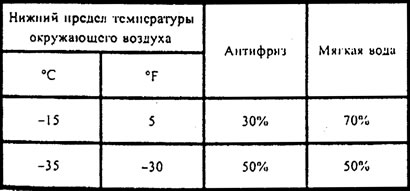
Using other solution proportions may result in failure of the cooling system.
The radiator is equipped with a high pressure sealed cap. It may only be replaced with a Nissan cap or equivalent.
CAREFULLY!
- Do not remove the radiator cap when the engine is hot. The release of hot fluid under high pressure can cause severe burns. Wait until the engine and radiator have cooled down. Precautions to follow are outlined in the section "In case of engine overheating".
- Antifreeze is toxic and must be stored in labeled containers out of the reach of children.
Checking the coolant level
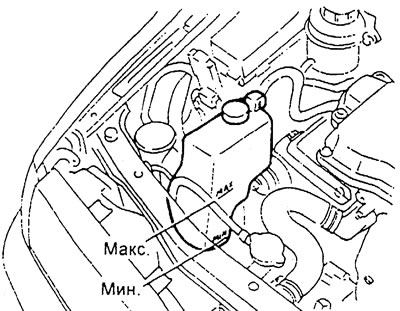
Check the coolant level in the expansion tank after the engine has cooled down. If the liquid level is below the "MIN" mark, then it is necessary to fill it up to the "MAX" mark. If the tank is empty, then check the coolant level in the radiator (also with a cold engine). If there is little liquid in the radiator, then it is necessary to fill the radiator up to the filler neck, and then the tank up to the "MAX" mark.
CAUTION: If frequent coolant refilling is required, contact your Nissan dealer to have the cooling system inspected.
Replacing the coolant
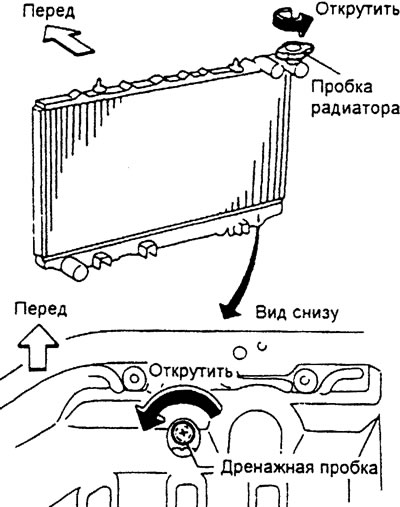
Major repairs to the cooling system should be performed by a Nissan dealer in accordance with the instructions in the appropriate Nissan Service Manual.
Improper maintenance of the cooling system can result in reduced cooling efficiency and engine overheating.
CAREFULLY!
To avoid burns, do not replace the coolant on a hot engine. Do not remove the radiator cap when the engine is cold. The release of hot fluid under high pressure can cause severe burns.
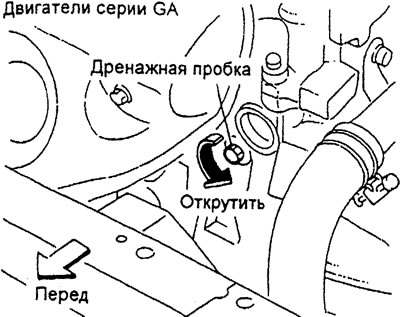
1. Set the manual temperature control of the heater and air conditioner to maximum heat ("HOT").
2. Loosen and remove the radiator drain plug and the cylinder block drain plug.
3. Open the radiator cap to drain the fluid.
4. Flush the cooling system with clean water by pouring it through the radiator cap. Tighten the radiator drain plug and the cylinder block drain plug tightly.
5. Slowly pour the correct mixture of antifreeze and water into the radiator. Fill the expansion tank to the "MAX" mark. The capacity of the cooling system is indicated in the chapter "Technical information".
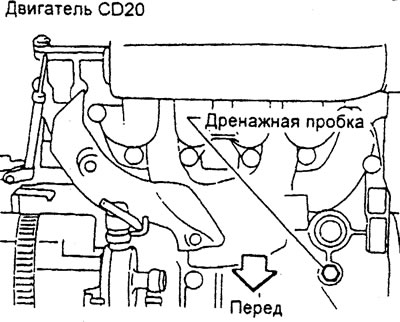
7. Open and close the air lock to release air. Fill the radiator with liquid again and close the radiator cap.
Source is available on the resource: www.NissanBook.ru
8. Start the engine and let it warm up until the radiator fan starts to run. Then run the engine at idle speed 2-3 times and check the coolant temperature gauge for overheating.
9. Turn off the engine. After it has cooled down completely, fill the radiator again to the filler neck level and the reservoir to the "MAX" level.
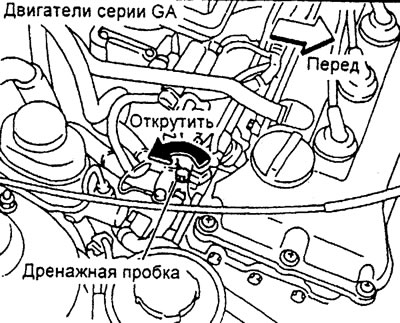
10. Inspect the drain plugs for leaks.