


Table of contents: Precautions when handling used…↓ Environmental protection laws ↓
1. Park the vehicle on a level surface and set the parking brake.
2. Let the engine run until it reaches operating temperature and turn it off.
3. Place a container under the drain plug to catch the drain.
4. Remove the oil filler cap.
5. Unscrew the drain plug with a wrench and drain the oil completely.
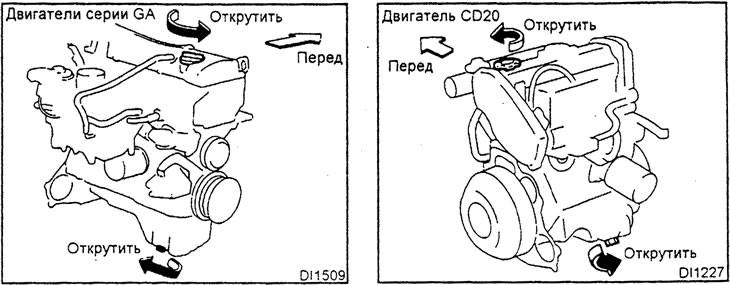
If there is a need to replace the oil filter, it is better to do it together with the oil change. Refer to the subsection "Replacing the oil filter".
CAUTION! The engine oil is drained while hot. Therefore, be careful when handling it.
6. Clean and reinstall the drain plug and washer. Tighten the plug with a wrench. The tightening torque of the drain plug is 29-39 N·m (3-4 kgf·m). Do not tighten the plug more than necessary.
7. Fill the engine with the recommended type of oil and tighten the cap securely. The amount of oil to be filled is specified in the chapter "Technical information".
8. Start the engine. Inspect the drain plug for leaks. Adjust it if necessary.
9. Turn off the engine and wait a few minutes. Then measure the oil level with a dipstick. Top up if necessary.
Precautions when handling used engine oil.
Long-term and frequent contact with used motor oil causes skin damage, dermatitis and skin cancer.
Avoid direct contact of used motor oil with skin. If oil does come into contact with skin, wash the affected area thoroughly.
Keep used motor oil out of the reach of children.
Environmental protection laws
WARNING: Pollution of drains, rivers and soil with oil is illegal.
The oil must be drained at a special waste disposal point or at a service workshop equipped to receive used oil and oil filters. For information on the rules for disposal of used oil, contact your local competent authorities. It is recommended that the engine oil be changed at a Nissan dealer.
It is important to remember that environmental laws may vary from country to country.