


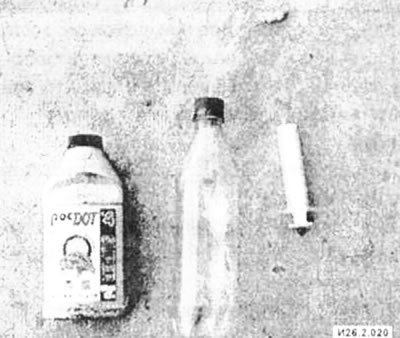
- Since the system has a vacuum booster, eliminate the effect of the vacuum by pressing the brake pedal several times (at a fast pace).
- If you are bleeding the entire system, start with the rear right wheel first.
- Place a transparent or rubber hose onto the head of the fitting and lower the other end of the hose into a transparent container partially filled with brake fluid.
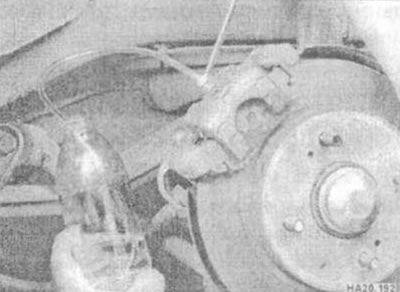
- By sharply pressing the pedal 3-5 times, with intervals of 2-3 seconds between presses, unscrew the nipple by 1/2-3/4 of a turn while the pedal is pressed. While continuing to press the pedal, force the fluid in the system, along with the air, through the hose into the container. Once the brake pedal reaches its extreme position and the fluid stops flowing through the hose, tighten the air bleed screw until it stops. These operations must be repeated until air bubbles stop coming out of the hose.
- While holding the pedal down, tighten the air bleed screw until it stops and remove the hose. Wipe the nipple dry and put on the protective cap.
- Repeat the operations for the other wheels, first on the front left wheel of the same circuit, and then sequentially on both wheels of the other circuit (rear left, front right).
- When bleeding air, maintain a normal fluid level in the brake fluid reservoir.
- If there is no air in the brake drive, the brake pedal should not travel more than 1/2-2/3 of its travel.
- If the brake fluid has been completely drained from the system, then before removing air from the system, loosen the fittings on the cylinders of all wheels by 1.5-2 turns. By pressing the pedal sharply and slowly releasing it, tighten the fittings as the liquid flows out of them. Then bleed the brake system as described above.
- If, even after prolonged removal, air continues to come out of the hose in the form of bubbles, it means that it is entering the system through damage in the pipeline due to insufficient tightness of the connections or due to a malfunction of the master and/or wheel cylinders.
- If bleeding is performed on a vehicle whose brake fluid has been in use for a long time, replace the fluid in the system with new fluid.
- After completing the air bleeding process, check the fluid level in the reservoir and top up if necessary.
- If air removal does not occur even after long operations, this indicates damage to the master cylinder seals.