


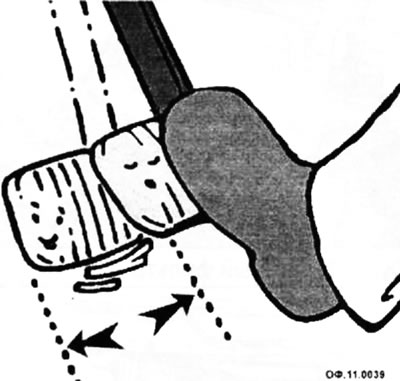
Parking brake pedal travel
- When the parking brake pedal is depressed with a force of 196 N (20 kg), check that its travel corresponds to the standard number of clicks (count the number of clicks when pressed), there should be 3-4 of them.
Checking the details
- First, make sure all parts are secured correctly (no looseness, play, etc.).
- Then check the parking brake pedal for deformations and cracks. Replace the pedal if necessary.
- Check the drive cable for wear or damage and replace the cable if necessary.
- Check the operation of the parking brake indicator switch and replace the switch if necessary.
Adjustment
- Remove the wheels.
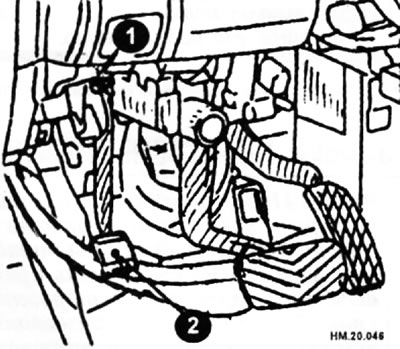
- Using a socket head with a ratchet, turn the adjusting nut (1) and loosen the drive cable. After this, return the pedal (2) to its normal height (drawing HM.20.046).
- Use wheel nuts to secure the brake disc to the hub and prevent the disc from tilting.
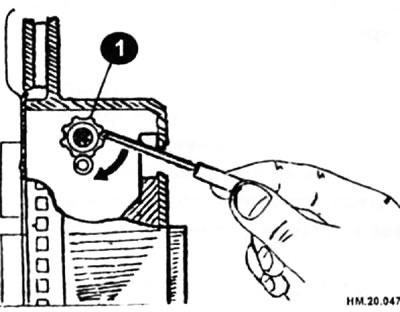
1 — regulator.
- Remove the plug from the adjustment hole on the brake disc. Using a screwdriver, turn the adjuster (1) as shown in the figure until the brake disc is locked. After locking the disc, turn the adjuster in the opposite direction by 5-6 teeth.
- Turn the brake disc and make sure it does not stick. Replace the plug.
- Adjust the parking brake cable as follows:
♦ Press the parking brake pedal at least 10 times with a force of 294 N (30 kg).
♦ To adjust the pedal travel, turn the adjusting nut using the socket head.
Caution: The adjusting nut cannot be reused.
- When the parking brake pedal is depressed with a force of 196 N (20 kg), check that its travel corresponds to the required number of clicks (count the number of clicks when you press the pedal), there should be 3-4 of them.
- When the pedal is returned to its original position, check that the rear wheel brakes do not stick.