


Table of contents: Checking the brake fluid level ↓ Checking the brake system for leaks…↓ Replacing brake fluid ↓
Caution: Brake fluid can be harmful to eyes and can damage painted surfaces, so be very careful when handling it. Do not use brake fluid that has been in an open container or stored for more than one year.
This yellowish liquid, usually toxic and aggressive to paint, is neutral to metal and rubber parts. It remains quite fluid even at -40°C and maintains this fluidity up to its boiling point, which is about 260°C.
However, brake fluid also has one very unpleasant property: it readily absorbs water, i.e. it is hygroscopic. And moisture can actually, for example, from the air, get into the brake fluid through microscopic leaks in the reservoir, brake hoses and rubber cuffs. This ingress of water leads not only to corrosion of the metal parts of the system, but also to a significant decrease in the boiling temperature. With only 2.5% water content, the boiling point is already only 150°C.
This is dangerous when there is a heavy load on the brakes, as they become very hot. Near heated brakes, steam bubbles form in the brake fluid, which can compress, causing the brake pedal to increase its travel and sink deeper, and sometimes completely. In such cases, you can correct the situation by quickly pumping the pedal. This effect is especially dangerous after the car has been parked after heavy load on the brakes. If there is insufficient air flow, the area around the brakes heats up even more; the high temperature remains for about 15 minutes after stopping, and only after about 30 minutes does the brake fluid return to normal temperature. To prevent these effects, it is recommended to replace the brake fluid every 2 years.
Brake fluid must meet DOTZ specifications. All fluids with these specifications can be safely mixed.
Checking the brake fluid level
- To check the brake fluid level, simply assess the level by looking through the walls of the transparent reservoir.
- Open the hood and wipe the brake fluid reservoir with a clean rag.
- In the transparent tank, the fluid level should be between the MIN and MAX marks.
The brake fluid level in the reservoir should not fall below the lower mark (MIN), otherwise a leak in the hydraulic system may be suspected. If the fluid level in the reservoir is too low, the warning light on the instrument panel will come on. The contact is closed by a float in the reservoir cap, which moves downwards as the amount of brake fluid decreases, but a visual inspection should not be neglected.
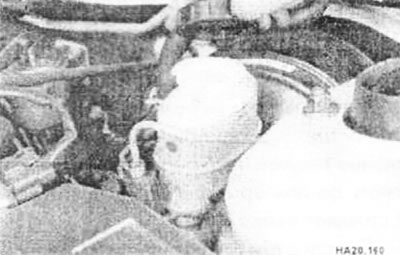
- If the level is low, open the reservoir cap and add fluid that meets the technical specifications.
- With the reservoir cap open, check the master cylinder reservoir for any debris. If there are rust deposits, dirt particles, or water droplets in the reservoir, the fluid from the system must be drained and filled with fresh fluid. This is best done in a specialized workshop.
Checking the brake system for leaks and damage
To check, it is necessary to dry the underbody of the car to make it easier to identify any loose areas. Brake fluid is leaking under the dirt. Damp, dark spots or black mud may indicate the location of a leak.
- Check all joints and connections, as well as the calipers and brake shield (mud deflector), behind which are the wheel brake cylinders.
- Brake hoses should not be wet, oily or frayed. If this occurs, the hoses need to be replaced.
- Brake lines are coated to protect against rust. If this protective layer is damaged, it can lead to the formation of rust. Therefore, the tubes cannot be cleaned with a screwdriver, sandpaper, or wire brush, but only with chemicals.
- If the protective layer is damaged, it is necessary to apply a thin layer of anti-corrosion primer.
- Tubes with rust spots or pinched tubes must be replaced.
- Check that all air bleed valves have protective caps. They are located on the brake calipers or inside the brake shields (mud deflectors).
You can perform a brake pressure test yourself.
- Press the brake pedal fully.
- The pedal should not weaken after several minutes of pressing; otherwise, there is a defect in the cuff of the master brake cylinder.
- Loose spots on piston seals can only be detected by careful inspection in a workshop.
Replacing brake fluid
The need to replace brake fluid is caused not only by the already described formation of steam bubbles, but also by the possibility of corrosion in the brake cylinders and pipes due to water absorption. When replacing the fluid, the operations are similar to those for removing air from the system.
Caution: Only refill the system with fresh DOT-compliant brake fluid. Drained brake fluid cannot be reused. Be careful not to let brake fluid splash onto your car's paintwork, as brake fluid will damage it. If brake fluid does come into contact with painted areas, rinse it off immediately with clean water.
- Connect a rubber tube to the brake bleed valve.
- Press the brake pedal, loosen the bleed valve and gradually remove the brake fluid.
- Turn off the ignition and disconnect the connector from the actuator and the anti-lock brake system (ABS) control unit or disconnect the negative cable from the battery.
- Make sure there are no foreign objects or materials in the brake fluid reservoir and fill the reservoir with fresh brake fluid.
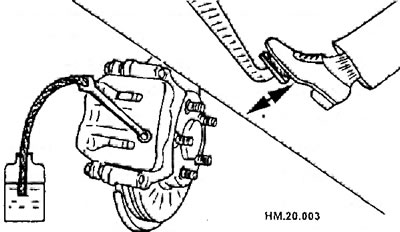
- Place your foot on the brake pedal. Loosen the air bleed valve. Slowly press the brake pedal all the way down. Tighten the valve to remove air. Release the brake pedal. Repeat the above process several times, and then fill the master cylinder reservoir with a new portion of fresh brake fluid. Continue this operation until fresh brake fluid starts to come out of the bleed valve.
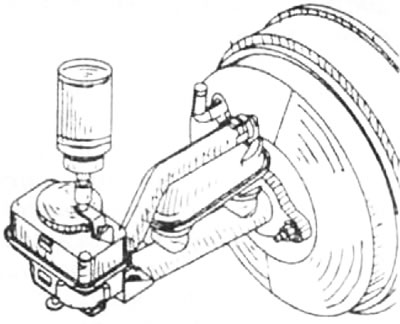
- Bleed the brake hydraulic system (if necessary).