


General information
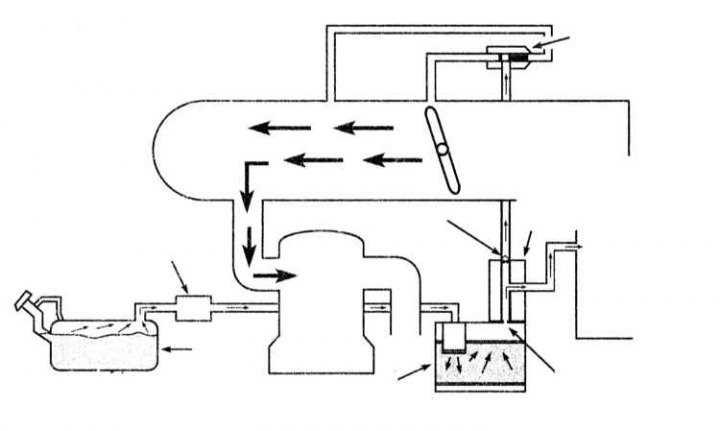
The EVAP system accumulates fuel vapors in the fuel system during the time the car is parked and ensures their output into the intake tract for combustion during normal engine operation. Any EVAP system necessarily includes a special adsorber filled with activated carbon, which, in fact, collects fuel vapors. The adsorber is connected by tubes to the fuel tank, in addition, the design of the system provides the ability to supply vacuum to the adsorber from the engine intake port and intake manifold
When the engine is turned off, the fuel vapors accumulated in the gas tank, throttle body and intake manifold are discharged through connecting tubes into the carbon adsorber, where they are stored until the engine is started. When the engine is started, the adsorber is purged and the vapors accumulated in it are discharged into the intake tract, from where they enter the combustion chambers.
On 1993 and 1994 models and on 1995 models subject to federal regulations, the purge control vacuum valve/switch is mounted on top of the canister. On 1995 California models and all 1996 models onwards, an electronic canister purge control valve is used which is actuated by the PCM. The electronic control system also includes a shut-off valve to stop canister purge at idle and during engine braking.
Examination
1. Malfunction of the purge control valve, as well as mechanical damage to the carbon adsorber or connecting lines, leads to a violation of the stability of idle speed, spontaneous engine shutdowns and a decrease in its efficiency.
2. If fuel consumption increases, or if a distinct smell of gasoline penetrates into the car, you should first check the condition of the fuel lines. Make sure there are no signs of mechanical damage to the adsorber.
3. Check the condition of the hoses connected to the adsorber. Make the necessary replacements.
4. Replace the cracked adsorber (see below).
5. Check for leaks under the carbon canister. Replace the faulty assembly if necessary. Ensure that the hoses are connected and routed correctly.
Replacing the carbon adsorber
All models of 1993 and 1994 and federal models of 1995.
1. Carefully label and disconnect all vacuum hoses connected to the canister.
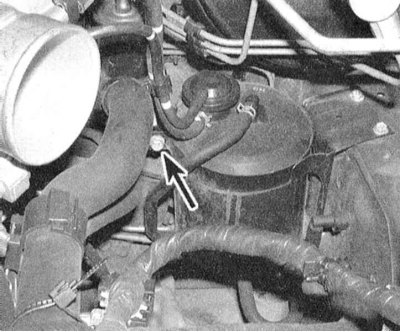
2. Unscrew the mounting bolts and remove the canister from the support bracket.
3. Installation is carried out in reverse order.
California models 1995 and all models 1996 and later.
Note: On these models, the EVAP charcoal canister is located on the left side of the vehicle, behind the fuel tank.
For more information, see the website NISSANBOOK
1. Jack up the car and place it on supports.
2. Carefully label and disconnect all vacuum lines from the canister.
3. Unscrew the mounting bolts and remove the adsorber.
4. Installation is carried out in reverse order.