


Table of contents: Models up to 1998 release. ↓ Models produced in 1999. ↓
Functional diagram of a typical EGR backpressure sensor
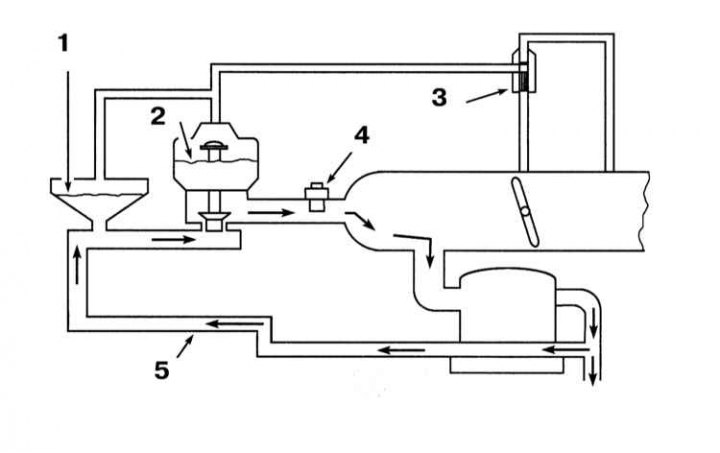
1 - VRT switch valve; 2 - EGR valve; 3-Electromagnetic EGR; 4 - EGR temperature sensor; 5 - EGR pipe
In order to reduce the emission of nitrogen oxides into the atmosphere, the engine design provides for the removal of part of the exhaust gases into the intake manifold through the EGR valve. Such mixing of exhaust gases into the air-fuel mixture leads to a decrease in its combustion temperature.
Models up to 1998 release.
1. On models prior to 1998, the EGR system consists of the EGR valve, the solenoid control valve (EGRC) linked to the vacuum in the port and pipeline, the EGR temperature sensor, and the back pressure sensor (BPS) valve. The PCM controls the operation of the system through the EGRC solenoid valve. A special valve is provided in the intake air tract, located directly behind the throttle valve. The vacuum of the intake port is monitored through a valve located in the throttle body. During acceleration, the throttle valve opens, which leads to an increase in the depth of the vacuum in the intake manifold.
2. The EGR switch valve monitors the depth of exhaust back pressure as engine speed changes. Information from the EGR temperature sensor is used by the PCM to control the EGR flow by turning the system on/off.
System check
1. Check all hoses for cracks, twists and other mechanical damage. Assess the tightness of the nipple connections.
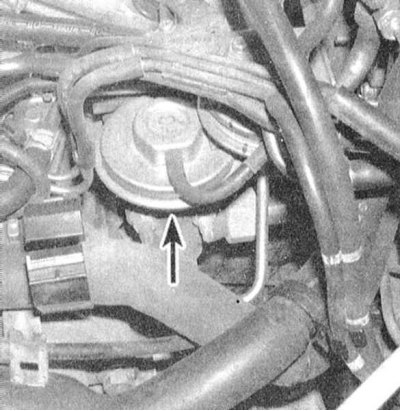
2. To check that the EGR system is functioning properly, warm up the engine to normal operating temperature. Put the transmission in neutral, apply the parking brake, and secure the rear wheels of the vehicle with anti-rollback shoes. Leave the engine running at idle. After opening the throttle valve, raise the engine speed to 2000÷4000 rpm, then close the throttle again - the EGR valve stem should move when the speed changes. Repeat the check several times. If the rod does not move. Check that the vacuum signal is properly applied to the EGR valve. Disconnect the hose from the valve and press your finger against the cut and repeat the procedure. If there is no vacuum in the hose, make sure that the corresponding fittings are tight, then proceed to check the EGRC solenoid valve.
Checking components
EGR valve
1. With the engine off, disconnect the vacuum hose and use a hand vacuum pump to create a vacuum of about 25.4 mm Hg on the EGR valve. If the valve opens, measure its stroke, which should be about 3 mm. Replace the faulty valve.
2. Re-apply vacuum and pinch the hose. The valve must remain open for at least 30 seconds, otherwise the diaphragm is not sealed properly and the assembly must be replaced.
3. Start the engine and create a vacuum on the valve. When the valve is open, there should be a violation of the stability of the idle speed, otherwise you should make sure that there are no violations of the patency of the channels in the intake manifold. If no changes in engine speed occur when opening and closing the valve, it is possible that the latter is jammed in one of the positions. Remove the EGR valve and check the plate and its seat for foreign deposits.
4. If there is heavy carbon deposits, the valve should be wiped with solvent, making sure that it does not come into contact with the diaphragm.
5. Using a hand vacuum pump, fix the valve in the open position and carefully scrape off the solvent-softened layer of deposits from the working surfaces of the disc and its seat. Assess the degree of wear of the working components; replace the valve assembly if necessary.
EGR control solenoid valve (EGRC)
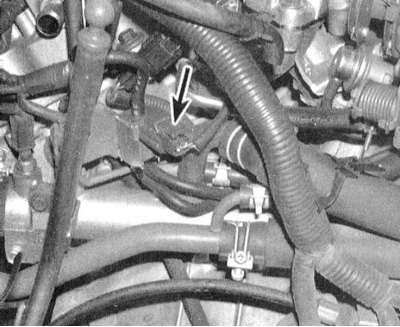
1. Check that the vacuum valve supply is working properly when the engine is running. If there is no vacuum, check the condition of the corresponding vacuum hoses and their fittings. If the hoses are in order, check that the connection on the throttle body is clear. If the vacuum is properly applied, disconnect the electrical wiring from the EGRC valve and check that the battery voltage is properly applied to the contact terminals of the battery connector when the ignition is switched on (do not start the engine).
2. To check the correct operation of the EGRC solenoid valve, disconnect the electrical wiring from it and, after grounding one terminal, connect the second one to the positive pole of the battery using a jumper wire.
3. When power is applied, air should flow freely through the two nozzles located next to each other. When power is disconnected, the valve should close.
EGR Back Pressure Switch Valve (BPS)
(The material is taken from a web resource: www.NISSANBOOK.ru)
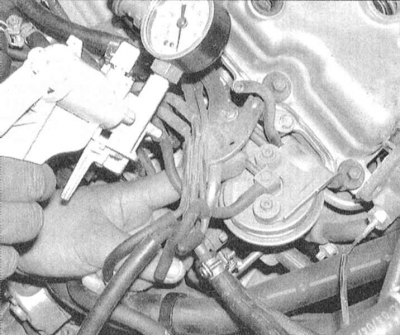
Locate the VRT switch valve and plug one of its connections with your finger. Using a hand vacuum pump, create a vacuum in the switch valve. The VRT should allow a slight leak. Note: The vacuum loss should stop when a pressure of 1.0 kPa is applied to the connection located below the valve (the valve should be removed from the vehicle). A defective switch valve must be replaced.
EGR temperature sensor
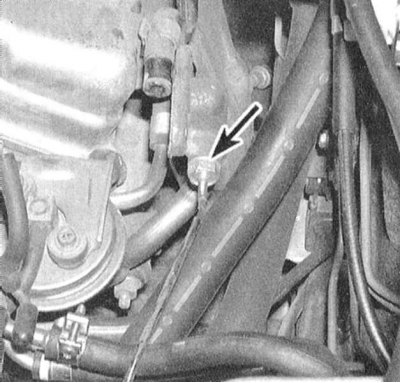
Remove the EGR temperature sensor. Place the working tip of the sensor in a container with water. Start heating the water, monitoring the change in the sensor resistance. As the temperature increases, the resistance should drop and reach 80÷100 kOhm at 100°C.
Replacement of components
EGR valve
1. Disconnect the air intake hose from the throttle body and air cleaner assembly (see Chapter Power and exhaust systems).
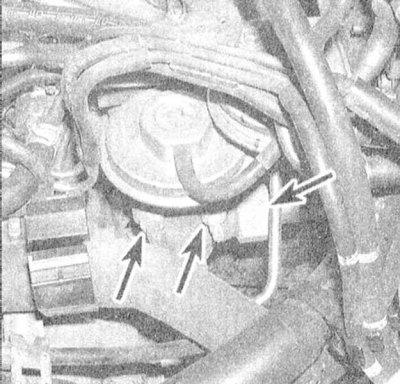
2. Disconnect the vacuum line from the EGR valve. Remove the union nut.
3. Release the fastening clamps.
4. Remove the EGR valve from the intake manifold. The old gasket cannot be reused and must be replaced during installation.
5. Use a wire brush to clean the valve mating surface of the intake manifold. If the valve is not being replaced, clean its mating surface as well. Use a screwdriver to scrape off any carbon deposits.
Attention! To avoid damaging the diaphragm, do not wash the valve in solvents under any circumstances! It is also not recommended to resort to sandblasting the mating surface.
6. If excessive carbon build-up occurs, the EGR passages can be cleaned with a wire brush. Make sure all abrasive is thoroughly removed to avoid blocking the valve.
7. If the valve is heavily contaminated, remove the EGR tube from the exhaust manifold and clean it from the inside. Note: Remove the EGR switch valve and carefully remove the abrasive from all channels.
8. Installation is carried out in reverse order.
EGR solenoid valve
1. Disconnect the electrical wiring from the EGR control solenoid valve (EGRC).
2. Carefully label and disconnect all vacuum tubes.
3. Loosen the mounting nut and remove the solenoid valve.
4. Installation is carried out in reverse order.
EGR temperature sensor
1. Disconnect the electrical wiring from the sensor and unscrew the sensor from the tube.
2. Before installation, lubricate the sensor threads with anti-seize sealant.
3. Installation is carried out in reverse order.
Models produced in 1999.
On 199 models, the EGR system consists of an EGR valve, a stepper motor-type valve, an EGR temperature sensor, and a control module (PCM). The PCM controls the flow of exhaust gas recirculation by opening and closing the EGR valve in small steps. The system allows for fine dosing of the EGR flow, achieving maximum engine performance.
Checking components
EGR valve
1. Check the correctness of the power supply to the EGR valve. Disconnect the wiring and turn on the ignition. Ground the negative probe of the voltmeter to ground, connect the positive probe to the terminals of the two red wires of the connector one by one. In both cases, the meter should register battery voltage, otherwise you should check the condition of the wiring in the sections of the circuit between the battery and the ECCS relay (don't forget about the fuses), and the relay and the EGR valve (see the electrical connection diagram at the end of the Chapter On-board electrical equipment).
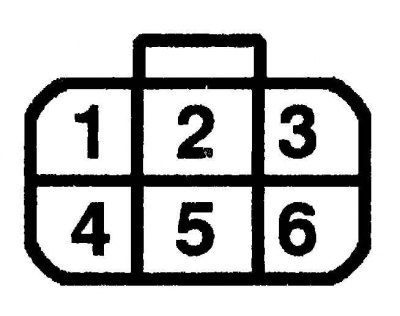
2. Using an ohmmeter, measure the resistance between the corresponding terminals of the EGR valve connector. At room temperature (20°C), the measurement result should be 22 ohms, otherwise replace the valve. If the valve is OK, the car should be taken to a service station for PCM diagnostics and necessary repairs.
EGR temperature sensor
Remove the EGR temperature sensor. Place the working tip of the sensor in a container with water. Start heating the water, monitoring the change in the sensor resistance. As the temperature increases, the resistance should drop and reach 10÷30 kOhm at 100°C.
Replacement of components
EGR valve
1. Disconnect the air intake hose from the throttle body and air cleaner assembly (see Chapter Power and exhaust systems).
2. Move the hoses and wiring aside to provide access to the EGR valve.
3. Disconnect the EGR pipe.
4. Release the fastening clamps.
5. Remove the EGR valve from the intake manifold. The old gasket cannot be reused and must be replaced during installation.
6. Using a scraper, thoroughly clean the mating surfaces of the valve and pipeline.
7. Installation is carried out in reverse order.
EGR temperature sensor
1. Disconnect the electrical wiring from the sensor and unscrew the latter from the pipeline.
2. Before installation, lubricate the sensor threads with anti-seize sealant.
3. Installation is carried out in reverse order.