


Table of contents: Examination ↓ Replacement ↓
The PSP is a normally open switch-sensor installed in the hydraulic pressure line between the steering gear housing and the steering pump. When the pressure in the hydraulic circuit reaches a certain value, the switch-sensor closes, which is immediately notified to the PCM. Such monitoring of the threshold pressure allows the control module to adjust the engine idle speed in time when maneuvering. If signs of sensor failure are detected, the PCM stores the corresponding fault code in the self-diagnostic unit memory. The switch-sensor condition should be checked if the engine spontaneously stalls while the car is parked, or when the idle speed is constantly too high.
Examination
Note: Performing the following procedure may cause a fault to be stored in the OBD memory and the Check Engine Light to be illuminated. Once the check and any necessary repairs have been completed, be sure to clear the system memory (see section On-Board Diagnostics (OBD) System - Operating Principle and Error Codes).
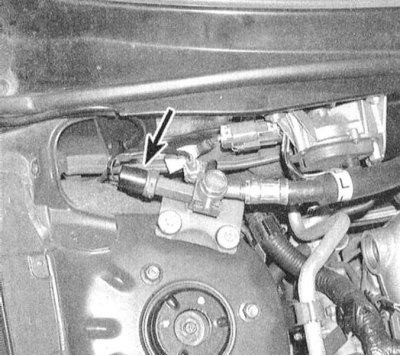
1. Disconnect the electrical wiring from the sensor switch and connect the ohmmeter to the terminals on the assembly body.
2. Start the engine at idle speed.
Caution: Make sure that the connecting wires do not come into contact with moving components in the engine compartment.
3. Bring the front wheels of the car into a straight-ahead position and read the ohmmeter reading, which in this case should be equal to infinity.
4. Rotate the steering wheel in any direction and observe the meter readings. When the steering wheel approaches any of the extreme positions, the PSP switch sensor should close, which is confirmed by the ohmmeter readings being close to zero.
5. If the test results are negative, replace the sensor switch. If the sensor switch is in good condition, check the engine idle speed settings. Also check the wiring from the PCM for a break. Assess the grounding quality of the black wire of the sensor harness.
Replacement
1. Disconnect the wiring from the sensor switch
2. Using two wrenches, unscrew the sensor switch from the junction block.
3. Install the new sensor switch in place of the removed one, connect the electrical wiring.
4. Remove air locks from the hydraulic circuit of the power steering system (see Chapter Suspension and steering). If necessary, adjust the hydraulic fluid level (see Chapter Settings and ongoing maintenance).