


Table of contents: Examination ↓ Replacement ↓
The IAT sensor is a thermistor (a resistor whose resistance depends on temperature). The sensor is installed inside the intake air duct and is used to determine the temperature of the air sucked into the engine. A change in resistance entails a change in the amplitude of the sensor signal voltage, and the HIGHER the temperature, the LOWER the resistance, and vice versa. The PCM uses the information provided by the sensor for fine adjustments of the air-fuel mixture dosage. Sensor failures/malfunctions in its electrical circuit lead to the recording of the corresponding fault code in the self-diagnostic system memory (see section On-Board Diagnostics (OBD) System - Operating Principle and Error Codes).
Examination
Note: Performing the following procedure may cause a fault to be stored in the OBD memory and the Check Engine Light to be illuminated. Once the check and any necessary repairs have been completed, be sure to clear the system memory (see section On-Board Diagnostics (OBD) System - Operating Principle and Error Codes).
1. Before proceeding directly to assessing the condition of the sensor, make sure that the power supply to it from the PCM is working properly and that there are no signs of ground faults. Disconnect the electrical wiring from the IAT sensor and connect a voltmeter to the two terminals of the connector on the harness side. Turn on the ignition (do not start the engine), - the meter should give a reading of 5.0 V, otherwise check the condition of the wiring in the circuit section between the sensor and the PCM. If the circuit is OK, drive the car to a service station to diagnose the condition of the PCM and perform the appropriate repair.
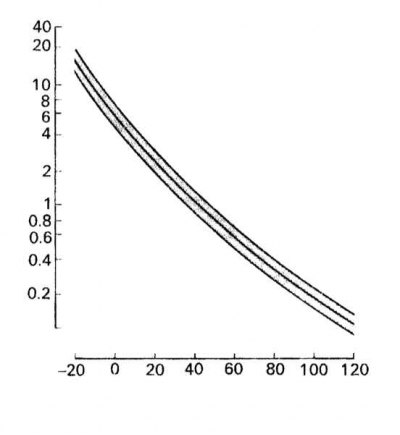
2. With the ignition off, disconnect the wiring from the IAT sensor and use an ohmmeter to measure the resistance between the two terminals of the sensor connector when the engine is cold. Reconnect the wiring, start the engine and warm it up to normal operating temperature. Disconnect the connector again and repeat the resistance measurement. Compare the results of the two measurements with the sensor temperature dependence graph. A faulty sensor must be replaced.
Note: A more detailed check of the IAT sensor condition can be made outside the vehicle and a complete temperature dependence graph can be constructed by lowering it into water heated over a fire.
Replacement
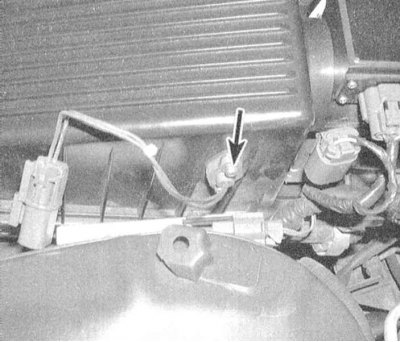
1. Disconnect the electrical wiring from the IAT sensor.
2. Remove the sensor from the intake air duct (try not to damage the plastic components).
3. Installation is carried out in reverse order.
The source of the article is on the website: NissanBook