


2. If all these parts are in normal condition, then check the integrity of the high-voltage wires. To do this, turn off the ignition, disconnect the coil wire from the distributor and secure it 45 mm from the stripped area of the ground. Turn the engine with the starter and watch for sparks. If there are sparks, you should look for a malfunction in other engine systems. If there is no spark, or sparks are observed intermittently, then further checking of the ignition system is necessary.
3. Warm up the engine (if it can be launched) and stop.
4. Check the voltage on the battery with the ignition and consumers off. If the voltage is below 11.5 V, remove the battery and charge it (if the battery has not been under load for a long time, check the charging circuit).
5. If the battery voltage is below 9.6 V when the starter is turned on, the battery is not fully charged. Remove the battery and charge it.
6. Check the distributor cap and wires. If, when measuring the resistance of the spark plug wire connected to the distributor cap, the ohmmeter reading is less than 30 kOhm (photo), then the cap terminal and wire are in good condition.
7. On cars of 1987-1988, check the insulation resistance between the electrodes of the cover (photo). If the resistance is below the norm, replace the cover.
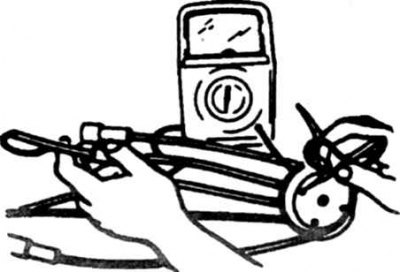
2.7a Checking the resistance of the wire and contact in the distributor cap
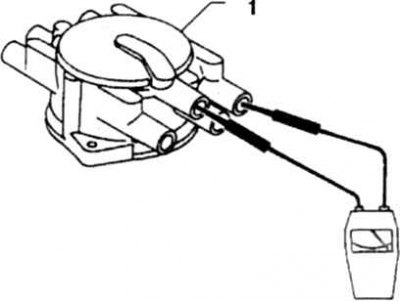
2.7b Insulation resistance testing
1. Lid
8. Check the resistance of the secondary winding of the ignition coil by connecting an ohmmeter with the ignition off between the high-voltage terminal and the H terminal of the coil (photo). If the ohmmeter reading is not correct, replace the coil.
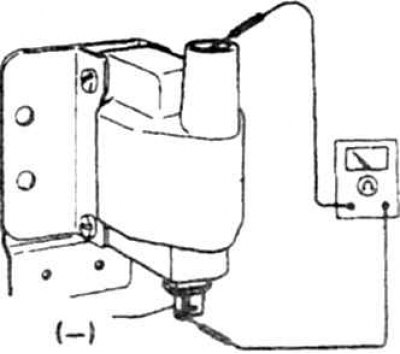
2.8 Checking the resistance of the secondary winding, ignition coil
1. Ohmmeter