


Table of contents: Models produced in 1993 and 1994. ↓ Models since 1995. ↓
Caution! Due to the very high voltage generated in the ignition system, its components must be serviced with extreme caution. This applies not only to the main components of the electronic ignition system, but also to all associated components, including spark plug wire leads, tachometer and other diagnostic equipment.
Do not immediately attribute the cause of failure to start the engine to malfunction of the ignition system. First, perform the following checks:
- a) Check the condition of the battery cable tips and the reliability of their fastening to the terminals;
- b) Check the battery status (see section Checking the battery status and replacing it), if necessary, replace it with a known good one;
- c) Visually assess the condition of the distributor and ignition coil connectors (models produced before 1995.);
- d) Check the condition of the fuse links in the fuse box installed in the vehicle interior (see Chapter On-board electrical equipment). If a "breakdown" is detected, find out and eliminate the cause of the overload.
Models produced in 1993 and 1994.
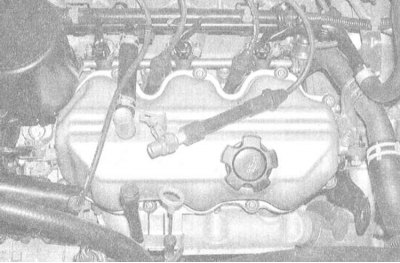
1. If the engine cranks but does not start, disconnect the spark plug wires and connect them to a special calibrated ignition tester (ask in car accessories stores). Connect the contact clamp of the tester to a bolt or metal bracket on the power unit block, then turn the engine - a clearly visible spark of bright blue color should jump between the electrode and the tester body (a weak spark intensity should be considered as its absence).
2. If sparking occurs correctly, then the required high voltage is supplied to the corresponding spark plug. Repeat the check for the remaining spark plug wires, making sure that the cover and distributor rotor are in good condition. The next step in checking will be to determine the condition of the spark plugs themselves - unscrew them from the cylinder head and refer to the material in the corresponding Section of the Chapter Settings and ongoing maintenance.
3. If there is no spark formation, or its intensity is excessively weak, you should check the distributor cap and rotor, as well as the high-voltage connecting wires for signs of oxidation and mechanical damage (see Chapter Settings and ongoing maintenance). If traces of moisture are found, wipe the ignition system components and repeat the check.
4. If no faults can be found during inspection of the distributor and electrical wiring, disconnect the central high-voltage wire (from the coil) from the distributor cap and connect it to a universal meter (spark plug wires should be connected to the spark plugs), then repeat the test. If sparking occurs this time, replace the distributor cap and rotor (the possibility of damage to the high-voltage electrical wiring cannot be ruled out either).
5. If there is still no spark, remove the high-voltage wire from the coil to the distributor and check the condition of its contact terminals. Using an ohmmeter, check the wire for signs of a break. It would be reasonable to replace the wire with a known good one for the duration of further testing.
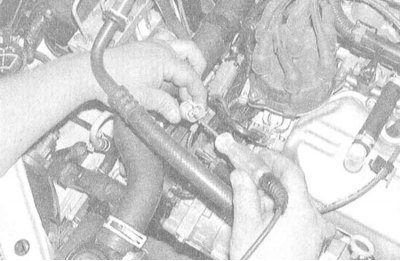
6. If replacing the wire does not restore proper spark formation, check that the voltage supply to the coil from the ignition switch is correct when the key is turned to the ON position (do not start the engine). Connect a 12-volt test light to the negative battery terminal or a good ground on the engine block. Disconnect the wiring from the coil and check for battery voltage at the green/white wire terminal of the ignition connector. If there is no voltage, check the wiring between the coil and the ignition switch.
Note: For more information on wire color coding, see Chapter On-board electrical equipment.
7. If the coil is powered properly, connect the LED test lamp to the positive terminal of the battery. Connect the contact probe of the lamp to the terminal of the light green wire in the connector of the coil wiring, then crank the engine with the starter - the lamp should blink when the engine is cranked. This check allows you to make sure that the trigger signal is received properly (ground signal) from the PCM and the power transistor. If the trigger signal is present, then the PCM, camshaft position sensor and power transistor are functioning properly.
Caution! To avoid the risk of damage to the PCM, use only the LED test lamp during this test!
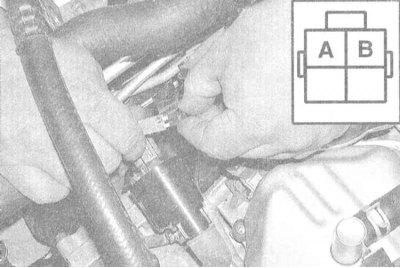
8. If signs of a fault in the trigger signal supply are detected, check the condition of the resistive-capacitive assembly and the power transistor (see section Checking the condition and replacing the power transistor (models produced in 1993 and 1994.)).
[Read more on the website nissanbook.ru]
Note: The RC assembly connector is taped to the wiring harness just to the left of the distributor. If the transistor and resistor are OK, proceed to testing the camshaft position sensor (see Chapter Engine management systems).
9. If the supply voltage and trigger signal are present correctly, the absence of sparking may be explained by internal faults in the ignition coil - measure the resistance of its primary and secondary windings (see section Checking the condition and replacing ignition coils). If signs of breaks are detected, replace the coil.
10. If the performed checks confirm the correct functioning and condition of all the components listed above, the vehicle should be taken to a service station for diagnostics of the PCM.
Models since 1995.
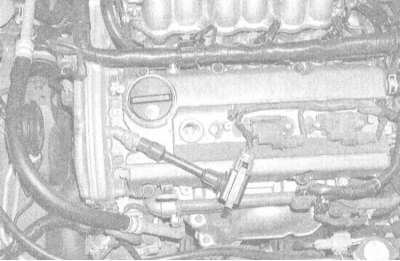
1. If the engine cranks but does not start, you need to make sure that the battery voltage supply to the spark plugs is working properly. Remove the coil (see section Checking the condition and replacing ignition coils) and connect a calibrated spark tester to the spark plug tip (don't forget to connect the wiring to the coil), ground the tester to the ground of the power unit. Turn the engine over - a bright blue spark of good intensity should jump between the tester electrode and its body.
2. If spark formation occurs correctly, then the required high voltage is supplied to the corresponding spark plug (proceeding in a similar manner, check each of the candles in turn). The next stage of the check will be to determine the condition of the spark plugs themselves - unscrew them from the cylinder head and refer to the material in the corresponding Section of the Chapter Settings and ongoing maintenance.
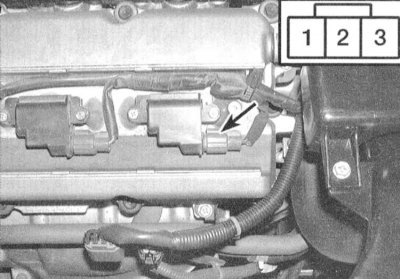
3. If there is no spark formation or its intensity is extremely weak, remove the spark plug tip and check the condition of its contact terminals. Using an ohmmeter, check the tip for signs of a break. Make sure that the battery voltage supply to the coil from the ignition switch is working properly (key in ON position, engine not running). Connect a 12V test light to the negative battery terminal or engine ground and check for proper power to terminal #1 of the coil connector (red wire). If there is no battery voltage, check the condition of the wiring between the coil, the ECCS relay and the ignition switch. Also check the grounding (see Chapter On-board electrical equipment).
4. If there is battery voltage on the coil, connect the LED test lamp to the positive terminal of the battery and test terminal No.3 of the connector - the lamp should blink when the engine is cranked. This test allows you to make sure that the trigger signal is received correctly (ground signal) from the PCM and the power transistor. If the trigger signal is present, then the PCM and the shaft position sensors are functioning properly.
Caution! To avoid the risk of damage to the PCM, use only the LED test lamp during this test!
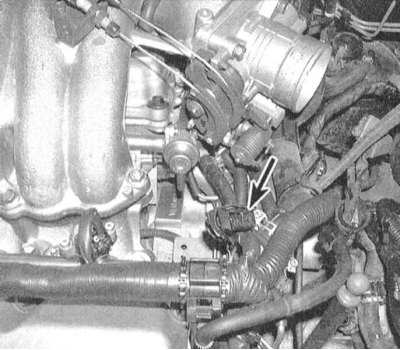
5. If signs of a trigger signal failure are detected, check the condition of the capacitive assembly.
Note: The capacitor assembly connector is taped to the wiring harness directly on the transmission case. If the capacitor is OK, proceed to check the crankshaft and camshaft position sensors (see Chapter Engine management systems).
6. If the supply voltage and trigger signal are present correctly, the absence of spark formation can be explained by internal faults in the ignition coil (see section Checking the condition and replacing ignition coils). If signs of malfunction are detected, replace the coil.
7. If the performed checks confirm the correct operation and condition of all the components listed above, the vehicle should be taken to a service station for diagnostics of the PCM.