Table of contents: Measures to prevent over-discharge ↓ Checking the electrolyte level ↓ Sulfation ↓ Checking the density of the…↓ Checking battery capacity ↓ Battery charge ↓ Technical specifications ↓
WARNINGS:
- If the battery is discharged, use only a 12V booster battery to start the engine.
- Never add distilled water to the battery through the electrolyte density inspection hole.
Measures to prevent over-discharge
Battery surface (especially from above) must always be clean and dry.
The wire connections to the battery terminals must be clean and tight.
Check the electrolyte level at each routine maintenance.
If the vehicle will not be used for a long period of time, disconnect the ground cable from the battery.
Check the electrolyte density periodically.
Checking the electrolyte level
CAUTION: Avoid contact of electrolyte with skin, eyes, clothing or painted surfaces. After handling the battery, do not touch your eyes until your hands have been thoroughly washed. If electrolyte contacts your skin, eyes or clothing, immediately flush the affected area with water for 15 minutes.
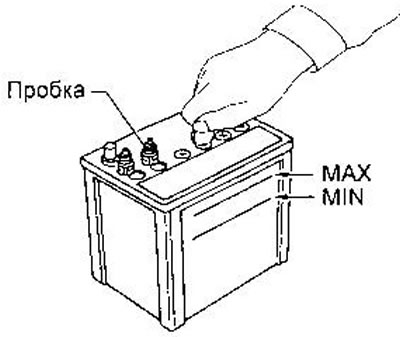
The electrolyte level should be between the MIN and MAX marks. If distilled water needs to be added, unscrew the cell plugs with a suitable tool and bring the electrolyte level to the MAX mark.
Sulfation
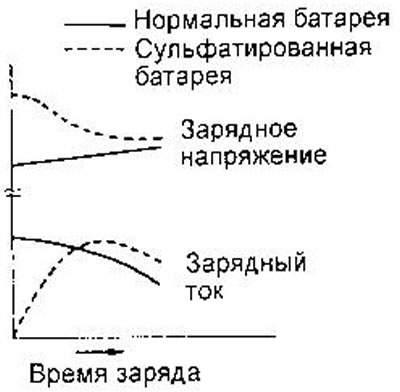
When the battery is completely discharged (the reduced density of the electrolyte is below 1.100) sulfation of the plates may occur.
To determine the condition of the plates, pay attention to the change in current and voltage during the charging process. A sulfated battery is characterized by low current and high voltage at the beginning of the charge.
Checking the density of the electrolyte
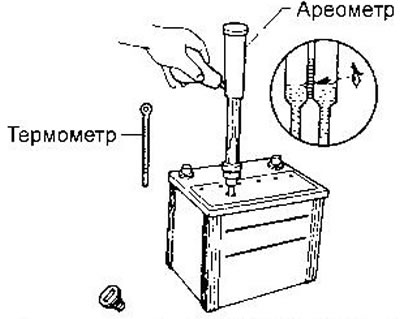
1. Fill the hydrometer with electrolyte through a special hole on the battery case. At the same time, measure the temperature of the electrolyte.
If the electrolyte level is low, tilt the battery to make it easier to measure.
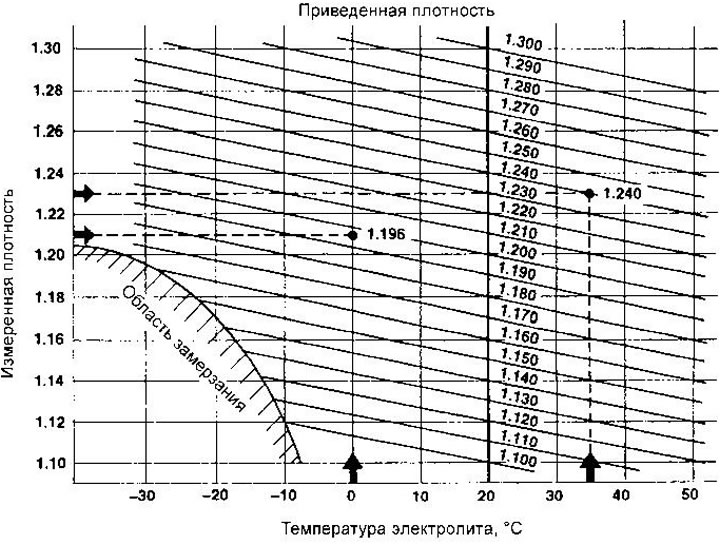
2. Convert the density of the electrolyte at a given temperature to the density at a standard temperature
20°C.
Example: electrolyte temperature is 35°C, measured density is 1.230. The reduced density will be 1.240.
Checking battery capacity
Test the battery with the discharge current specified in the table. If the voltage drops below 9.6 V, replace the battery.

Battery charge
Slow charge. If the reduced specific gravity of the electrolyte is less than 1.100, the battery can only be charged slowly. The initial charging current is indicated in the table.

After 30 minutes of charging, check the battery voltage. If the voltage is below 12 V or above 15 V, replace the battery. If it is between 12 and 15 V, continue charging for 12 hours, then check the electrolysis density. If the specified density is less than 1.240, recharge the battery with the starting current for the time specified in the table.

After this, check the battery capacity (see the subsection "Checking the battery capacity"). If the result is unsatisfactory, replace the battery.
Standard chargeIf the electrolyte density is within the range of 1.200-1.300, both standard and accelerated charging are acceptable.
For standard charging, determine the initial current from the table.
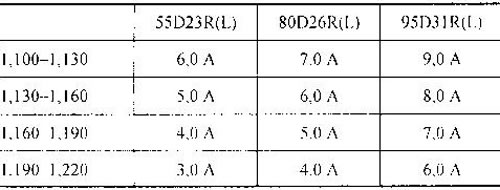
Charge the battery for 8 hours, then check the specific gravity of the electrolyte. If it is less than 1.240, recharge the battery with the initial current for the time specified in the table.

Check the battery capacity (see subsection "Checking the battery capacity"). If the result is unsatisfactory, replace the battery.
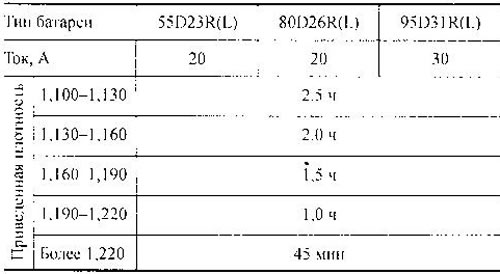
Accelerated charge. Determine the time and initial current of the boost charge according to the table. Charge the battery, then check its capacity (see the subsection "Checking the battery capacity").
WARNINGS:
- Keep the battery away from open flames and sparks while charging.
- Turn on the charger only after connecting it to the battery to avoid sparking when connecting.
- During charging of any duration, monitor the battery temperature. If it exceeds 60°C, stop charging.
- Do not exceed the boost charge time to avoid battery damage.
Technical specifications
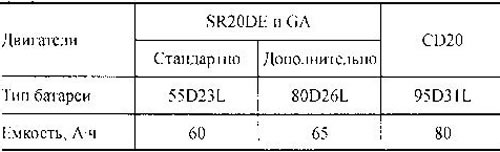
Batteries installed on European models: