


Caution: Take precautions when handling the battery, as it produces explosive hydrogen gas and the electrolyte contains sulfuric acid. When removing wires, always disconnect the negative wire first and connect the negative wire last.
During normal vehicle operation, the battery charges automatically. If the battery is gradually discharged or overcharged, and the electrolyte begins to "boil", it is necessary to check the operation of the generator and voltage regulator.
High discharge current should not be allowed (when starting a cold engine in winter), as this leads to warping of the battery plates, loss of their active mass and a reduction in the service life of the battery. The starter must be turned on for a short time - no more than 5-10 seconds, with an interval of at least 20-30 seconds.
The longevity and reliability of the battery largely depends on the overall technical condition of the vehicle and on the easy starting of its engine with a minimum starter cycle time. The minimum service life of batteries, provided that proper care is followed and the vehicle's electrical equipment is in good working order, is 24 months or 60,000 km.
Service
The car is equipped with a sealed system as standard (unattended) battery. The lids (caps) of its jars cannot be removed, no electrolyte testing is required, and water cannot be added to the jars. However, if your vehicle has a different type of battery that requires regular maintenance, the information we provide will be helpful.
Regular battery maintenance is the key to a long battery life and trouble-free engine starts. Before servicing the battery, prepare all the necessary supplies: a protective face mask, baking soda to neutralize the acid, petroleum jelly to lubricate the terminals, a tool for cleaning the battery terminals and posts, felt washers, a cable puller, rubber gloves.
Before working with the battery, always turn off the engine and all electrical consumers, and disconnect the cables from the battery.
See the source on the portal (NISSANBOOK.ru)
Do not smoke or use open flames near the battery, as it produces flammable hydrogen gas. Charge the battery in a ventilated area.
Wear safety glasses and do not allow electrolyte to come into contact with your skin or clothing.
Check the density of the battery electrolyte. It should be between 1.22 and 1.28 g/cm³ at room temperature. A value of 1.00 g/cm³ or slightly more indicates that the cans contain mainly water and it is time to change the battery. It is unlikely that it is possible to add acid to an old battery in a qualified manner. If distilled water is added in cold weather, it is necessary to drive several kilometers so that the water mixes well with the electrolyte and the mixture does not freeze.
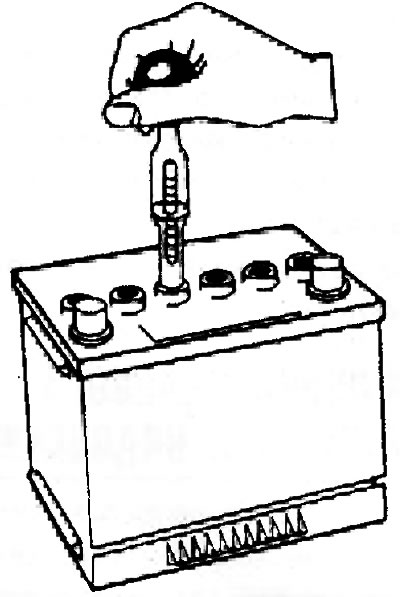
- Check the appearance of the battery. If the terminals are covered with rubber caps, check that they are not damaged and that they completely cover the contact area. Inspect the battery case and cover for damage, the clamps for signs of corrosion and looseness, and the wires for integrity of conductors and insulation.
- If corrosion is found on the terminals and posts, which looks like a white fluffy powder, remove the battery for cleaning. Remove the wire terminals, then the battery itself.
- Thoroughly clean the battery terminals and wire clips (terminals) with a brush or special cleaning device, and then rinse with a soda solution and finally with clean water.
- Make sure the battery tray and mount are in good condition and the bolts are tight. Clean the battery mounting parts before reinstalling the battery.
- All metal parts near the battery that are subject to corrosion must be cleaned and then painted.