


Table of contents: Location of lighting and light…↓ Lamp ratings ↓ Headlights ↓ Lamp replacement procedures ↓
Location of lighting and light signaling devices
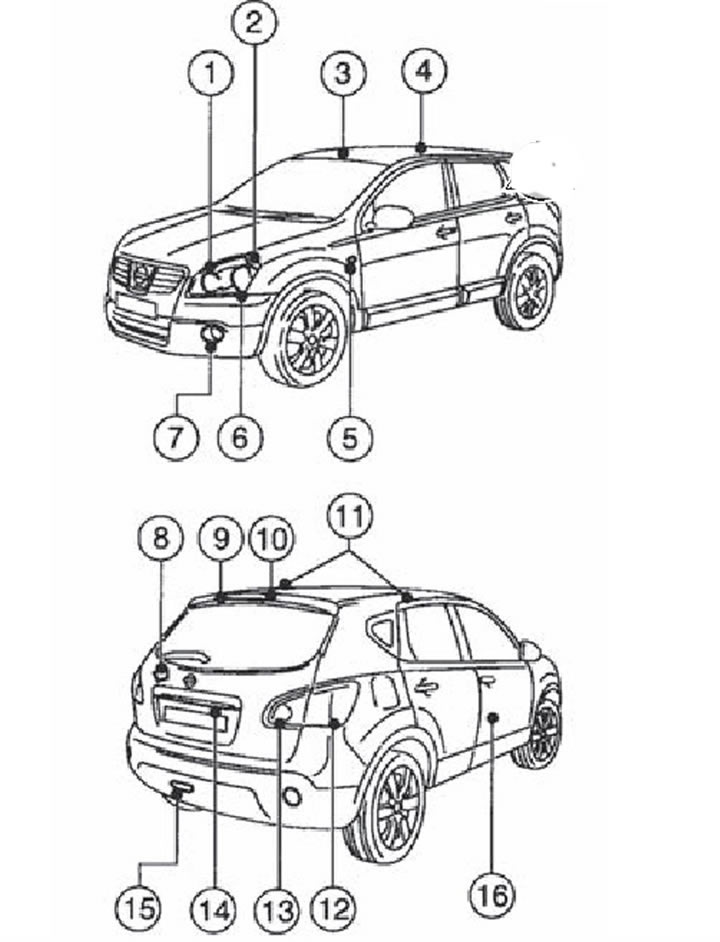
1. Front side light.
2. Front direction indicator.
3. General and local lighting lampshades (for some vehicle versions).
4. Reading lamps - type A (for some vehicle versions).
5. Side turn signal repeater.
6. Headlights.
7. Front fog lights (for some vehicle versions).
8. Luggage compartment light (for some vehicle versions).
9. Central high brake light.
10. General interior lighting lamp (for some vehicle versions).
11. Reading lamps - type B (for some vehicle versions).
12. Rear combination light.
13. Reversing light.
14. Registration plate light.
15. Rear fog light.
16. Footwell lighting lamps (for some vehicle versions).
Lamp ratings
Outdoor lighting fixtures
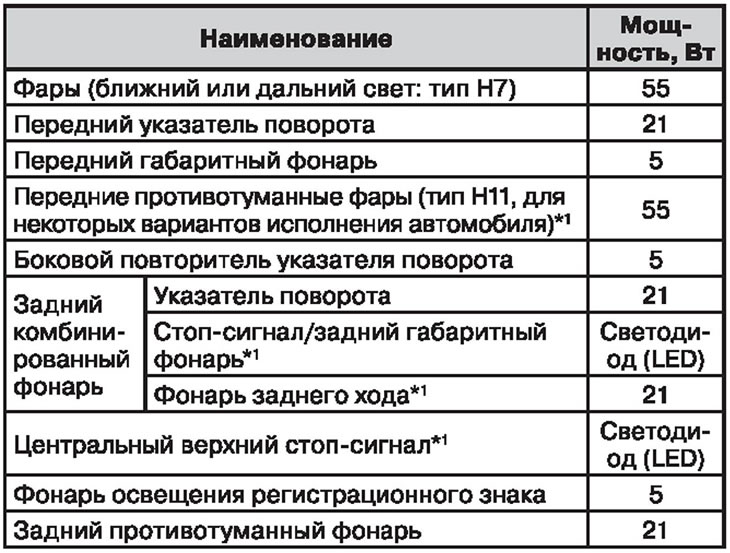
Note: For replacement, contact an authorized Nissan dealer.
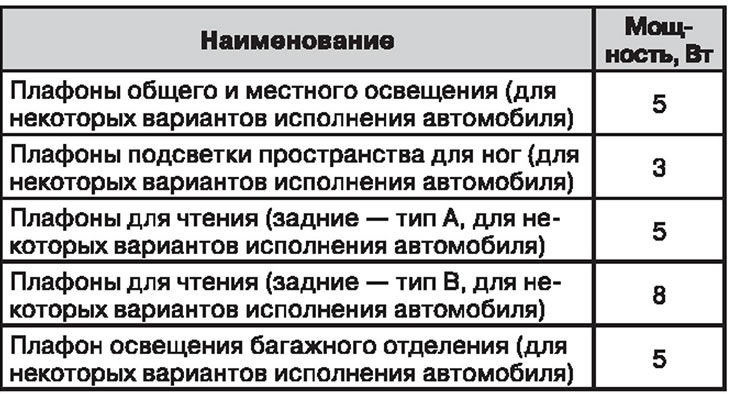
Interior lighting fixtures
Headlights
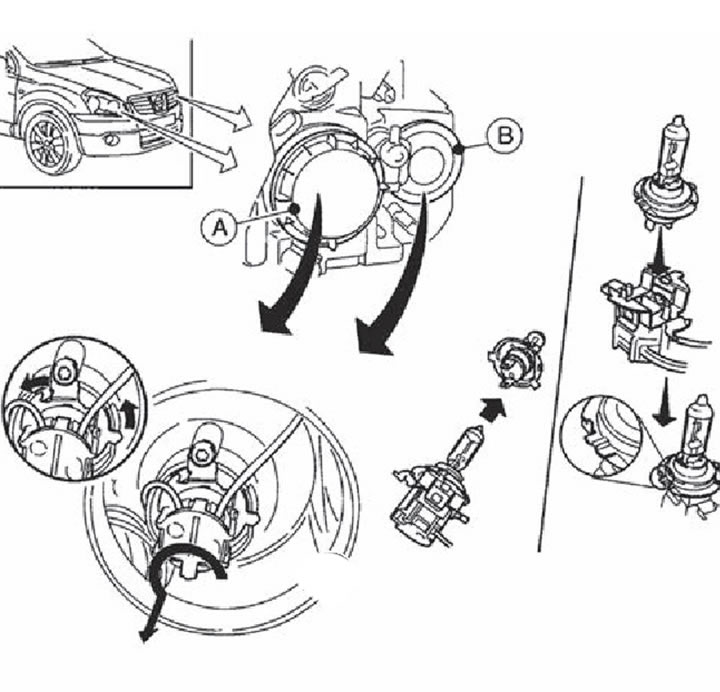
A. Low beam. B. High beam.
Xenon low beam headlights (for some vehicle versions)
Gas discharge headlights use xenon lamps.
Attention.
- When working, xenon headlights are under high voltage. In order to avoid electric shock, it is prohibited to make changes to the design of the headlights or disassemble them.
- If you need to replace the xenon lamp, contact your authorized Nissan dealer.
Replacing a xenon headlight bulb
Attention.
- If you are changing a xenon headlight bulb yourself, be sure to follow the safety instructions below.
- Due to the high internal pressure in the xenon lamp, be sure to follow the precautions for spinning and freezing (wear protective gloves and glasses, use the lamp only in a closed headlight, etc.).
- Do not touch the glass bulb of the lamp with your fingers.
- The lamp is made of high-quality quartz glass and is under high pressure. Avoid damaging and contaminating the lamp, do not leave fingerprints on it (if they occur, remove them with alcohol before installing them in the headlight).
- When working, the xenon lamp produces a certain amount of ultraviolet radiation. To prevent harm to health (burns, eye damage) the xenon lamp should only be used in sealed headlights with a diffuser that absorbs ultraviolet radiation.
- To avoid burns, allow the lamp to cool for at least three hours before handling
- Since the lamp contains mercury and various salts, its disposal must be carried out by specialized enterprises.
- The lamp can only be used with the ballast intended for it, which is under very high voltage during operation.
- Do not touch the lamp or wires. Keep a safe distance (not less than 30 mm).
Replacing halogen bulbs in headlights
Attention.
- The bulb of a halogen lamp is filled with gas under high pressure. If the bulb is dropped or scratched, the lamp may burst.
- Do not touch the glass bulb of the lamp with your fingers.
- Use bulbs of the same type and wattage as those originally installed in the headlights.
- After replacing the bulbs, it is usually not necessary to check and adjust the angle of the light beam of the headlights. If you need to adjust the headlights, contact an authorized Nissan dealer.
- Do not leave the headlights for a long time with the bulbs removed, as dirt, dust and moisture may penetrate into the headlight housing, which will negatively affect the quality and service life of the headlight.
- The headlights use replaceable halogen bulbs. The bulbs can be replaced from the engine compartment without dismantling the headlights.
1. Open the hood.
2. Disconnect the negative ("-") cable from the battery.
3. Remove the headlight cover.
4. Turn the socket ¼ turn counterclockwise and remove the lamp from the socket.
5. Install the new bulb by performing the described operations in reverse order. Check the reliability of the headlight cover installation.
6. Connect the negative ("-") cable to the battery and close the hood.
If you have any difficulties replacing the bulbs, please contact your authorized Nissan dealer.
Note: After rain or washing the car, or during sudden changes in temperature, condensation may temporarily form on the inner surface of the diffusers of the outdoor lighting devices. This is caused by the difference between the temperature inside the device and the outside air temperature. This is not a sign of a malfunction. If large drops of water condense on the inner side of the diffusers, contact&contact the official Nissan dealer service center to have them fixed.
Lamp replacement procedures
Removal/installation
The remaining lighting and signaling devices use lamps of four types, which are designated by letters of the Latin alphabet: A, B, C and D.
To replace the lamp, first remove the diffuser and/or housing of the flashlight.
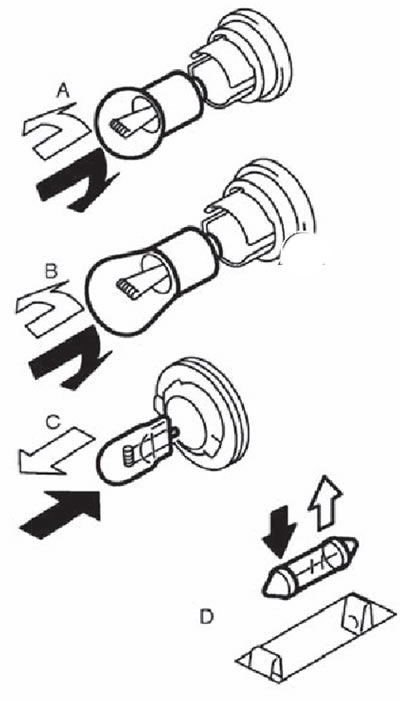
Note: The white arrow shows the direction of lamp removal, the black one shows the direction of installation.
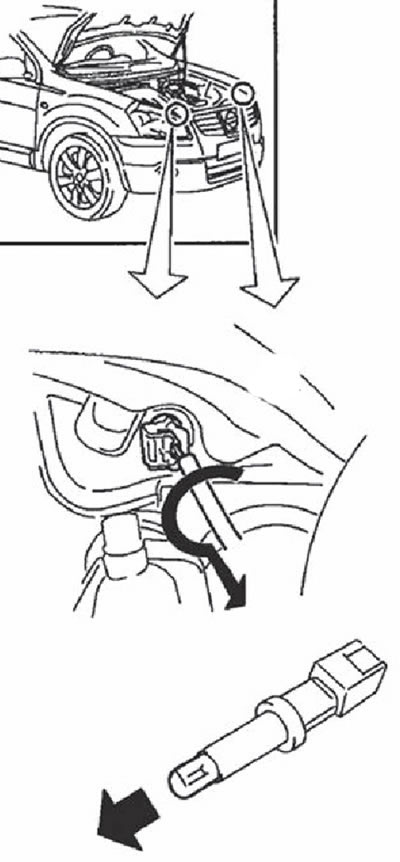
Front side light
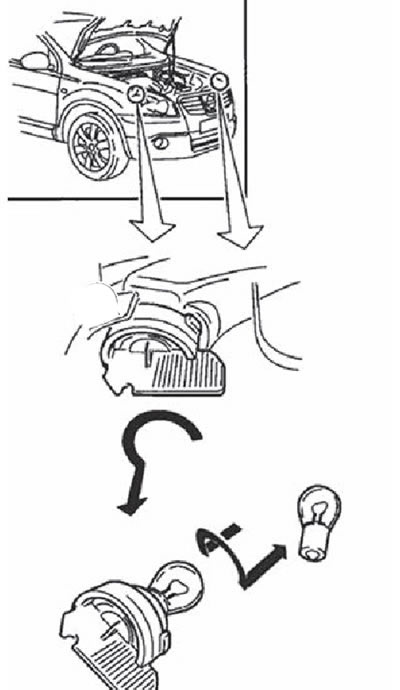
Front direction indicator
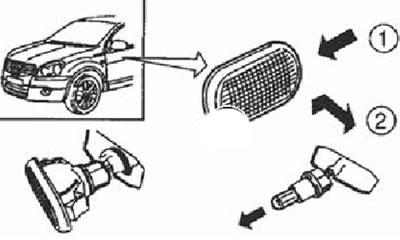
Side turn signal repeater
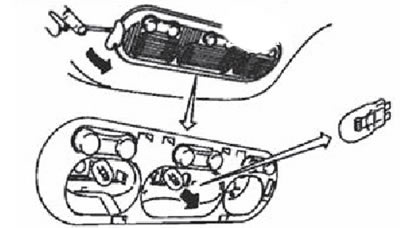
General and local lighting lampshades (for some vehicle versions)
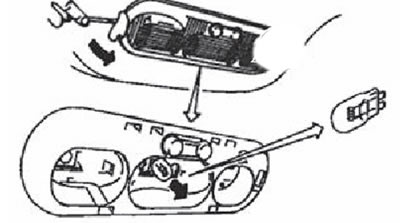
Reading lamps (rear) - type A (for some vehicle versions/general interior lighting lamp rear (for some vehicle versions)
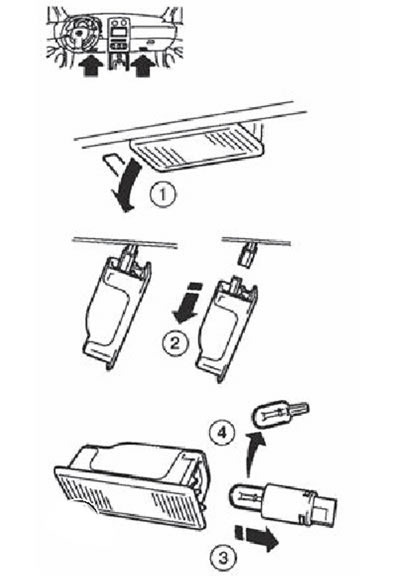
Footwell lighting shades (for some vehicle versions)
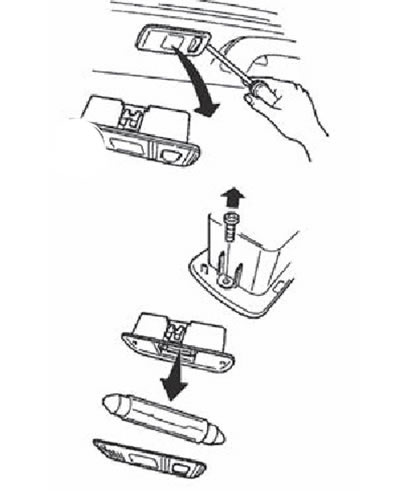
Reading lamps (rear) - type B (for some vehicle versions)
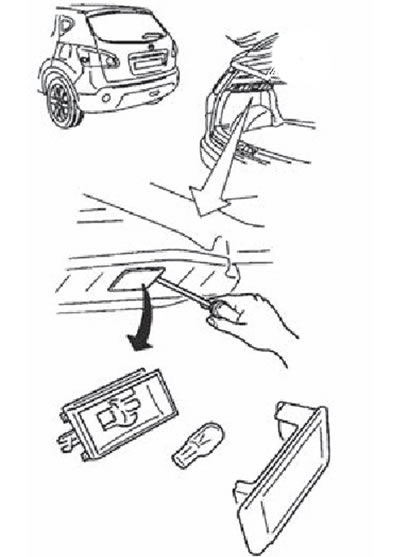
Luggage compartment light
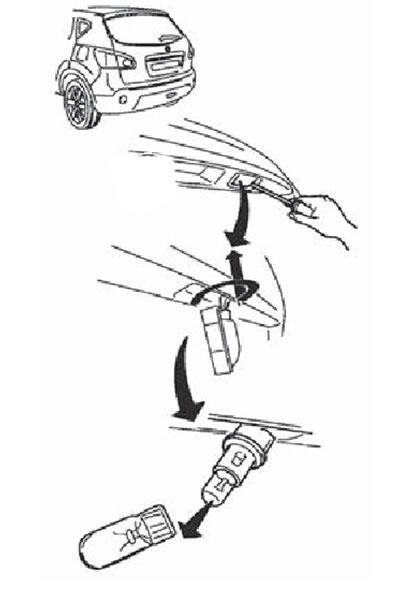
Registration plate light
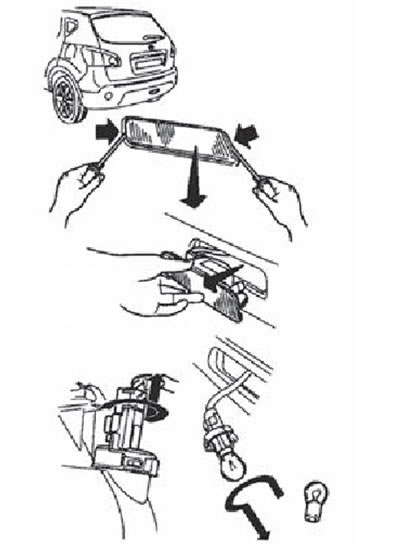
Rear fog light
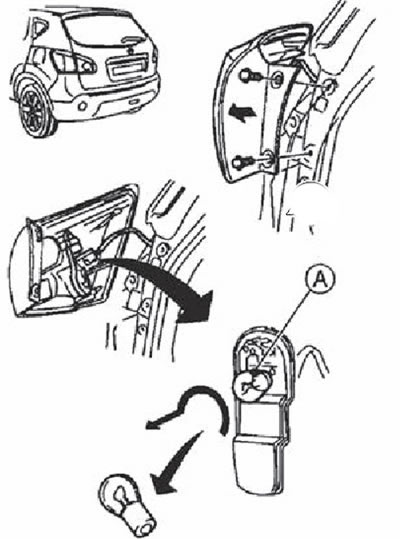
Rear combination light (A - direction indicator light)