


Table of contents: General information ↓ Disassembly, maintenance of internal…↓
AT RE4F02A Internal Components Layout Diagram
Tightening force of threaded connections, Nm:
- A: 44÷5
- B: 6.3÷8.3
- C and N: See subsection "Assembly"
- D: 20÷26
- E: 5÷7
- F: 6.3÷6.8
- G: 74÷88
- H, J, and K: 16÷21
- I: 31÷37
- L: 7÷9/3.7÷5.0
- M and O: 5÷7
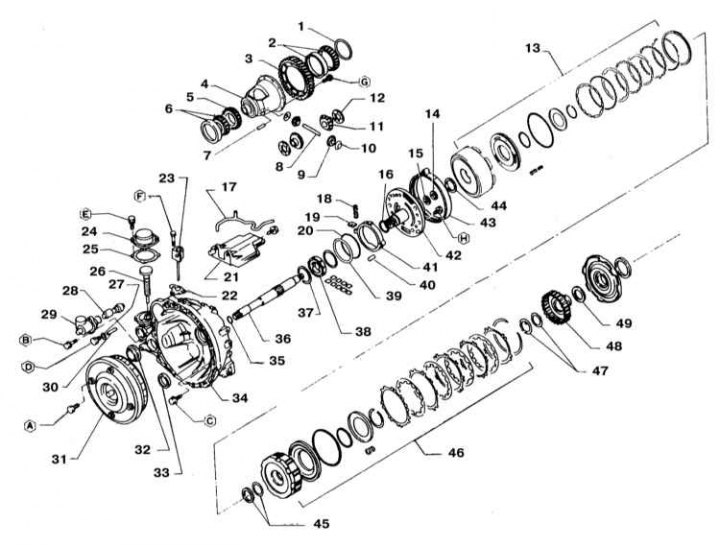
1 - Bearing preload adjustment gasket; 2 - Bearing; 3 - Driven gear of the main transmission; 4 - Differential box; 5 - Regulator shaft drive gear; 6 - Bearing; 7 - Locking pin; 8 - Axle of satellites; 9 - Satellite; 10 - Thrust washer; 11 - Differential side gear; 12 - Washer; 13 - Reverse clutch assembly; 14 - Bearing cage; 15 - Needle bearing; 16 - Rotor support ring; 17 - Differential lubrication supply pipe; 18 - Return spring; 19 - Spring holder; 20 - Ring; 21 - Mesh oil filter; 22 - Gasket; 23 - Control cylinder; 24 - Regulator cover; 25 - Gasket; 26 - Regulator axis; 27 - Sealing washer; 28 - Speedometer drive; 29 - Speedometer drive housing; 30 - Pin; 31 - Rotation converter; 32 - oil seal; 33 - Seal; 34 - Rotation converter housing (transmission dome); 35 - Sealing ring; 36 - Primary shaft; 37 - Ring; 38 - Rotor; 39 - Friction ring; 40 - Hinge pin; 41 - Stator ring; 42 - Oil pump cover; 43 - Brake band; 44 - Washer; 45 - Needle bearing; 46 - Assembly of the overdrive clutch; 47 - Needle bearing; 48 - Overdrive clutch hub; 49 - Needle bearing
AT RE4F02A Internal Components Layout Diagram (continuation)
Tightening force of threaded connections, Nm:
- A: 44÷5
- B: 6.3÷8.3
- C and N: See subsection "Assembly"
- D: 20÷26
- E: 5÷7
- F: 6.3÷6.8
- G: 74÷88
- H, J, and K: 16÷21
- I: 31÷37
- L: 7÷9/3.7÷5.0
- M and O: 5÷7
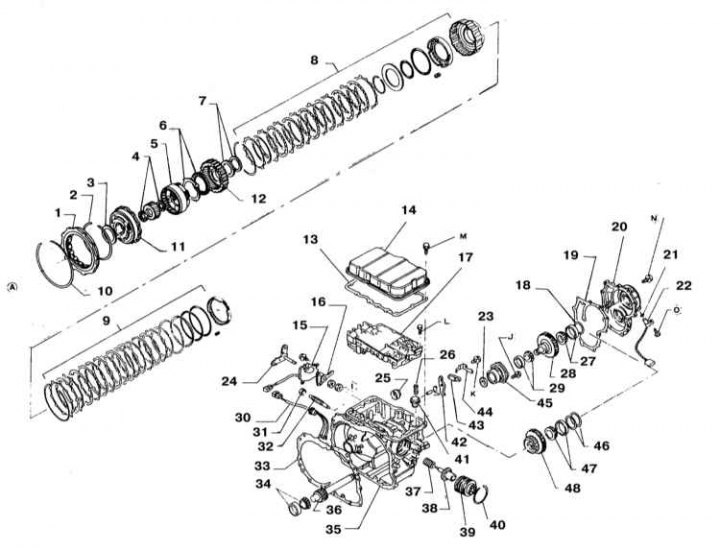
1 - Overrunning clutch; 2 - Thrust ring; 3 - Needle bearing; 4 - Needle bearing; 5 - Rear fastening element; 6 - Needle bearings; 7 - Needle bearing; 8 - Assembling the low-range clutch; 9 - Brake assembly for low and reverse gears; 10 - Thrust ring; 11 - Front fastening element; 12 - Rear internal gear; 13 - Sealing gasket; 14 - Valve assembly cover; 15 - Start enable switch sensor; 16 - Plate; 17 - Assembly of control valves; 18 - Driven shaft bearing adjusting washer; 19 - Sealing gasket; 20 - Side cover; 21 - Sealing ring; 22 - Speed sensor; 23 - Needle bearing; 24 - Manual shift lever; 25 - Seal; 26 - Spring; 27 - Bearing; 28 - Driven shaft; 29 - Bearing; 30 - Terminal; 31 - Lock nut; 32 - Anchor pin; 33 - Sealing gasket; 34 - Bearing; 35 - Carter AT; 36 - Gearbox gear; 37 - Return spring; 38 - Servo piston; 39 - Servomotor; 40 - Thrust ring; 41 - Damper; 42 - Parking latch; 43 - Latch gasket; 44 - Parking stop; 45 - Bearing retainer; 46 - Adjusting washers for intermediate gear axle bearing; 47 - Bearing; 48 - Intermediate gear
Scheme of arrangement of oil flows in the crankcase of the AT
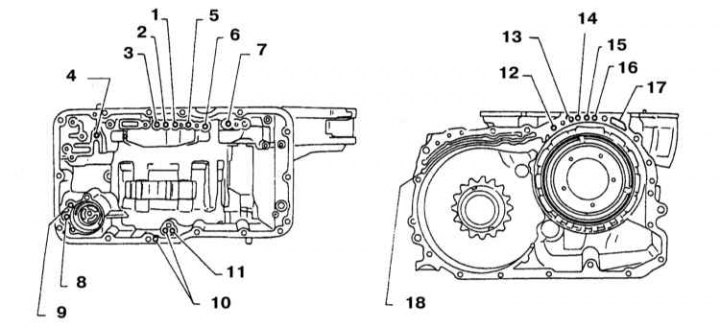
1 - Torque converter output pressure; 2 - Reverse clutch pressure; 3 - High range clutch pressure; 4 - Servo pressure; 5 - Torque converter locking pressure; 6 - Oil pump back pressure; 7 - Pipeline pressure; 8 - Low range clutch release pressure; 9 - Pipeline pressure; 10 - Low range clutch pressure; 11 - Low and reverse gear brake pressure; 12 - Oil pump back pressure; 13 - Torque converter locking pressure; 14 - Torque converter output pressure; 15 - Reverse clutch pressure; 16 - High range clutch pressure; 17 - Pipeline pressure; 18 - Pipeline pressure
Layout of oil flows in the housing of the rotation converter
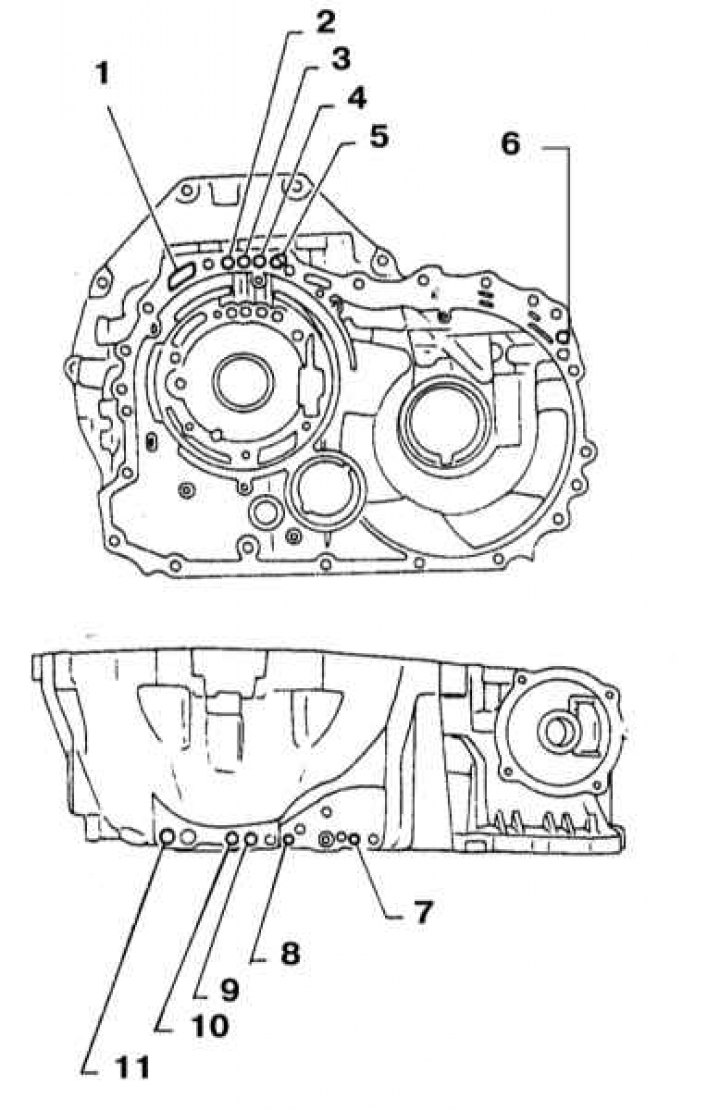
1 - Pipeline pressure; 2 - High range clutch pressure; 3 - Reverse clutch pressure; 4 - Torque converter input pressure; 5 - Torque converter locking pressure; 6 - Pipeline pressure; 7 - Back pressure; 8 - Locking pressure; 9 - Reverse clutch pressure; 10 - High range clutch pressure; 11 - Pipeline pressure
Oil flow pattern in the oil pump cover
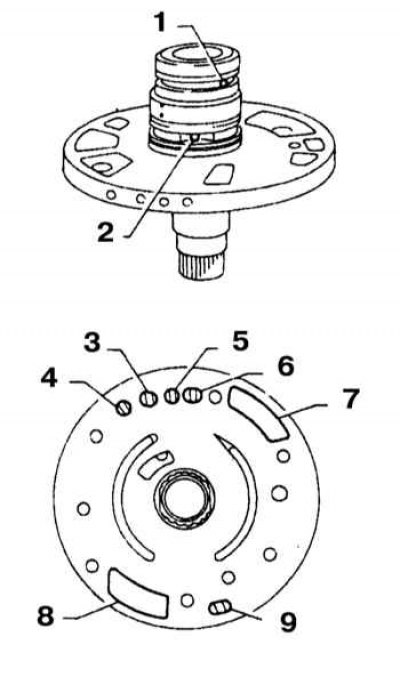
1 - High range clutch pressure; 2 - Reverse clutch pressure; 3 - Torque converter input pressure; 4 - Torque converter locking pressure; 5 - Reverse clutch pressure; 6 - High range clutch pressure; 7 - Pressure side of the oil pump; 8 - Suction side of the pump; 9 - Torque converter output pressure
General information
The authors of this Manual do not recommend that car owners undertake major repairs of the automatic transmission on their own. During the procedures of disassembling and assembling the transmission, it is necessary to remove and then install many small components. It is necessary to make a lot of precise measurements and, by selecting adjusting washers, rings and spacer bushings, precisely set many gaps. In view of all the above, it would be wiser to entrust major repairs of the automatic transmission to car service specialists. Note that in many cases it is possible to purchase a reconditioned unit on an exchange basis, which is often cheaper than carrying out complex repairs.
Despite the above, independent repair of the AT by an amateur mechanic is not at all an absolutely impossible undertaking. The only necessary conditions are the availability of the necessary special tool and accuracy in the approach to performing all procedures.
Tools needed to perform an AT overhaul include circlip pliers, a bearing puller, a sliding hammer, a set of punches and center punches, a DTI gauge, and possibly a hydraulic press. Of course, you will also need a sturdy workbench with a vice or a special assembly stand.
When performing the AT disassembly procedures, try to remember, or better yet, write down, the order of installation of each of the removed parts.
Before disassembling the transmission, it is wise to try to analyze the symptoms of its failures in order to roughly determine their causes. Many failures are clearly associated with the failure of very specific components. See also the Section on AT Malfunction Diagnostics at the beginning of the Manual.
The following subsection provides a schematic description of the procedure for disassembling the AT and servicing its internal components.
Disassembly, maintenance of internal components of AT
1. The illustrations show the layout of the internal components of the AT and the operation of the hydraulic system.
2. Drain the ATF (see Chapter Settings and ongoing maintenance).
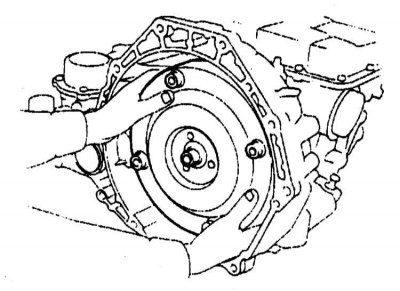
3. Remove the rotation converter.
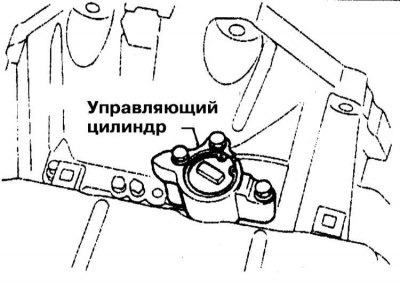
4. Remove the control cylinder.
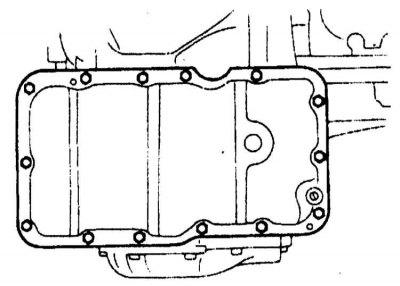
5. Remove the valve cover.
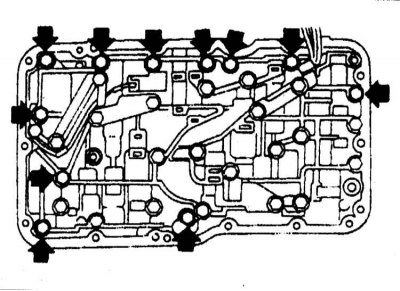
6. Disconnect the electrical wiring from the control valve and remove the valve assembly
7. Disconnect the terminal harness.
Note: The harness is laid quite deep and may snag when pulling - try not to apply excessive force. When pulling, bend the harness inward and push it outward. Do not pull the assembly by the wire.
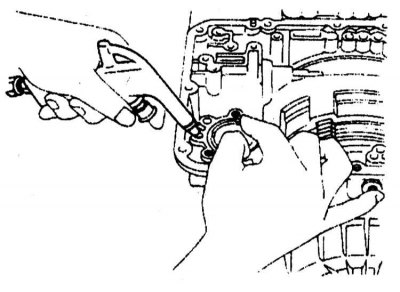
8. Remove the hydraulic accumulator.
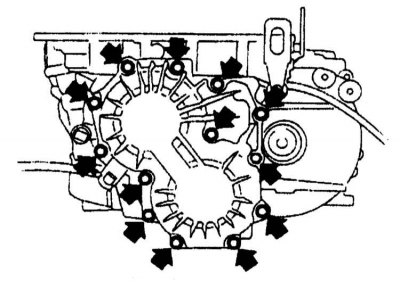
9. Remove the side cover.
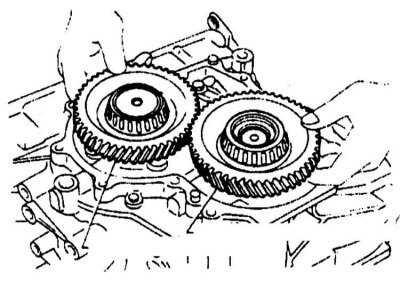
10. Remove the output gear.
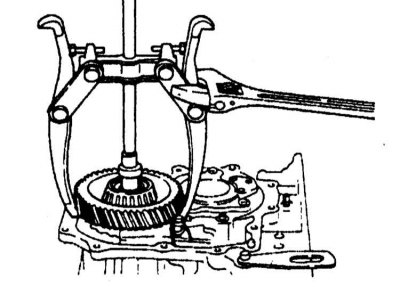
11. Using a puller, remove the intermediate gear.
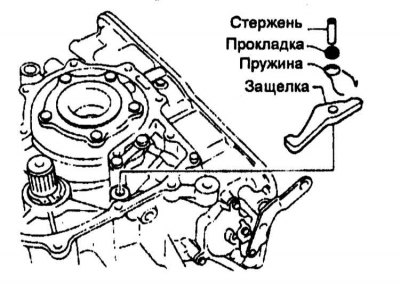
12. Remove the parking pawl, return spring and pin with gasket.
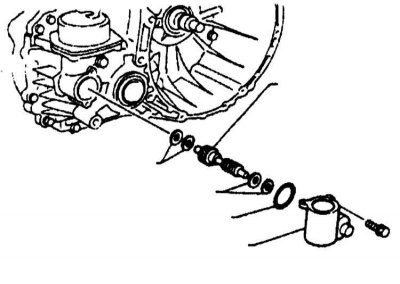
13. Remove the speedometer drive components.
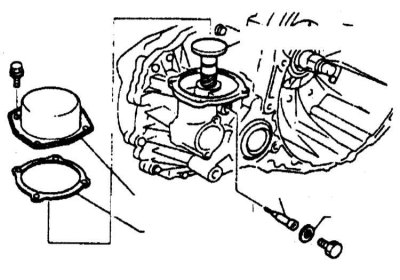
14. Remove the regulator shaft.
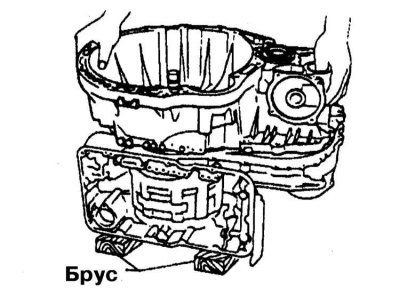
15. Install the AT assembly on the beam and remove the rotation converter casing.
16. Remove the final drive assembly.
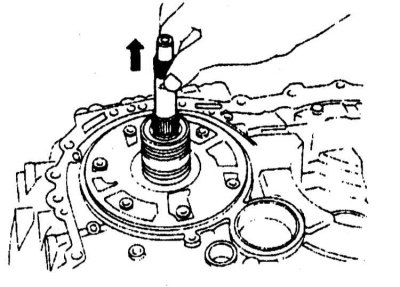
17. After removing the O-ring, remove the input shaft from the converter housing.
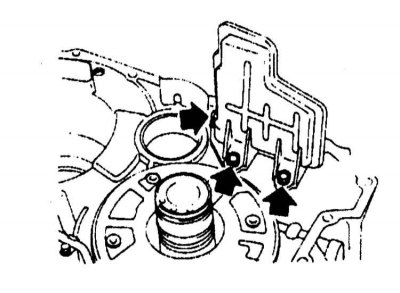
18. Remove the mesh oil filter.
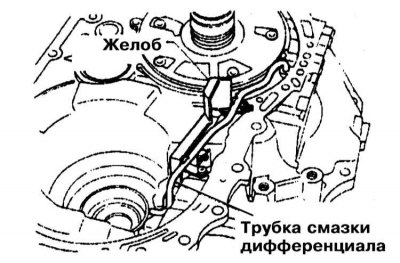
19. Remove the differential lubrication supply pipe.
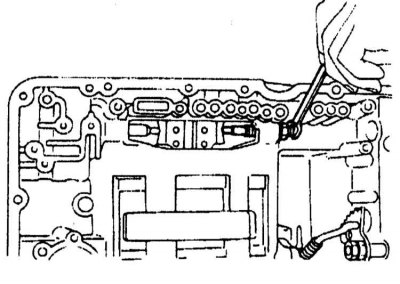
20. Loosen the band brake rod retainer nut, then remove the rod from the piston.
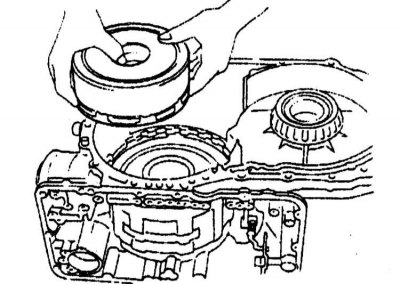
21. Remove the brake band, take out the overdrive clutch and the reverse gear clutch assembly.
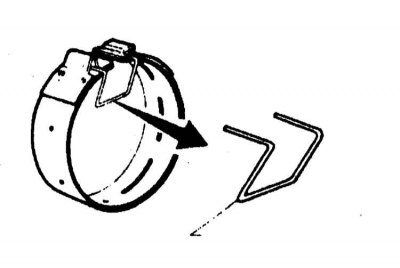
22. To avoid damaging the friction linings of the drum brake, try not to overstretch the flexible strip. When removing the brake band, hold it by the bracket. After removing the band, lower the bracket to its original position.
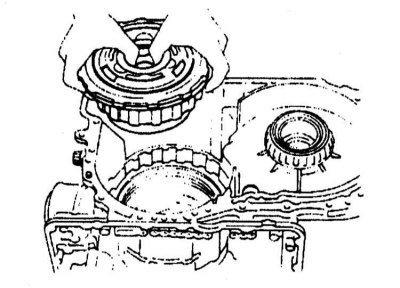
23. Remove the overrunning clutch, front fastener, rear fastener and underdrive clutch.
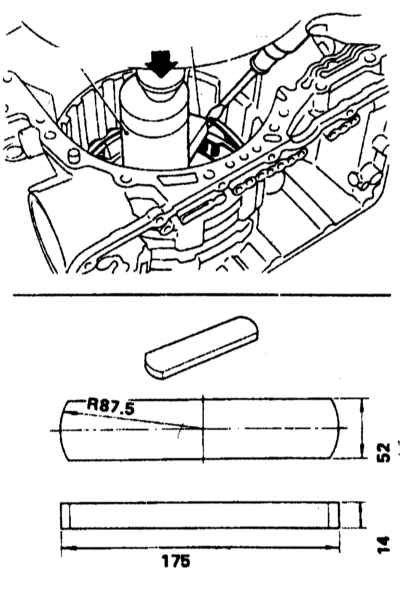
24. Remove the low and reverse gear clutches, disconnect the low and reverse gear brake retainer thrust ring.
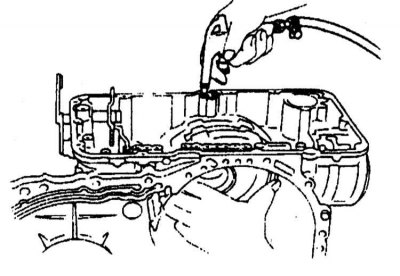
25. Remove the towing and reverse brake piston using compressed air.
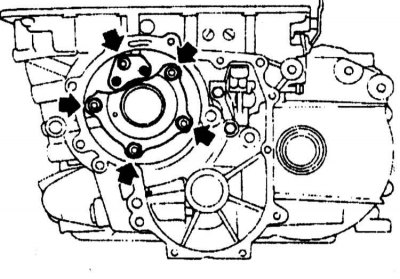
26. Remove the separator assembly.
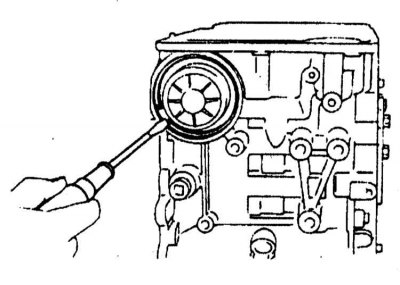
27. Remove the servo motor thrust ring.
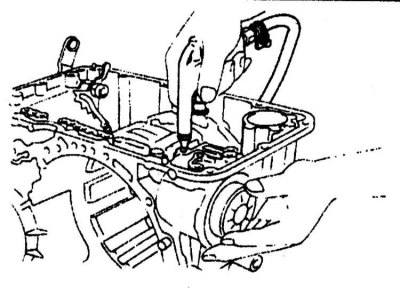
28. Remove the band brake drive servo motor and return spring.
29. Loosen the manual control shaft locknuts and remove the manual drive plate.
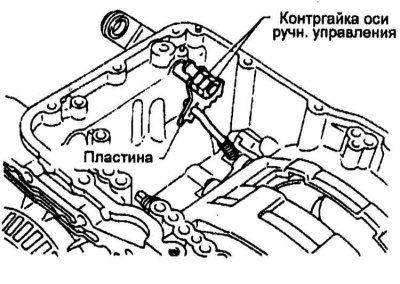
30. Remove the pin and remove the manual control shaft.