


Table of contents: Examination ↓ Replacement ↓
The crankshaft position sensor provides a spark timing signal to the electronic control module (ECM) based on the crankshaft position directly from the crankshaft. The sensor detects the position of the crankshaft by detecting magnetic field breaks caused by pulse rings on the crankshaft. It monitors engine speed, piston position and transmits the corresponding signal to the control unit to regulate fuel injection, ignition and other functions.
Most crankshaft position sensor faults can be traced back to a faulty wiring harness or connector. These faults can result in no ignition timing signal and, consequently, the engine will stop working and will not start. The fault may be in the computer, wires, or crankshaft position sensor. Remember the relationship between the details mentioned.
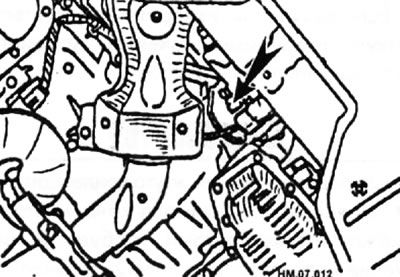
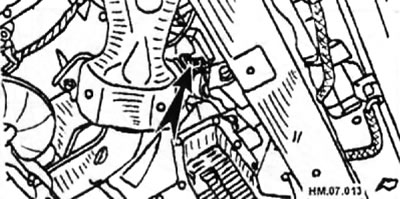
The knock sensor (arrow) is located underneath the vehicle near the oil pan opposite the teeth of the signal disk.
2WD models
AWD models
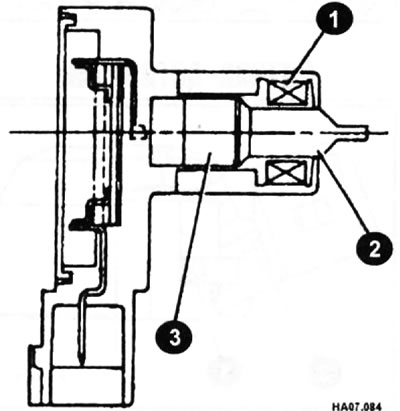
The sensor consists of a magnet (3), a core (2) and a coil (1).
To determine the fault code:
- After starting the engine, let it idle for 2 seconds.
- Turn the ignition key to the OFF position, wait 3 seconds, then turn it to the ON position.
- Turn on self-diagnosis mode.
The material is based on data from the portal: NISSANBOOK.ru
Examination
- After disconnecting the crankshaft position sensor harness connector, loosen the sensor mounting bolt.
- After removing the sensor, check it for mechanical damage and corrosion.
- After connecting the sensor harness connector, turn the ignition key to the ON position.
- By quickly moving the screwdriver closer and further away from the sensor core (1), check the voltage between contacts (2) and (3).
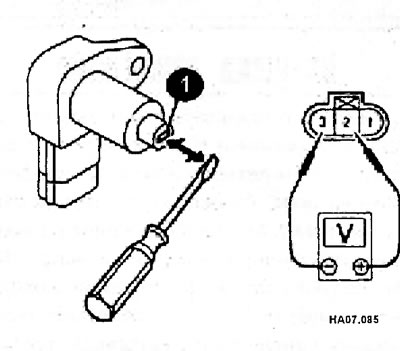
| Contact | Voltage, V |
| 2-3 | The tester needle fluctuates between 5 and 0 |
- If the test results do not match the required value, replace the crankshaft position sensor.
Replacement
- If the sensor needs to be replaced, install it correctly, paying attention to the orientation. Distortions or interference will cause the engine to run irregularly, so when replacing the sensor with a new one, be sure to properly adjust the air gap between the sensor tip and the teeth of the timing disk.