


Table of contents: Removal ↓ Installation ↓
Note: The procedures described below apply to models with a station wagon and hardtop body. For other types of bodies, the work is carried out similarly with the necessary adjustments for the design features of the body.
Removal
1. Disconnect the negative cable from the battery.
2. In the luggage compartment, loosen the mounting screws and remove the tie-down hooks.
3. Loosen the mounting screws and remove the carpet mounting trim from the tailgate flaps.
4. Fold the mat forward and loosen the screws securing the access cover. Remove the cover.
5. Disconnect and plug the fuel hoses. Disconnect the electrical connector.
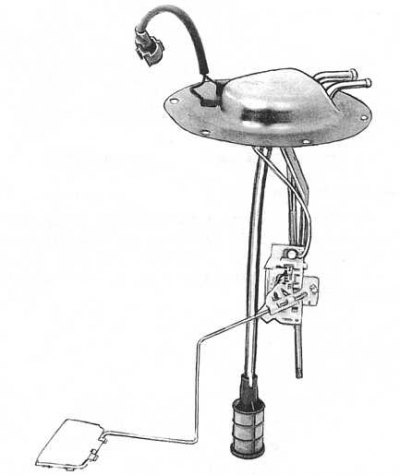
Note: The fuel flow sensor assembly, and on 3.0L models also the fuel pump, can now be removed from the fuel tank to perform any necessary repairs after the fasteners have been released. The 4.2L model fuel flow sensor is shown removed from the fuel tank in the accompanying illustration.
6. Jack up the rear of the car and place it on supports.
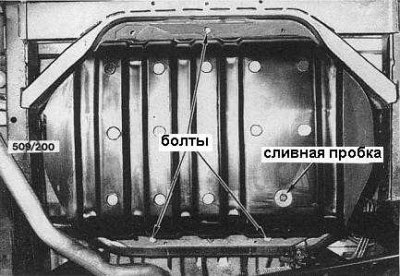
7. Carefully unscrew the fuel tank drain plug (see accompanying illustration) and drain the fuel into a clean canister. Screw the plug back in place and tighten it securely.
8. Working through the opening of the right rear wheel arch, loosen the bolts securing the filler neck protective screen to the tank body and remove the screen.
9. Loosen the clamps securing the filler neck and fuel vapor discharge tube (the corresponding tank components of the 4.2L models are shown in the accompanying illustration).
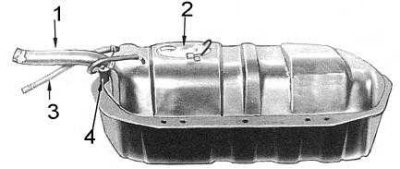
1 - filler neck; 2 - fuel flow sensor; 3 - vapor discharge tube; 4 - control valve
10. Loosen the mounting bolts and lower the fuel tank protective screen down.
11. Loosen the bolts securing the tank to the chassis and carefully remove the tank from under the vehicle. Before removing the tank, make sure once again that the filler neck and fuel vapor drain pipe are disconnected.
Installation
Installation is carried out in reverse order.
1. Make sure that all hoses are in good condition and connected correctly to their fittings.
2. When installing the tank, ensure that the filler neck and fuel vapor outlet tubes are connected correctly.
3. Fill the tank with clean fuel and check for leaks.