


Removal
1. Disconnect the master cylinder push rod from the clutch pedal.
2. Disconnect the hydraulic line from the cylinder and drain the fluid.
3. Unscrew the mounting bolts and remove the cylinder (photo).
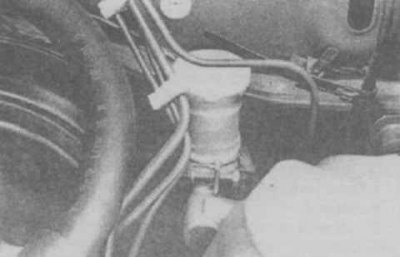
3.3 The master cylinder is attached to the engine compartment bulkhead
4. Drain the remaining liquid from the tank and clean the cylinder.
(The original is posted on the portal NISSANBOOK.ru)
5. Remove the cylinder dust cover and take out the limit ring (photo).
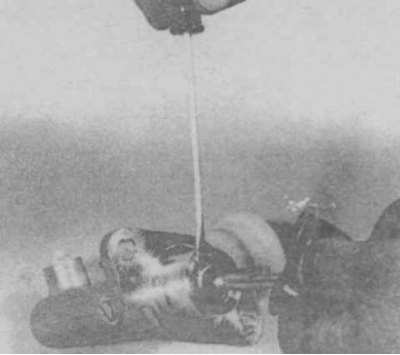
3.5 The restrictor ring can be removed using a narrow screwdriver
6. Remove the plunger.
7. Press the piston into the cylinder and unscrew the limit bolt (photo).
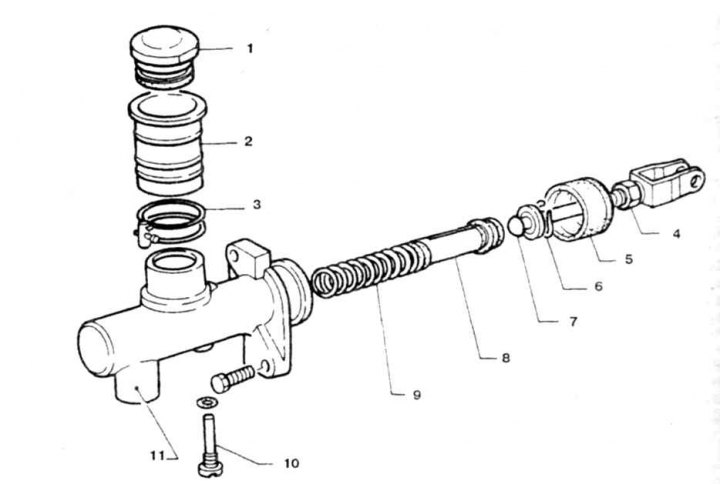
3.7 Clutch master cylinder
1. Tank lid; 2. Feeding tank; 3. Clamp; 4. Lock nut; 5. Dust cover; 6. Restrictive ring; 7. Pusher; 8. Piston; 9. Return spring
8. Remove the piston assembly with the spring.
Attention! The piston design is non-disassemblable.
9. The hydraulic drive reservoir should be replaced only if the reservoir is damaged. A removed reservoir must be replaced.
10. Check the condition of the inner surface of the cylinder. If scoring, scratches or painted areas are found, replace the cylinder.
11. If the inner surface is in good condition, then replace only the seals.
12. Before installing the parts, they must be lubricated with brake fluid.
13. Using your fingers, install the piston seals into the corresponding grooves, ensuring that they are oriented correctly (photo).
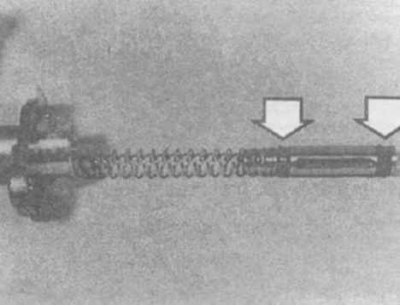
3.13 Correct installation of piston seals (indicated by arrows). The working edges of the cuffs must face in the direction indicated
14. The cylinder is assembled in reverse order.
15. Installation is carried out in the reverse order. Check the clutch pedal height and free play (Ch. 1), remove air from the hydraulic drive (see below).