


Table of contents: Removal ↓ Installation ↓
Clutch Master Cylinder Assembly Components
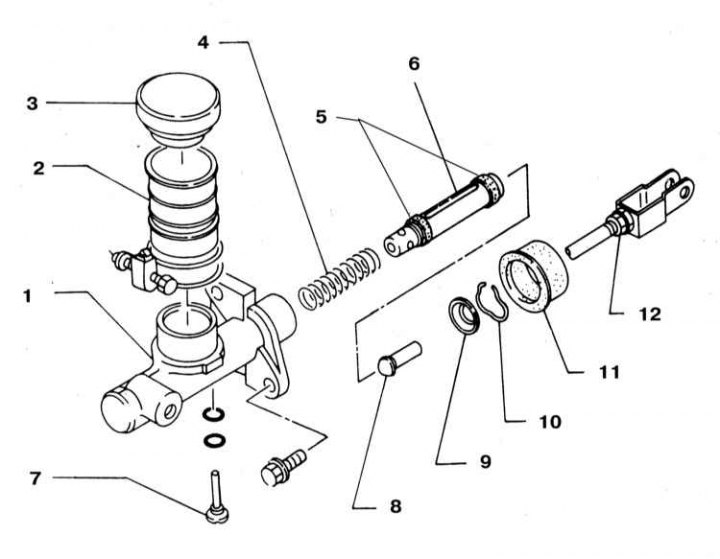
1 - Body; 2 - Hydraulic fluid reservoir; 3 - Tank cover; 4 - Return spring; 5 - Sealing cuffs; 6 - Piston; 7 - Valve stop (removed when dismantling the spring and piston, 1.5÷2.9 Nm); 8 - Pusher; 9 - Stop; 10 - Retaining ring; 11 - Dust cover; 12 - Lock nut (8÷11 Nm)
Removal
1. The design of the clutch master cylinder is shown in the illustration.
2. Disconnect the negative cable from the battery.
Warning! If the car stereo system is equipped with a security code, make sure you have the correct combination to activate the audio system before disconnecting the battery!
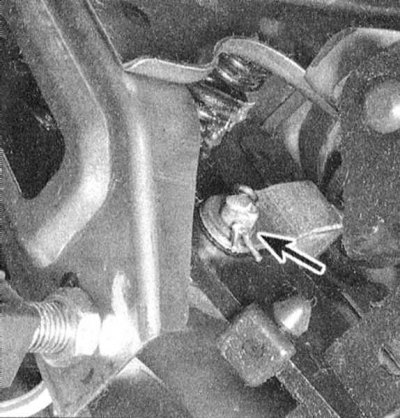
3. Under the instrument panel, remove the mounting pin and disconnect the split pin of the hydraulic master cylinder push rod from the clutch pedal lever.
(Text duplicated from the website: nissanbook)
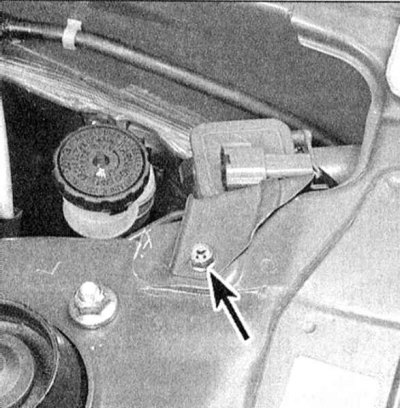
4. Remove the automatic speed control device (ASCD) pump. Disconnect the hydraulic line from the clutch master cylinder assembly - to avoid rounding the nut splines, it is advisable to loosen the union nut using a special open-end wrench with a slotted head. Have a rag ready to collect any spilled hydraulic fluid.
Caution! To avoid damage to the paintwork, do not allow brake fluid to come into contact with painted body surfaces.
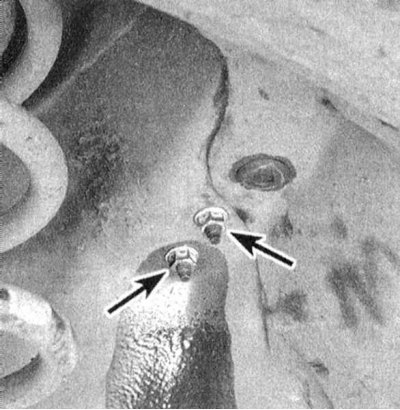
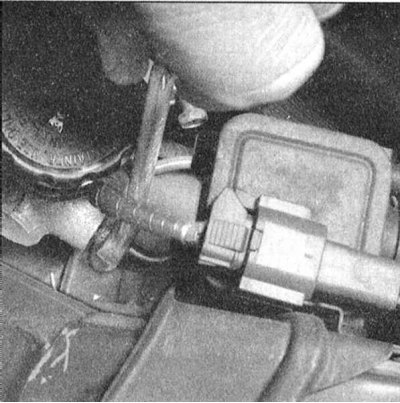
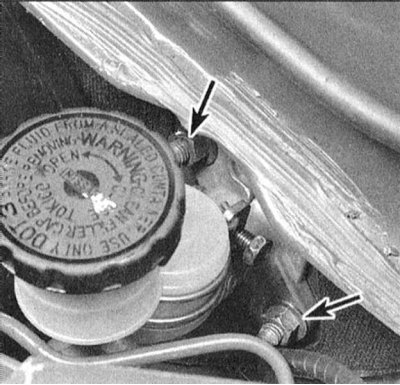
5. Loosen the master cylinder mounting nuts on the rear bulkhead of the engine compartment. Remove the Master Cylinder Assembly (try not to spill the brake fluid).
Installation
1. Place the master cylinder assembly in its regular place and secure it with nuts, tightening them by hand.
2. Connect the hydraulic line to the master cylinder - try not to twist the union nut of the union connector to avoid irreversible damage to the latter due to thread stripping.
3. Tighten the mounting nuts and hydraulic line fitting securely.
4. Connect the cylinder push rod to the clutch pedal and secure the split pin with a new pin.
5. Fill the reservoir with the required amount of DOT 3 brake fluid (see Chapter Settings and ongoing maintenance), then remove air pockets from the tract (see section Bleeding air from the hydraulic circuit of the clutch release drive).
6. Check that the height and free travel of the clutch pedal are set correctly and make the appropriate adjustments if necessary (see section Adjusting the clutch pedal).