


Table of contents: Engine operation ↓ System pressure sensor ↓ Fuel injectors ↓ Risks associated with contamination ↓ Precautions when performing any work…↓
Cylinder #1 is located on the flywheel side.
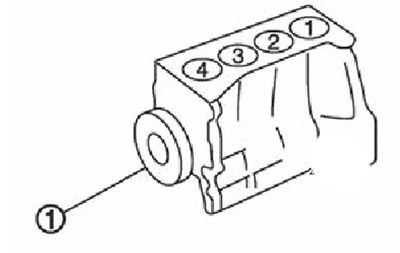
Crankshaft pulley
Engine operation
Do not perform any work on hydraulic systems while the engine is running.
Remember that the pressure in the fuel system can reach up to 1600 bar.
Keep your hands and face covered (especially the eyes) away from any high pressure leak.
Original text on the website: NISSANBOOK.ru
Remember that fuel is harmful to health.
System pressure sensor
Do not remove the fuel pressure sensor from the line unless necessary.
Do not attempt to measure the resistance of the fuel pressure sensor as this may damage the sensor.
Fuel injectors
The operating voltage of the fuel injectors control exceeds 100 V.
Fuel injector electronics have polarity. Be careful not to mix up the polarity of the wires, as this will cause the piezo components to malfunction.
Do not apply voltage to the injectors if their body is not connected to the battery ground (there is a risk of electrostatic discharge). For example, the fuel injector body must be in contact with the cylinder block.
The fuel injector piezo element must not be de-energized while the engine is running, as there is a risk of serious engine damage due to prolonged opening of the fuel injector.
Risks associated with contamination
The high-pressure direct fuel injection system is very sensitive to various types of clogging. The risks associated with clogging are as follows:
- damage or destruction of the high pressure injection system,
- jamming of components,
- damage to the seals of system components.
All fuel system maintenance operations must be carried out in a perfectly clean environment. This means that no impurities must be allowed to enter (particles several microns in size) into the system during its disassembly and assembly. This condition must be strictly observed in the section from the fuel filter to the injectors.
Sources of contamination include, in particular:
- metal or plastic filings;
- dye;
- fibers of cardboard, brushes, paper, fabric, clothing;
- foreign bodies such as hair;
- ambient air.
Note: Do not use high pressure to clean the engine as this may damage the connections.
Precautions when performing any work on a vehicle
Note: Before performing any work on the high pressure fuel system, ensure protection:
- attachments and drive belts;
- electrical equipment (starter, generator, electric power steering);
- flywheel surfaces (to prevent diesel fuel from getting onto the working surface of the clutch discs).
1. Check for plugs for connections that need to be depressurized (a set of plugs is available for sale as spare parts). All stoppers are intended for single use, after which they must be disposed of, as they are contaminated and cleaning cannot provide the required cleanliness. Unused stoppers from the set are also not subject to long-term storage for the same reason.
2. Ensure that the bags for storing spare parts are sealed tightly, as this reduces the risk of foreign particles getting on the parts. The bags are not reused, after removing the parts from them, the bags must be disposed of.
3. Do not use fibrous cloths or paper for cleaning, as this may cause high pressure. Non-fibre cloths should only be used once.
4. Use fresh solvent for each cleaning procedure (the used solvent is contaminated). Pour the solvent into a clean container.
5. Use only a clean brush in good condition for each cleaning procedure (the bristles should not fall out).
6. Before opening the connections, they must be cleaned from the outside with a brush and solvent.
7. Use compressed air to clean the tool and work area, as well as the parts being cleaned. Make sure that no bristles remain.
8. Wash your hands before performing and, if necessary, also during operations.
9. When using leather gloves, also use latex gloves over them to prevent contamination.
10. Immediately after depressurization of connections, they must be plugged. Under no circumstances should plugs be reused.
11. Close the plastic bag even if you plan to use it soon, as the surrounding air can be a source of contamination.
12. All parts removed from the injection system must be carefully packed in a sealed plastic bag immediately after they have been plugged.
13. The use of a brush, solvent, compressed air, sponge or cloth is strictly prohibited once the fuel system has been depressurized, as this may result in clogging of the fuel injection system.
14. A new part replacing an old one should be unpacked immediately before installation, not prematurely.