

2. Do not attempt to disconnect the battery cables while the engine is running.
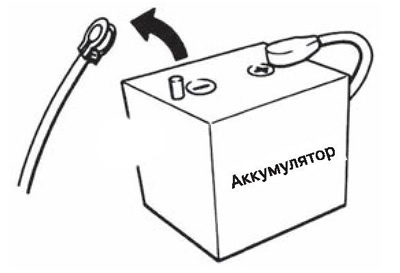
3. Before connecting or disconnecting the ECU connector, turn the ignition switch to the "Off" position (turn off the ignition) and disconnect the negative battery terminal. Failure to do so may result in serious damage to the engine control unit, since battery voltage is supplied to the control unit even when the ignition switch is off.
4. Before removing parts, turn off the ignition and then disconnect the negative battery terminal.
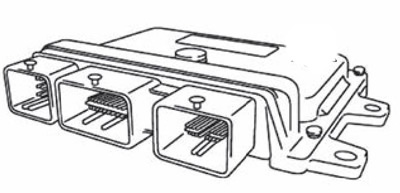
5. Do not disassemble the electronic engine control unit.
6. If the wires are disconnected from the battery, the memory returns to the original values of the electronic control unit.
The engine operation may change slightly when the connector is disconnected, but this does not indicate a malfunction.
7. If the battery is disconnected, engine operation related information will be lost after 24 hours: diagnostic trouble codes, freeze frame data, system readiness test (SRT) codes, test values.
8. When connecting the connector (1) of the electronic engine control unit, securely fix it (B) with the lever until it stops, as shown in the figure.
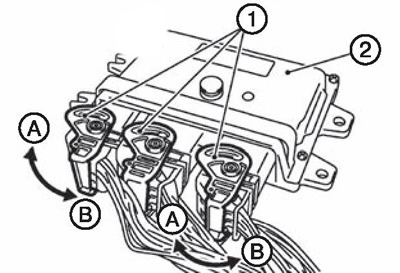
1. Connector.
2. Electronic control unit.
A. Weakening.
B. Fixation.
9. When connecting or disconnecting the connectors of the electronic control unit, be careful not to deform or break the connector terminals. Make sure that there is no deformation or breakage of the connector terminals when connecting.
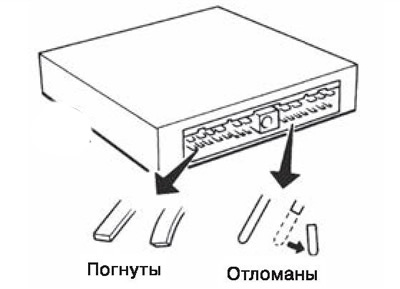
10. Carefully connect the connectors of the electronic engine control unit. A loose connection can cause extremely high (wave) voltage in the windings or capacitors, which will lead to a malfunction of the unit.
11. Ensure that the engine self-diagnosis system wires are at least 10 cm away from the common harness to prevent interference from affecting the diagnostic results.
12. Keep the engine self-diagnosis system parts and connectors clean.
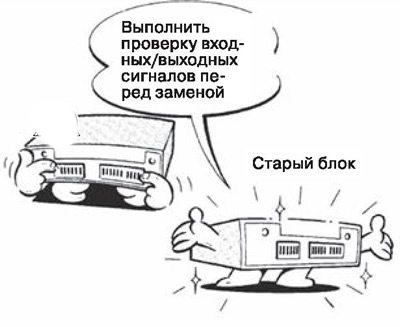
13. Before replacing the electronic control unit, check the terminals and control values to ensure that the control unit is functioning correctly.
14. Be careful not to damage the mass air flow sensor.
15. Do not clean the MAF sensor with any type of solvent.
16. Do not disassemble the electronic throttle control drive.
17. Even a small leak in the intake system can lead to serious engine failures.
18. Do not subject the camshaft position sensor (phase) and crankshaft position sensor (POS) to impact or jolt.
19. After performing a comprehensive diagnosis, it is necessary to perform a procedure for confirming the fault codes or checking the functionality of the components. No fault codes should be detected if the repair is complete.
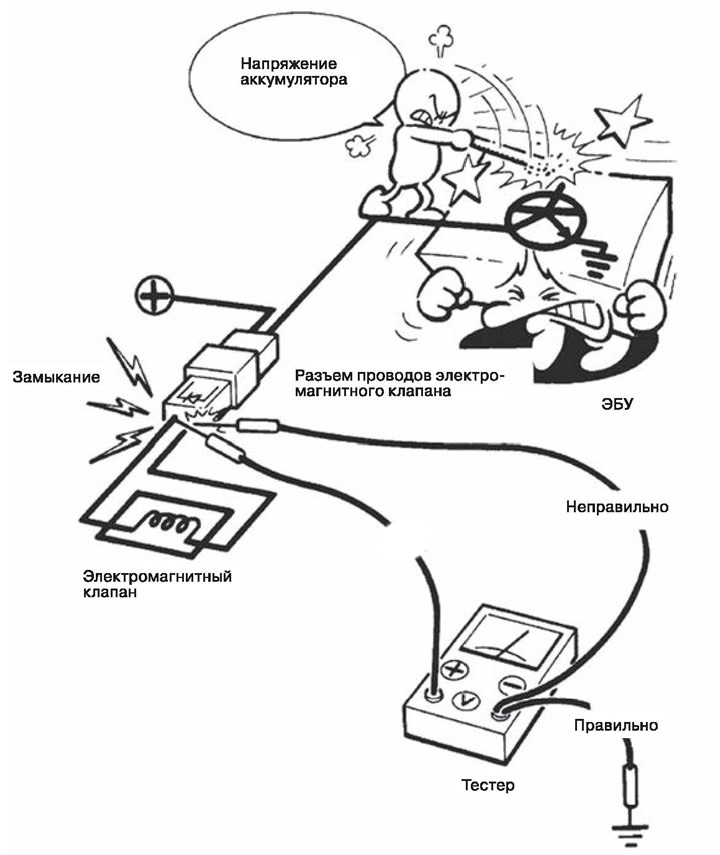
20. When using a digital tester, do not keep its probes close to each other, as this may cause a short circuit and damage the power transistor in the control unit.
21. When checking the input and output signals of the control unit, use a special adapter.
22. Do not turn on the fuel pump if there is no fuel in the fuel lines.
23. Tighten the fuel hose clamps to the specified tightening torques.
24. Do not press the accelerator pedal when starting.
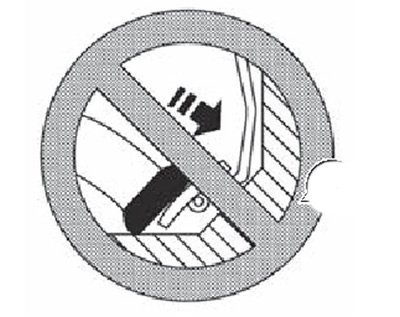
25. Do not increase the engine crankshaft speed excessively immediately after starting.
26. Do not accelerate the engine immediately before stopping the engine.
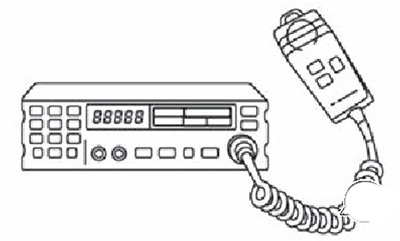
27. When installing a radio or mobile phone in a vehicle, ensure that the following points are observed to prevent interference with the engine management system:
Keep the antenna as far away from electronic control units as possible.
Keep the antenna power wires more than 20 cm away from the electronic control wires. Do not allow the said wires to be parallel for a long time.
Position the antenna and power line so as to create as little interference as possible.
Make sure the radio is grounded to the vehicle body.