


Table of contents: General description ↓ Description of the self-diagnostic…↓ Operating modes of the engine…↓ Mode 1 - lamp test ↓ Mode 1 - Fault indication ↓ Mode 2 - self-diagnosis ↓ Self-diagnostic codes ↓ Conditions under which the check…↓ How to clear self-diagnosis results ↓
General description
If during self-diagnosis faults are detected in the main sensors required for the operation of the ECCS unit, fault codes are written into the control unit memory, which simplifies diagnostics. Faults are read in two ways: using the CONSULT service tester and by flashing the engine warning lamp in the instrument cluster.
There are two diagnostic modes. Mode 1 is the normal state, mode 2 is the self-diagnostic mode.
Description of the self-diagnostic system operation
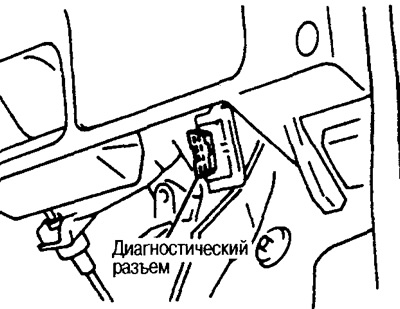
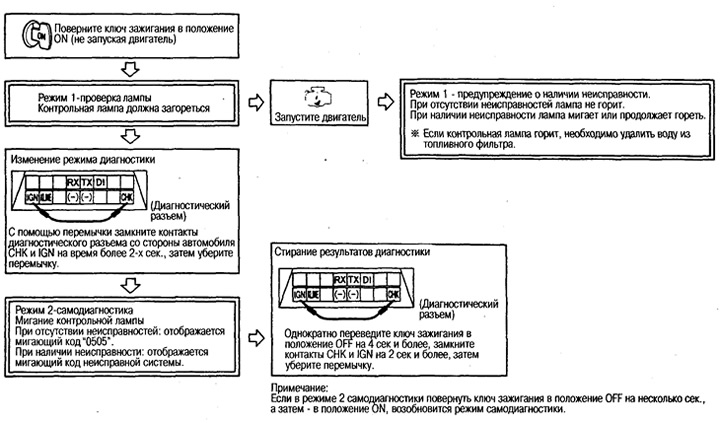
Self-diagnosis mode 2 is activated after turning the ignition key to the ON position (the engine is not working) and short-circuiting the contacts of the diagnostic connector SNK and IGN for 2 seconds (located on the right side of the lower section of the instrument panel on the driver's side).
Self-diagnosis is performed after turning the ignition key to the ON position (self-diagnosis mode 2).
After turning the ignition key to the OFF position, it automatically returns to mode 1 (normal state).
Operating modes of the engine malfunction indicator lamp
The text was copied from the portal: NissanBook.ru
Mode 1 - lamp test
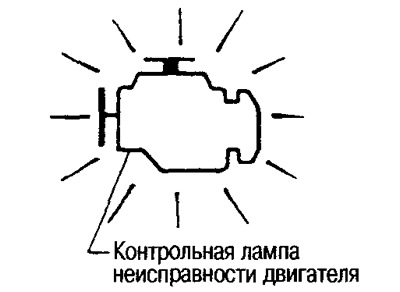
The lamp should come on after turning the ignition key to the ON position and go out after the engine starts.
If the indicator lamp remains on after the engine has started, there is a possibility that there is water in the fuel filter. Drain the water (see section "Checking the fuel filter").
Mode 1 - Fault indication
If the self-diagnosis reveals a fault, the indicator lamp switches to the fault indication mode and starts flashing, alerting the driver.
Mode 2 - self-diagnosis
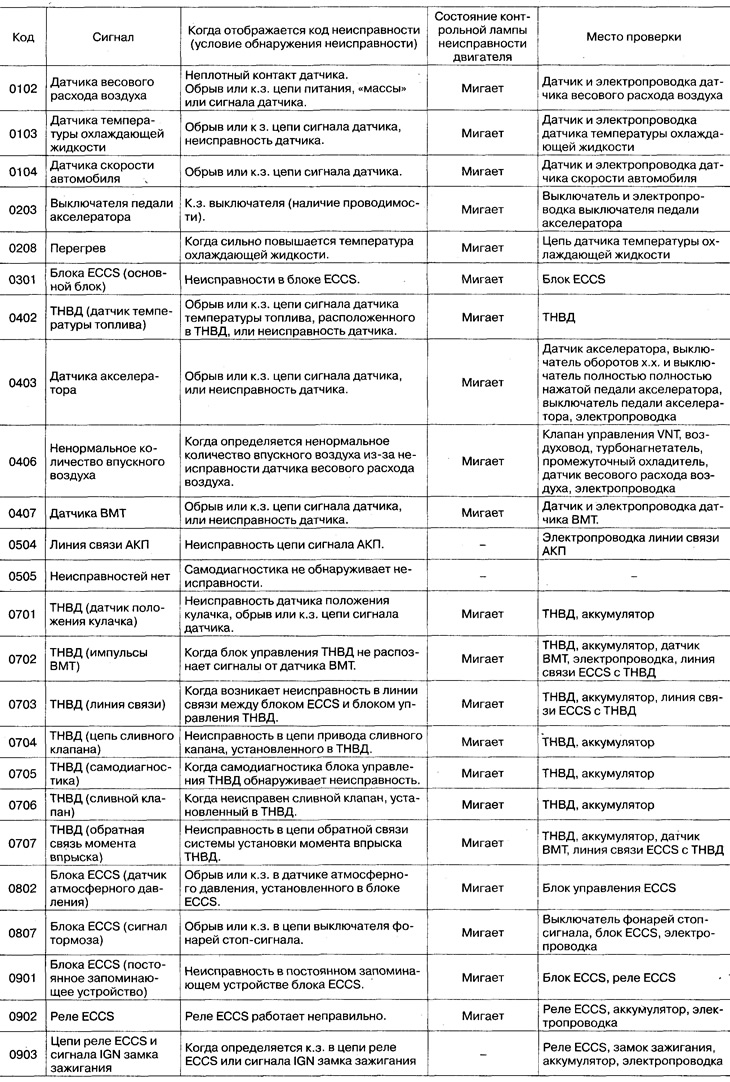
Flashing of the check engine light indicates that a fault code is being stored in the system memory.
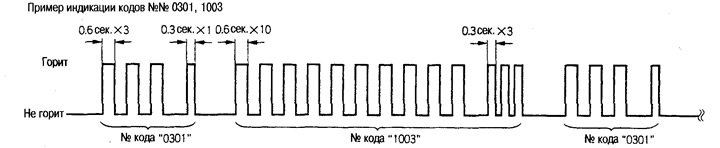
The code number is 4-digit and the senior 2 digits are displayed by blinking with a large interval, and the junior 2 digits are displayed by blinking with a small interval. For example, code #1003 will be displayed by blinking 10 times with a large interval and blinking 3 times with a small interval.
If there are no faults, the code "0505" is displayed.
Self-diagnostic codes

Conditions under which the check engine light goes out
To start diagnostics again after a malfunction has been detected, turn the ignition key to the OFF position for 4 seconds or more. If there is no malfunction, you can perform self-diagnosis again.
To turn off the check engine light that was on due to engine overheating, after eliminating the cause of overheating, clear the self-diagnosis results by turning the ignition key to the OFF position.
How to clear self-diagnosis results
Turn the ignition key to the OFF position for more than 4 seconds. When the engine stops, turn the ignition key to the ON position (without starting the engine), short-circuit the contacts of the diagnostic connector SNK and IGN for 2 seconds or more in mode 2, then open.