


WARNING: Before removing the rear suspension, disconnect the ABS sensor and set it aside. Otherwise, the sensor wires may be damaged, causing the sensor to become inoperative.
1. Disconnect the brake hoses and parking brake cables from the suspension arms. Drain the brake fluid before disconnecting the hoses.
2. Disconnect the parking brake cables from the caliper and remove the caliper from the pad guide and the brake disc (models with disc brakes).
- Hang the caliper on the wire so that the hose is not stretched or twisted.
- Do not press the brake pedal after removing the caliper, otherwise the piston will come out of the cylinder.
3. Raise the suspension beam with a jack and unscrew the nuts and bolts securing the longitudinal arms, cross member and shock absorber struts (from below).
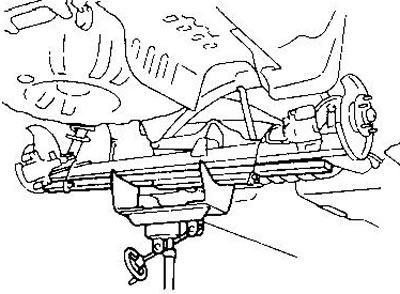
4. Lower the suspension with a jack and remove it from under the car.
5. Remove the trunk trim.
6. Loosen the nuts securing the shock absorber struts to the body and remove the struts downwards.
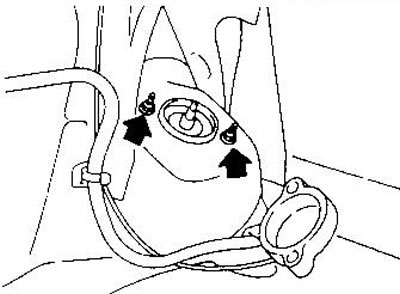
Installation
WARNING: Fill the brake system with DOT 3 or DOT 4 brake fluid. Never reuse drained brake fluid.
1. Attach the trailing arms and suspension crossmember to the body. Do not tighten the bolts completely.
2. Using a jack, position the suspension crossmember and transverse tie rod horizontally and parallel to the beam axis. Tighten the crossmember fasteners to the body.
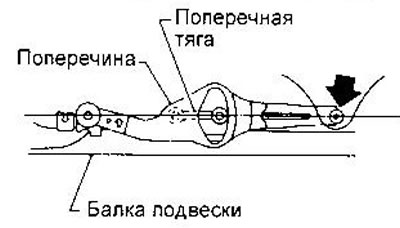
3. Attach the shock absorbers to the body, then tighten their lower fasteners.
4. Lower the vehicle and tighten the trailing arm fasteners to the body.
5. Connect the brake hoses and tighten the union nuts.
- Tightening torque: 15-18 Nm