


Table of contents: Checking the condition of the…↓ Checking the hydraulic fluid level ↓ Checking the hydraulic system for…↓ Checking the steering wheel turning…↓
Note: In the event of a complete or partial failure of the power steering system, it is important to immediately perform the following checks. Only on the basis of the results obtained can you begin restorative repairs.
Checking the condition of the steering pump drive belt
1. Carefully inspect the belt for cracks, polished areas and other damage. Replace the belt if necessary. Only the original belt should be used as a replacement.
2. If only a weakening of the tension force of a belt that is still suitable for further use has occurred, make the necessary adjustments.
Note: Typically the first sign of a loose drive belt is a squealing noise when turning or accelerating the engine due to increased load on the steering pump.
Checking the hydraulic fluid level
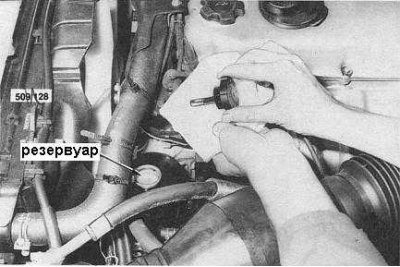
1. Check the fluid level in the power steering reservoir (see accompanying illustration). If the check is performed immediately after the vehicle has been in operation, use the HOT range on the dipstick blade. Accordingly, if the engine is cold, use the COLD range.
(The source is indicated on the page: «NISSANBOOK.RU»)
2. If necessary, add the required amount of fluid, bringing its level to the appropriate mark on the dipstick. Use only the required grade of fluid (see size and adjustment tables at the end of the Guide).
Note: Do not exceed the rated liquid level in the tank.
Checking the hydraulic system for fluid leaks
1. Using a suitable solvent, clean the surfaces of all suspected hydraulic system components, lines and fittings. Start the engine and turn the steering wheel from lock to lock several times, then stop the engine again. Inspect the system components for signs of leaks. If necessary, tighten any loose fittings and repeat the test.
Caution: Do not overtighten the union nuts.
2. If tightening the fittings does not correct the situation, refer to Section Basic checks and adjustments and disconnect the defective lines.
3. If the leak source is located in the area of the steering pump and hydraulic fluid reservoir assembly, specialist intervention is required.
Checking the steering wheel turning force
Note: A prerequisite for this check is that the tire inflation pressure and front wheel alignment are correctly adjusted. The vehicle must be parked on a level, dry asphalt or concrete surface.
1. Start the engine and set the parking brake.
2. Warm up the engine at idle speed to normal operating temperature, turn the steering wheel from lock to lock several times in order to warm up the hydraulic fluid of the power steering system.
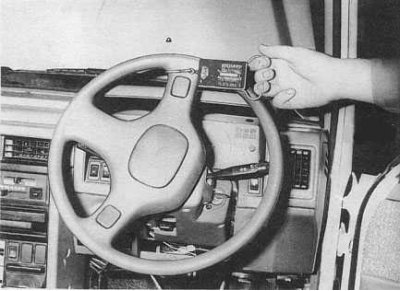
3. Attach a steelyard to the steering wheel (see accompanying illustration) and measure the force required to turn the steering wheel at least one revolution in both directions from the straight-ahead position. Compare the measurement result with the regulatory requirements (see size and adjustment tables at the end of the Guide).