


When removing air, do not add used fluid.
1. If liquids other than those recommended get into the system, flush it and replace all seals.
2. Before removing air, any leaks in the hydraulic drive must be eliminated.
3. Place the car on a level surface, stop the engine and apply the handbrake.
4. Remove the caps and wipe all fittings clean.
5. Remove the tank cap and add fluid up to the MAX mark.
6. Do not screw the lid on tightly, keeping in mind that the liquid level must always be maintained above the MIN mark.
7. If there is no special kit, air removal work should be performed by two people.
8. When using a special kit, follow the instructions included with the kit.
9. Regardless of the method, the pumping sequence must be followed.
10. If the hydraulic drive is partially depressurized, then you can limit yourself to removing air only from the depressurized circuit.
11. The sequence for bleeding the brakes is: rear left, front right, rear right, front left.
12. Prepare a transparent container and a hose.
 |
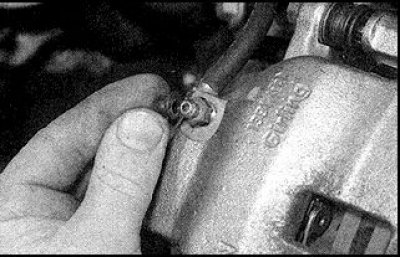 |
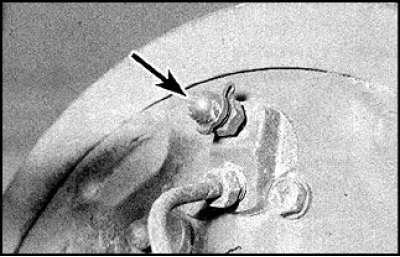
13. Place the hose on the fitting (the cap of the fitting is indicated by an arrow on the left).
14. Place the other end of the hose in a container and add some liquid.
15. Check the fluid level in the reservoir.
16. Ask an assistant to press and hold the brake pedal several times.
17. Loosen the nipple by 1 turn. When the liquid stops flowing, tighten the nipple and ask the assistant to release the pedal.
18. Check the fluid level in the reservoir.
19. Repeat this cycle until the air is removed from the system, as indicated by the absence of bubbles in the liquid flowing through the hose. Wait about 5 seconds between individual cycles.
Original text on the website: NissanBook.ru
20. Install the dust cap, tighten the nipple, remove the hose and put the cap on.
21. Repeat the procedure on the remaining wheels.
22. Check the fluid level in the reservoir.
23. After bleeding is complete, the brake pedal should be "hard".
24. Otherwise, repeat the procedure.
25. If after repeated bleeding the pedal remains "soft", then the cause is wear of the cylinder seals.