


Description
| Correspondence | Selected component | Selection criteria | Method of selection |
| Between the cylinder block and the crankshaft | Main bearing | Main bearing class (bearing thickness) | Determined by the compliance of the class of the main bearing housing in the cylinder block (inner diameter of the housing) and class of crankshaft journal (outer diameter of the neck) |
| Between the crankshaft and the connecting rod | Connecting rod bearing | Connecting rod bearing class (bearing thickness) | The selection of connecting rod bearings is determined by a combination of repair classes of the inner diameter of the large connecting rod head and the outer diameter of the connecting rod journal. |
- The class marking stamped on each part represents the class of geometric dimensions measured on a new part. This class does not apply to reused parts.
- Perform accurate geometrical measurements on reused or repaired parts. Determine the class by comparing the measurement results with the values given in the individual component selection tables.
- For more detailed information on how each part is measured, reuse standards and how to match components to the site, see the text.
The procedure for selecting connecting rod bearings
When new connecting rod and crankshaft are used
(Material borrowed from the website: «NISSANBOOK.ru»)
1 Find the connecting rod big end diameter class (C) stamped on the side of the connecting rod in the horizontal line of the "Connecting Rod Bearing Selection Table".
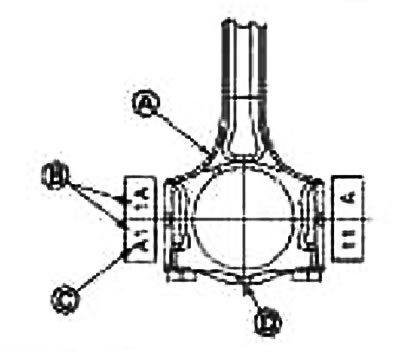
A. Main journal diameter class
B. Crankpin diameter class
D. Front Mark
2. Find the crankpin diameter class (B) stamped on the front of the crankshaft in the vertical column of the "Connecting Rod Bearing Selection Table".
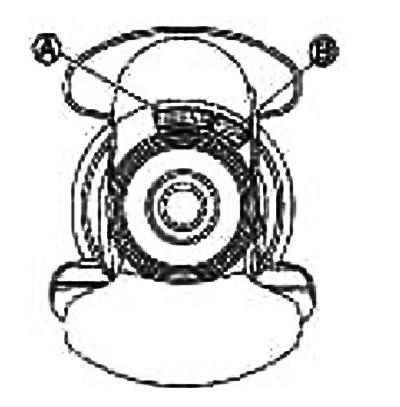
A. Lubrication hole
B. Cylinder number
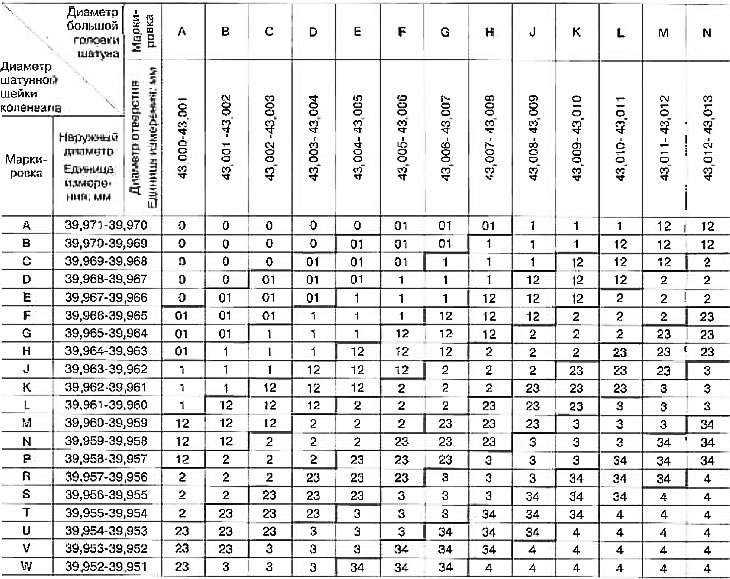
3. Read the symbol at the intersection of the horizontal line and vertical column in the "Connecting Rod Bearing Selection Table".
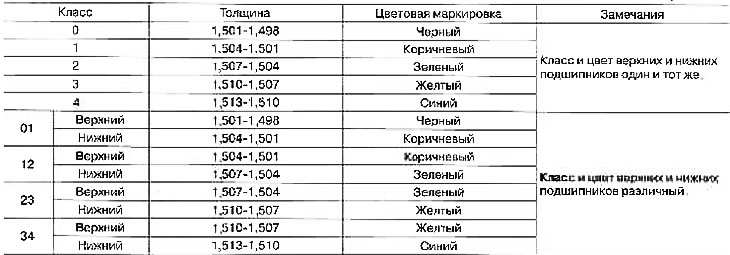
4. Select the connecting rod bearing by matching the resulting symbol with the values in the "Connecting Rod Bearing Class Table".
When old crankshaft and connecting rod are reused
1. Measure the inside diameter of the big end of the connecting rod and the outside diameter of the crankpin. Refer to the relevant sections.
2. Find the obtained value in the "Connecting Rod Bearing Selection Table".
3. Read the symbol at the intersection of the horizontal line and vertical column in the "Connecting Rod Bearing Selection Table".
4. Select the connecting rod bearing by matching the resulting symbol with the values in the "Connecting Rod Bearing Class Table".
Connecting rod bearing selection table
Connecting rod bearing class table
Unit: mm
Instructions for the use of bearings with reduced repair dimensions
If the specified oil clearance cannot be achieved with standard size connecting rod bearings, use undersize bearings.
When using an undersized bearing, measure the connecting rod bearing inside diameter on the installed bearing and regrind the connecting rod journal to obtain the specified oil clearance.
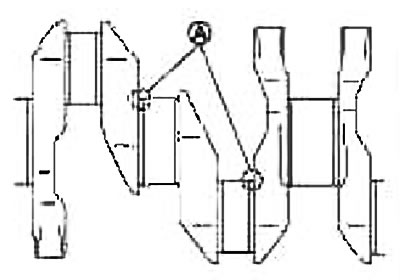
Caution: When regrinding the crank journals for bearings of reduced repair size, maintain the rounded corners R (A) (0.8-1.2 mm).
Table of bearings of reduced repair size
Unit: mm
| Size | Thickness |
| Reduced by 0.25 repair size | 1,623-1,631 |
The procedure for selecting main bearings
When a new cylinder block and crankshaft are used
1. The horizontal lines in the "Main Bearing Selection Table" correspond to the class of the main bearing housing stamped on the left side of the cylinder block.
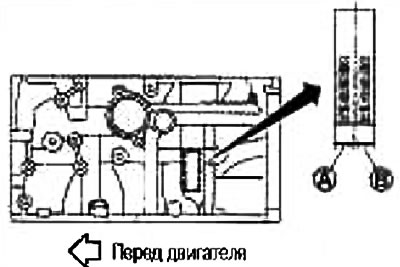
A. Main marking
If the cylinder block is stamped with an adjustment mark (B), use it as standard.
2. Find the main journal diameter class (A), stamped on the front of the crankshaft, in the vertical column of the "Main Bearing Selection Table".
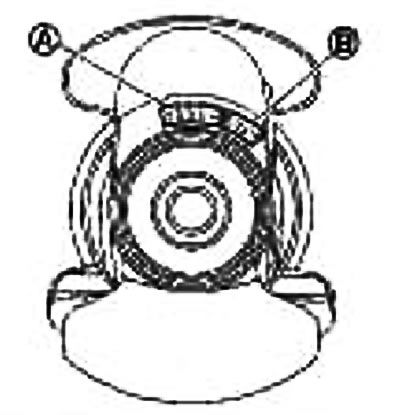
A. Main journal diameter class (Nos. 1-5 from left in order)
B. Crankpin diameter class (Nos. 1-4 from left in order)
3. Read the symbol at the intersection of the horizontal line and vertical column in the "Main Bearing Selection Table".
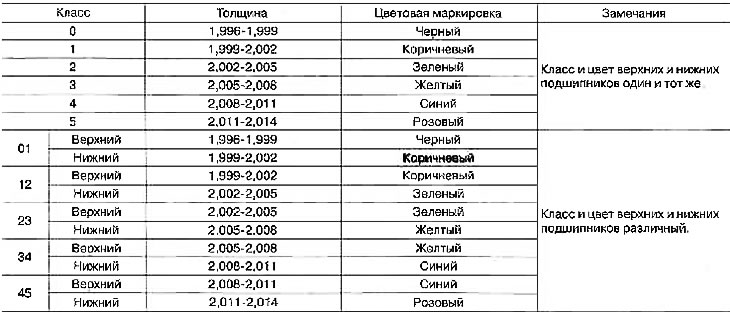
4. Select the main bearing by comparing the obtained symbol with the values in the "Main Bearing Class Table".
Main Bearing Selection Table
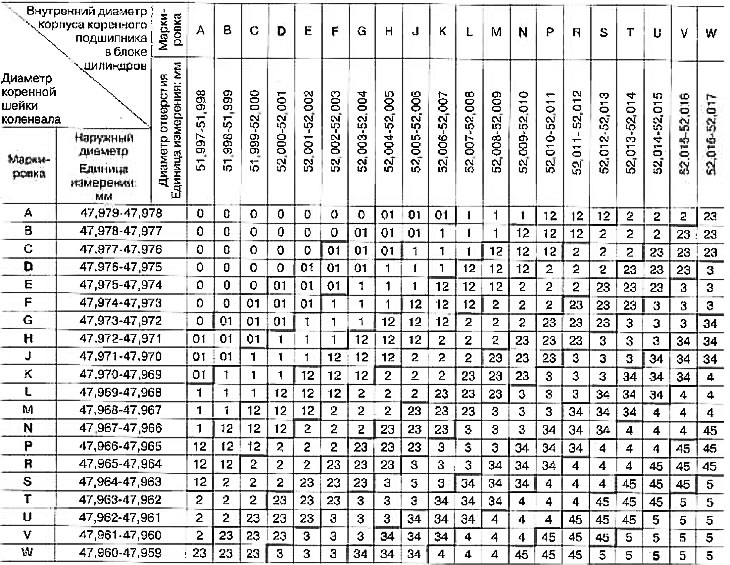
Table of classes of main bearings
Intent unit: mm
Instructions for the use of bearings with reduced repair dimensions
If the specified oil clearance cannot be achieved with standard size main bearings, use undersize bearings.
When using an undersized bearing, measure the main bearing inside diameter on the installed bearing and regrind the main journal to obtain the specified oil clearance.
Caution: When regrinding main journals for bearings of reduced repair size, maintain rounded corners R (A) (0.8-1.2 mm).
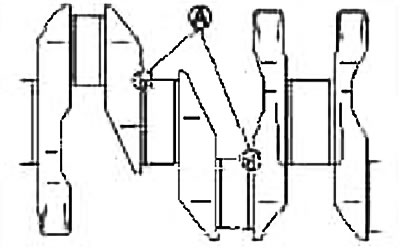
Table of bearings of reduced repair size
Unit: mm
| Size | Thickness |
| Reduced by 0.25 repair size | 2,126-1,134 |