


2. Prepare fresh transmission fluid of the appropriate grade (see Specifications at the beginning of the Chapter).
3. Other tools and materials required for the upcoming procedure include: stands to secure the vehicle in a raised position, a suitable sized Allen key with a long collar, a drain pan with a capacity of at least 7.5 litres and a supply of rags and/or old newspapers.
4. The fluid should be drained after being warmed up to normal operating temperature by a short drive. Hot ATF has a higher fluidity and is better at flushing out sludge and other deposits.
Warning! The working temperature of ATF can reach 180°C! Be careful, work with rubber gloves.
5. After making a short trip and warming up the ATF to normal operating temperature, park the car on a level horizontal area with a hard surface, jack it up and place it on supports, ensuring free access to the drain plug of the transmission case.
6. Place a drain pan and all necessary equipment under the transmission housing. Try not to touch the heated components of the power unit and exhaust system located under the bottom of the car.
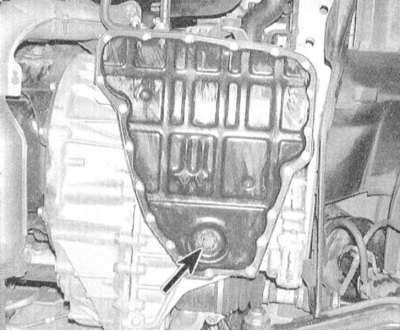
7. Having properly positioned the receiving container, unscrew the drain plug. Do not forget that at first the ATF will start to flow out with relative pressure, which, as the liquid level decreases, will gradually decrease - be ready to adjust the position of the drain container accordingly in time. When the liquid flow has completely stopped, wipe the drain plug, screw it into its regular place and tighten it firmly.
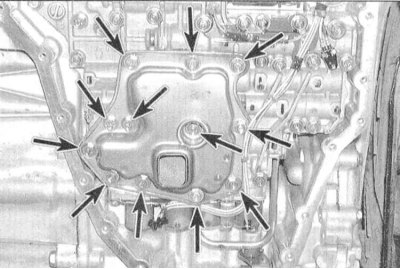
8. Unscrew the front transmission oil pan mounting bolts, then loosen the rear ones and, using a screwdriver to pry the pan off, release the remaining ATF from the AT oil pan. Once the fluid has finished flowing out, unscrew the remaining bolts and lower the pan to the ground. Unscrew the mounting bolts and remove the filter, lowering the assembly down. Be careful - some liquid will inevitably remain inside the filter.
9. Install a new filter in place of the removed one.
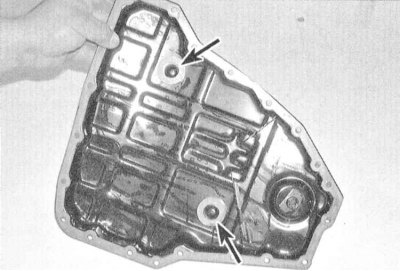
10. Carefully clean the mating surfaces of the transmission housing and the mounting flange of its pan, completely removing traces of the old gasket and sealant, wipe the inner surfaces of the pan. Remembering the installation positions of the components, remove the protective magnets from the pan, wash them in solvent and dry them with compressed air (don't forget to wear safety glasses). Do not forget to install the magnets in their original places in the tray, having previously replaced the gaskets.
11. After replacing the gasket, install the pan in its regular place and secure it with bolts, screwing them into their previous positions and tightening them by hand first. In several steps, 1/4 turn per approach, tighten the fasteners with the required force - do not overdo it!
12. Without starting the engine, remove the dipstick from the transmission housing and pour in the required amount of fresh fluid of the required grade through the hole in the guide tube (see Specifications). To minimize ATF loss, use a funnel. Add fluid in small portions, periodically checking its level on the dipstick (see section Checking the ATF level of an automatic transmission). Pause to allow the poured liquid to drain to the bottom of the tray.
Note: The ATF volumes listed in the Specifications at the beginning of this chapter include the torque converter. The above procedure does not drain all of the fluid in the transmission, so do not add more ATF to the crankcase than was drained. Always monitor the fluid level as you add it (see section Checking the condition of the cooling system components).
13. Start the engine, then slowly move the selector lever through all positions from "P" to "L", then return it to the original ("P"), and then set the parking brake.
14. With the engine idling, check the ATF level in the transmission and, if necessary, make the appropriate adjustments to bring the fluid level up to the COOL mark on the dipstick blade.
Data taken from this portal: nissanbook.ru