


Models with carburetor engine
Examination
1. Adjust the fuel mixture for idle mode (cO level) (cm. subsection 2.2.2).
2. Remove the fuse box cover to gain access to the diagnostic connector, which is located on the bottom of the fuse box.
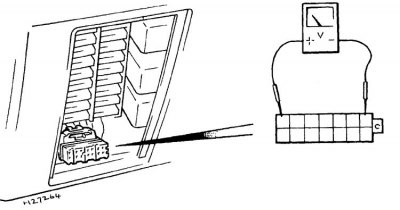
3. Set the tester to measure voltage and connect its probes to the fuse box test connector as shown in the figure.
4. Start the engine, increase the engine speed to about 2000 rpm and hold it there for about 2 minutes, watching the tester scale. If the exhaust gas sensor is working properly, the tester readings should change from 0 volts to about 12 volts at least 5 times every 10 seconds. If not, the sensor is probably faulty. For a more detailed check of the sensor and catalytic converter, contact specialists.
Fuel Injected Models
Examination
If the CO level in the exhaust gases is too high, the operation of the exhaust gas sensor must be checked by switching the engine control unit to self-diagnosis mode (see subsection 6.2.11).
For a more detailed check of the sensor and catalytic converter, contact a specialist.
Exhaust gas sensor
Warning! The exhaust gas sensor is very fragile and will fail if it is hit or dropped, if the power is disconnected while it is in operation, or if any cleaning agents come into contact with it.
Replacement
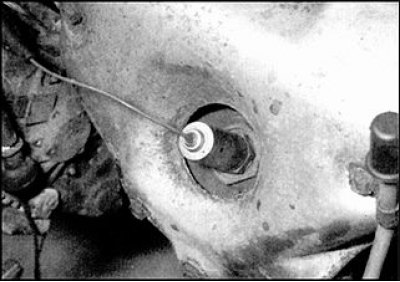
1. On 1.6-liter models, follow the wires from the exhaust gas sensor, which is screwed into the exhaust manifold. Disconnect the connection connector and remove the wires from all mounting clips.
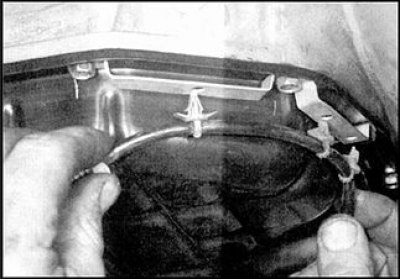
2. On 2.0L models, set the handbrake, raise the front of the car and support it on stands. Follow the wires from the exhaust sensor (which is screwed into the intake pipe), removing the wires from all the mounting clamps.
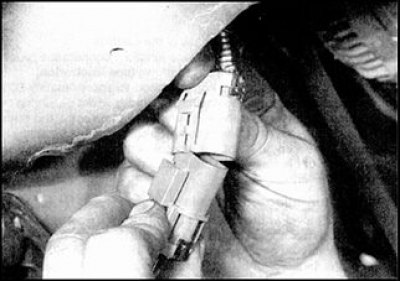
3. Disconnect the connection connector.
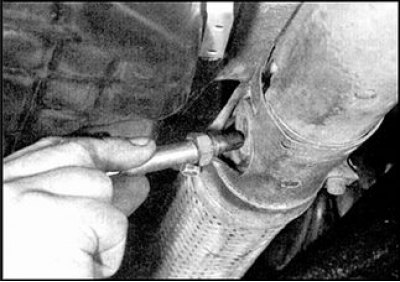
4. Unscrew the sensor and remove it together with the sealing washer.
5. Installation is carried out in the reverse order of removal. When installing, use a new sealing washer. Before installing the sensor, lubricate the sensor threads with high-temperature grease. Securely tighten the sensor. Check that the wires are correctly routed and do not touch the exhaust pipes or the engine.