


Warning! The vehicles covered in this Manual are equipped with an additional SRS safety system, better known as an airbag. Before performing any work in the vicinity of the airbag or steering column assembly, be sure to turn off the system to avoid injury if it is accidentally triggered (see Chapter On-board electrical equipment). The insulation and connectors of the SRS circuit wiring are painted bright yellow. Do not connect any diagnostic equipment to this circuit!
The air conditioning system is under constant high pressure. Never disconnect refrigeration lines or remove any system components without first discharging the system. Discharging the air conditioning system must be done by an experienced technician in a car service workshop. Always wear safety glasses when disconnecting refrigeration lines!
Do not allow antifreeze to come into contact with exposed areas of the body or painted surfaces of the vehicle. If any splashes do come into contact, wash them off immediately with plenty of water. Remember that antifreeze is a highly toxic liquid and its ingestion, even in small quantities, can have the most serious consequences (even to the point of death). Never leave antifreeze stored in a loosely closed container and immediately collect any coolant spilled on the floor. Remember that the sweet smell of antifreeze can attract the attention of children and animals. Consult any car service station about methods of disposal of used coolant. In many regions of the world, special collection points for various types of waste have been set up. Never pour old coolant into the sewer or onto the ground!
Note: Non-toxic types of antifreeze have been developed recently, but they must also be disposed of in an organized manner.
Wait until the engine has cooled down completely before starting the procedure.
It would be wise to entrust the heat exchanger replacement procedure to auto service specialists.
1. If the vehicle is equipped accordingly, have the air conditioning system discharged at a service station.
2. Move the heater control knob to the maximum heating position (HOT). Drain the cooling system (see Chapter Settings and ongoing maintenance). If the coolant has been changed recently, save it for future use.
3. Disconnect the negative cable from the battery.
Warning! If the car stereo system is equipped with a security code, make sure you have the correct combination to activate the audio system before disconnecting the battery!
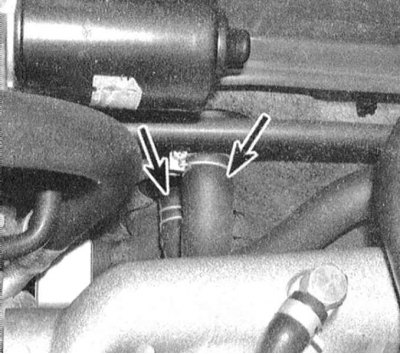
4. In the engine compartment, disconnect the engine cooling system hoses from the heater heat exchanger inlet and outlet pipes on the rear bulkhead of the engine compartment.
Note: It would be wiser to cut off "stuck" hoses to avoid accidental damage to the pipes.
5. Release the rubber pass-through tubes of the heater heat exchanger pipes from the engine compartment bulkhead.
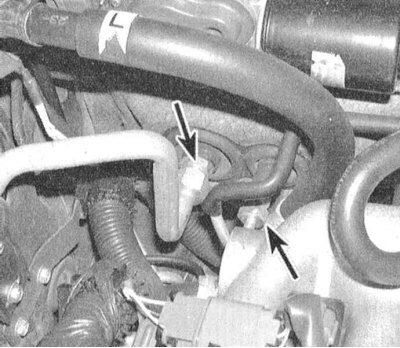
6. If the vehicle is equipped accordingly, disconnect the refrigeration lines from the air conditioner evaporator heat exchanger and remove the rubber grommet.
Caution: When disconnecting refrigeration lines, always wear safety glasses!
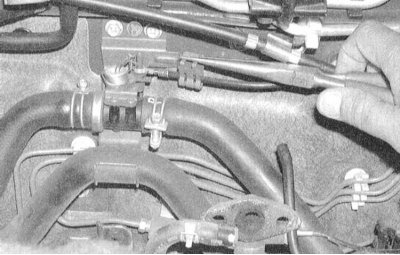
7. Loosen the retaining clamp and disconnect the heater core coolant supply flap drive cable. Release the cable from the engine compartment bulkhead so that it can be removed together with the heater housing.
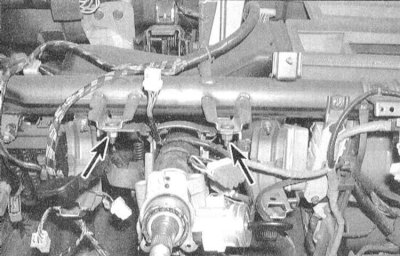
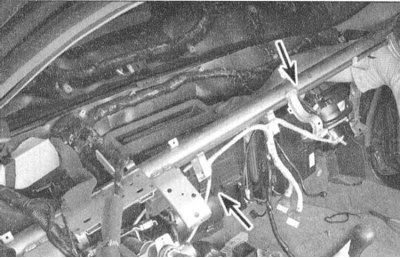
8. Lower the steering column. And remove the instrument panel (see Chapter Body). Remove the instrument panel spacer reinforcement bar.
The article was copied from here: www.nissanbook.ru
Note: Before attempting to remove the heat exchanger, make sure all fasteners are released.
 |
 |
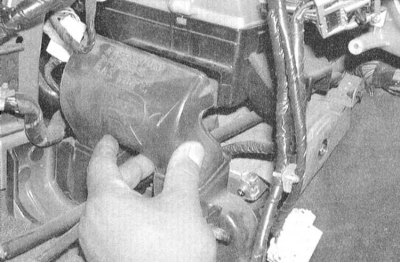
9. Remove the floor air duct with steel reinforcement bars, disconnect the associated electrical wiring, then remove the on-board processor (PCM) assembly.
 |
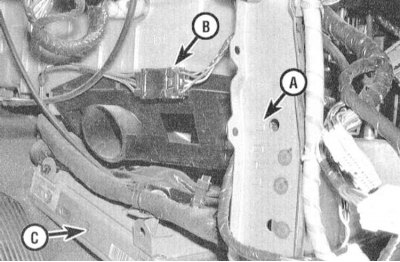 |
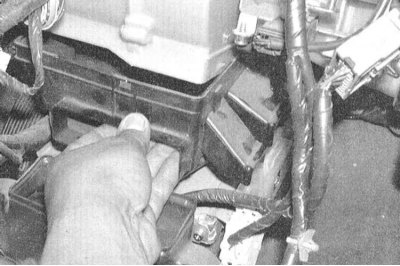
10. Disconnect the air duct sleeve from the bottom of the heater heat exchanger casing.
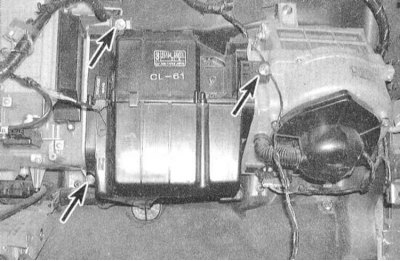
11. If the vehicle is equipped with the appropriate equipment, remove the evaporator heat exchanger housing assembly or the air duct located on the passenger side (models without K/V).
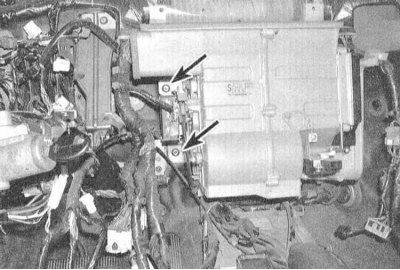
12. Loosen the bolts/nuts securing the heater assembly to the engine compartment bulkhead. Disconnect the control cables.
13. Pull the heat exchanger assembly down and back, making sure all the fasteners are released. If necessary, slightly rotate the assembly to separate it from the upper sleeves.
14. Remove the heat exchanger from the heater assembly.
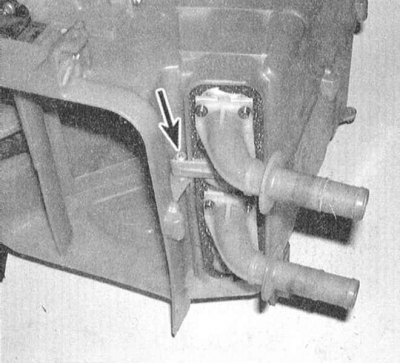 |
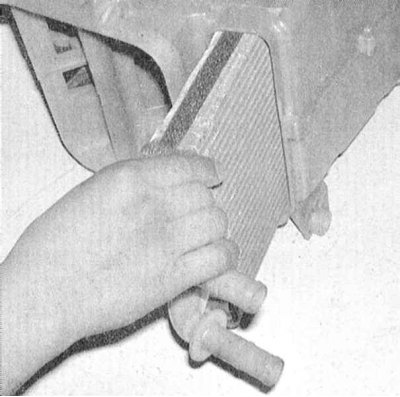 |
15. Assemble the heater and check the proper functioning of all flaps. Make any necessary corrections.
16. Install the components in the reverse order of their removal. Tighten the fasteners (bolts/nuts)steering column to the support bracket with a force of 5÷18 Nm.
17. Fill the cooling system and remove air locks from it (see Chapter Settings and ongoing maintenance). Reconnect the battery and start the engine. Check the heating system components for signs of leaks and proper operation. Recharge the air conditioning system.