


General information
The air conditioning system serves to cool and reduce the humidity of the air in the car.
The system can be used both separately in warm weather and together with the heater in cold weather. In the second case, dry warm air is supplied to the passenger compartment, which allows for the rapid removal of condensation from the windows.
The main components of an air conditioning system include the evaporator, condenser, compressor, receiver/dryer, expansion valve, and connecting fittings consisting of tubes and hoses through which liquid and/or gaseous refrigerant is pumped (see accompanying illustration). A set of various controls and sensors serves to stabilize the engine idle speed and to prevent excessive pressure fluctuations in the system.
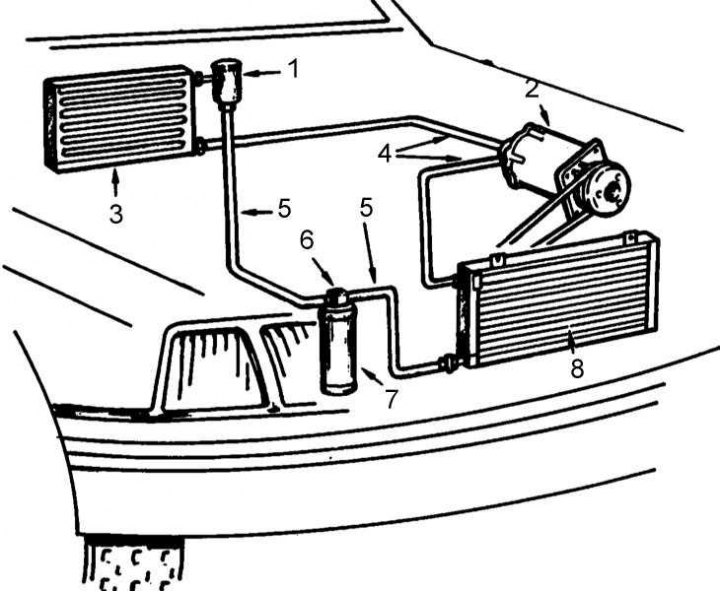
1 - expansion valve; 2 - compressor; 3 - evaporator; 4 - vapor phase lines; 5 - liquid lines; 6 - viewing window; 7 - receiver/dryer; 8 capacitor
The refrigerant boils at a very low temperature (- 33°C), which requires it to be kept under pressure at all times.
Warning! Escaping refrigerant can cause frostbite and eye damage, and when mixed with air, the refrigerant forms a toxic and flammable gas.
Along with the loss of refrigerant, there is also a loss of oil from the compressor, and therefore, the presence of traces of oil on any of the refrigeration line connectors is a sign of a refrigerant leak.
The authors of this Guide recommend that all work involving the need to disconnect refrigeration lines be entrusted to air conditioning system specialists.
In case of general repairs of the car, connected with the necessity of extracting the power unit, the designers have provided the possibility of removing the compressor from the engine without disconnecting the hoses (the length of the latter gives a certain degree of freedom of movement of the node) and securing it in the engine compartment away from the work area (on the mudguard of the wing).
Checking the refrigerant level (system charge level)
1. Start the engine and turn on the air conditioner to maximum cooling for a few minutes.
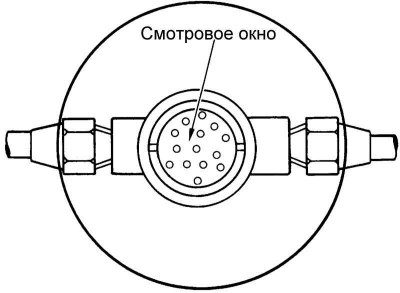
2. Observe the flow of refrigerant through the sight glass on the top of the receiver/dryer:
- If the system is functioning properly, the viewing window glass will remain transparent throughout the entire compressor operation time.
- Cycling the compressor on and off may cause occasional bubbling, but continuous bubbling of the flow indicates a drop in the system's charge level.
- Intense bubbling and foaming indicate a very strong drop in the refrigerant level.
- The complete absence of bubbles or the presence of streaks of oil indicate that the system is completely discharged.
Note: At high ambient temperatures, slight bubbling of refrigerant may be observed even when the system is fully charged.
3. If the system needs charging, the car should be taken to a specialized workshop where it is towed away (air release), leak testing and charging.
4. To avoid damage to the compressor, do not turn on the air conditioner if there are signs of a drop in the refrigerant level in the system.
Service
Note: The air conditioning system requires virtually no regular maintenance other than the procedures listed below.
1. Lubricate system components according to the vehicle's routine maintenance schedule.
2. Check the refrigerant level periodically through the viewing window on top of the receiver/dryer. Recharge the system if necessary. The need to recharge the air conditioning system regularly is normal and should not cause concern.
3. Periodically check the condition of the refrigeration lines of the air conditioning system for signs of leaks and external damage. The presence of traces of oil on the nipple connections is a sign of refrigerant leaks. Perform the necessary repairs.
4. Periodically check the evaporator drain pipe and the condenser heat exchanger flow section for signs of blockage. Clean if necessary.
5. Regularly check the condition and tension of the compressor drive belt.
6. Regularly at any time of the year (at least once a week) run the air conditioning system for 10-15 minutes to lubricate the internal seals.