


Warning! Prolonged skin contact with used engine oil is quite dangerous. Use a barrier cream or wear rubber gloves when performing the procedures described below.
Note: Frequent engine oil changes are the most important preventative maintenance procedure available to the amateur mechanic. Over time, oil is susceptible to dilution and contamination, leading to premature engine wear.
Draining engine oil
Note: Engine oil can be sucked out using a probe through the dipstick guide tube.
1. Warm up the engine to the operating temperature of the coolant.
2. Jack up the car and place it on supports, or drive it into an inspection pit.
3. Remove the filler cap and place a container of suitable volume under the drain plug to collect the used oil.
4. Remove the drain plug from the oil pan and allow the oil to drain completely.
Caution! Do not burn your hands with hot leaking oil!
5. Check the condition of the used oil. If it contains a large amount of metal shavings and wear products, this indicates the presence of scoring, for example, in the crankshaft bearings and connecting rod bearings. To avoid damage after the repair, thoroughly clean the oil channels and hoses, and, if equipped, replace the oil cooler.
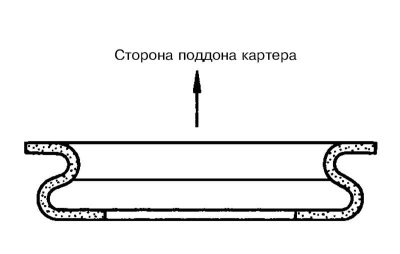
6. Clean the drain plug and screw it in new sealing ring into the oil pan. Tighten the drain plug with force 29.4÷39.2 Nm and lower the car to the ground.
Note: Install the drain plug sealing ring as shown in the illustration.
Replacing the oil filter
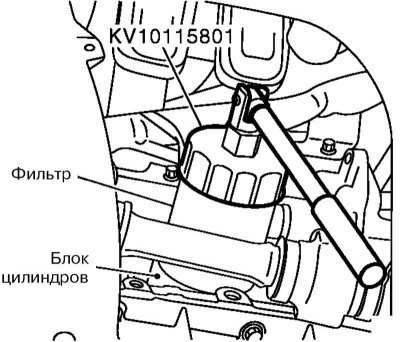
1. Unscrew the oil filter using a special key.
Note: You can also remove the filter by piercing it with a sharp screwdriver.
2. Wipe off any leaked oil, clean the filter flange on the cylinder block and remove any remaining seal from it.
3. Lubricate the rubber sealing ring of the new oil filter with a thin layer of clean engine oil.
4. Screw in the new filter by hand. After the sealing ring is pressed against the cylinder block, tighten the filter another 2/3 of a turn (120 degrees). The final tightening force of the oil filter is 14.7÷20.5 Nm. Please pay attention to the instructions on the filter housing.
Filling the engine with oil
Note: When changing, use the same type and, if possible, the same brand of oil. For this purpose, it is recommended to attach a label to the engine indicating the brand and viscosity of the oil each time the oil is changed. Engine oils of the same type and the same brand, but of different viscosity, can be added during the appropriate time of year. Before adding oil of a different brand, the lubrication system should be flushed.
1. Fill with engine oil (see section Checking fluid levels, leak monitoring) the volume is approximately half a liter less than indicated in Specifications.
2. Start the engine and let it idle while checking for engine oil leaks. Pay particular attention to the filter and drain plug.
3. Wait 5 minutes, then check the oil level and adjust it if necessary.
4. Test drive the vehicle and recheck the drain plug and oil filter for leaks. Tighten them slightly if necessary. Check the oil level again and adjust it if necessary.