


Attention! The procedure is performed on a completely cooled engine, observing safety precautions for working with toxic liquids.
1. Carefully unscrew the radiator cap, wrapping it with a rag.
2. Move the heater control lever to the "hot" position.
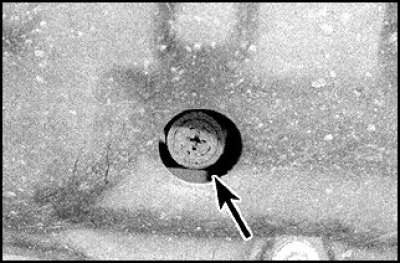
3. Unscrew the radiator drain plug (indicated by the arrow).
[Data copied from web resource: NISSANBOOK.ru]
4. Drain the liquid into a container, taking care to prevent liquid from coming into contact with the drive belts or rubber parts.
5. If necessary, remove the expansion tank, drain the remaining liquid and rinse.
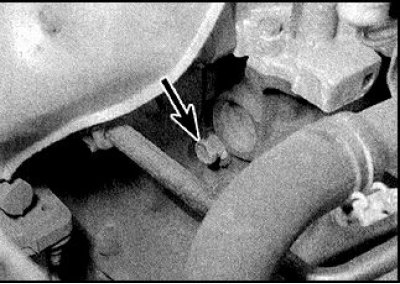
6. Place a container under the cylinder block drain plug (indicated by the arrow).
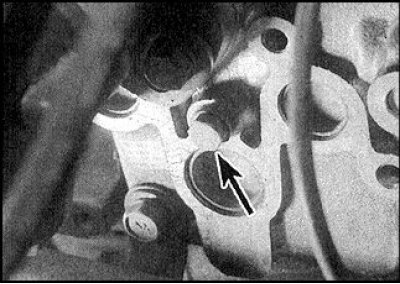
7. Unscrew the plug on the cylinder block, then unscrew the air bleed nipples (the nozzle is indicated by the arrow). Drain the fluid from the cylinder block.
8. Screw in the drain plug, fill the radiator with clean water. After the water flows out of the engine, screw in and tighten the cylinder block drain plug.
9. Continue pouring water until water flows out of the air bleed holes. Replace the air bleed plugs and tighten to the specified torque.
10. Add water up to the MAX mark of the expansion tank, tighten the radiator cap tightly.
11. Start the engine and warm it up until the auxiliary cooling fan comes on. Bring the engine speed up to 3000 rpm 2-3 times, stop the engine and wait until it cools down completely.
12. Repeat steps 3–11 until the water coming out is clear.
13. Drain the water and repeat steps 8–10, but this time add antifreeze in the required proportion. Lubricate the cylinder block drain plug with a locking compound and tighten to the specified torque.
14. Start the engine and warm it up to operating temperature, stop the engine and wait until it cools down completely.
15. Make sure there are no leaks from the disassembled connections. Check the fluid level in the expansion tank, top up if necessary.