


Table of contents: Total steering play ↓ Checking the neutral position of the…↓ Wheel turning angles ↓ Steering gear housing offset ↓ Checking and adjusting drive belts…↓ Checking the fluid level in the…↓ Checking for leaks ↓ Bleeding air from the hydraulic…↓ Checking the steering wheel turning…↓ Checking the hydraulic system ↓
Total steering play
Set the wheels to the straight-ahead position and measure the steering wheel free play (on the rim).
- Free play of the steering wheel - no more than 35 mm
If the total play measured across the steering wheel rim exceeds the specified value, check the tightness of the fasteners and the condition of the following components:
- Steering gear
- Steering column
- Front suspension
Checking the neutral position of the steering wheel
Check the front wheel alignment angles first (see chapter "Front suspension"). Before removing the steering wheel, make sure that the steering gear is correctly centered.
1. Check the position of the steering wheel when driving straight.
2. The shoe and wheel move away from the neutral position, remove it and reinstall it on the shaft.
3. If the deviation from the neutral position does not exceed two splines, loosen the steering rod locknuts and adjust the steering wheel position by turning the rods in opposite directions by the same amount.
Wheel turning angles
1. Mount the wheels on the measuring table and measure the maximum inward and outward turning angles. The required data is given in Chapter "Front suspension".
2. If the measured angles differ from those specified, check the steering rack travel. Its value is given in the section "Data for adjustments and control".
Steering gear housing offset
The crankcase displacement check is performed with the vehicle stationary, on a dry road surface.
1. Apply a force of 49 N (5 kgf) to the steering wheel and measure the displacement of the crankcase. The ignition key should be in the OFF position.
- Crankcase offset - no more than 2 mm
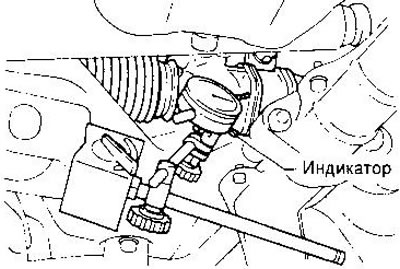
2. If the displacement exceeds the specified value, replace the rubber supports (having first checked the correct installation of the steering gear mounting brackets).
Checking and adjusting drive belts (for power steering)
See section "Checking drive belts" chapters "Maintenance".
Checking the fluid level in the power steering reservoir
See section "Checking the power steering" chapters "Maintenance".
Checking for leaks
Check hoses for leaks, cracks, loose fittings, abrasions and damage.
1. Start the engine and maintain the speed between idle and 1000 min⁻¹.
Make sure that the temperature of the liquid in the tank has risen to 60-80°C.
2. Turn the steering wheel from lock to lock several times.
3. Hold the steering wheel in each extreme position for 5 seconds and check for fluid leaks.
WARNING: Do not hold the steering wheel in the lock position for more than 15 seconds.
4. If leaks are noticed at the connections, loosen the union nuts and tighten them again. Do not overtighten the connections, as this may damage the sealing rings, washers and the connections themselves.
5. Check for accumulation of working fluid in the rack protective covers.
(Original text on the website NISSANBOOK)
Bleeding air from the hydraulic system
1. Raise the front of the vehicle until the wheels are off the ground.
2. Add fluid to the reservoir to the normal level. Then quickly turn the steering wheel from lock to lock, without holding it in extreme positions. Repeat these steps until the fluid level in the reservoir stops falling.
3. Start the engine. Repeat step 2.
The following signs indicate that air has not been completely removed from the system:
- Air bubbles in the tank
- Clicking noise in power steering pump
- Increased pump hum
There may be a fluid noise coming from the valve or pump. This usually occurs when parked or when turning the steering wheel slowly and does not affect the efficiency or life of the power steering.
Checking the steering wheel turning force (for power steering)
1. Place the vehicle on a level, dry surface and apply the parking brake.
2. Start the engine.
3. Warm up the working fluid to normal temperature (60-80°C).
The tires must have normal air pressure.
4. Measure the steering wheel turning force after turning it 360° from the neutral position.
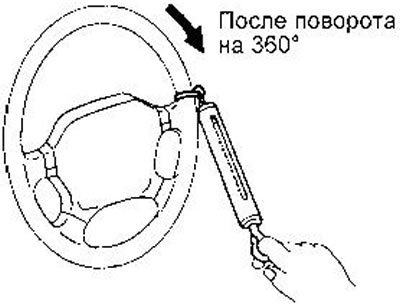
- Turning force - no more than 39 N (4 kgf)
5. If the force exceeds the specified value, check the rack shift force. To do this, disconnect the lower steering shaft joint from the steering gear and the steering rods from the steering knuckles. Start the engine and make sure that the fluid has warmed up to normal operating temperature. Then slowly move the steering rod from the neutral position by = 11.5 mm at a speed of 3.5 mm/s.

- Average rack shear force 152-240 N (15.5-24.5 kgf)
- Maximum deflection - 98 N (10 kgf)
6. If the rack shift force is not within the specified limits, the steering mechanism is subject to major repairs.
7. If the rack shift force is normal, check the steering column.
Checking the hydraulic system
First, you should check the tension of the pump drive belt, drive pulley and tire pressure.
1. Attach a pressure gauge and open the shut-off valve. Then bleed the air from the system (see the section "Bleeding air from the hydraulic system").
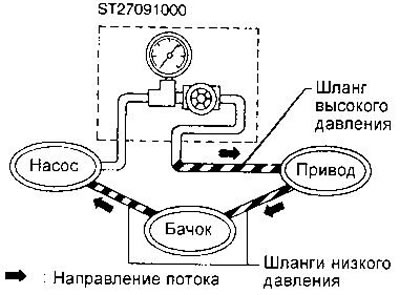
2. Start the engine. Make sure that the temperature of the liquid in the tank has risen to 60-80°C.
CAUTION: Warm up the engine with the shut-off valve fully open. If the engine is started with the valve closed, the fluid pressure in the pump will rise to the maximum, causing the oil temperature to rise abnormally.
3. Check the pressure at the extreme positions of the steering wheel at an engine speed of 1000 min⁻¹.
WARNING: Do not hold the steering wheel at full lock for more than 15 seconds.
- Maximum oil pressure 7649 8238 kPa (78 84 kgf/cm²)
4. If the pressure is less than the specified value, slowly close the valve and check the pressure again.
If the pressure has returned to normal, then there is damage in the steering mechanism.
If the pressure remains low, the pump is damaged.
WARNING: Do not keep the valve closed for more than 15 seconds.
5. If the oil pressure is higher than normal, check the pump discharge valve.
6. After checking the hydraulic system, disconnect the pressure gauge and add fluid if necessary. Then remove air from the system.