


Table of contents: Examination ↓ Removal (separate regulator) ↓ Installation (separate regulator) ↓ Removal and installation (built-in…↓
Examination
WARNINGS:
- When measuring the pressure, press the brake pedal slowly.
- For ABS models, disconnect the connector from the actuator relay before checking.
1. Attach pressure gauges to the air bleed valves on one of the front and rear brake assemblies.
2. Remove air from the pressure gauges.
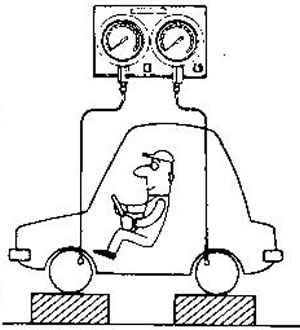
3. Monitor the pressure in the rear brakes, gradually increasing the force of pressing the pedal.
[Data taken from this portal: www.NissanBook.ru]
If the regulator outlet pressure is not within the specified limits, replace the regulator (in models with a separate regulator) or master brake cylinder (in models with built-in regulator).

4. Disconnect the pressure gauges and bleed air from the hydraulic drive (see the relevant section of this chapter).
Removal (separate regulator)
1. Drain the brake fluid through all the air bleed valves.
2. Loosen the union nuts.
3. Remove the regulator mounting bolt, then completely unscrew the union nuts and disconnect the tubes.
Installation (separate regulator)
1. Tighten the brake pipe union nuts.
2. Tighten the regulator mounting bolt, then drive in the union nuts, inserting a wooden block between the regulator body and the instrument panel.
- Cap nuts - 15-18 Nm
- Regulator mounting bolt - 5.1-8.8 Nm
3. Fill the system with new brake fluid.
4. Remove air from the system (see section "Removal air from the hydraulic drive").
Removal and installation (built-in regulator)
See section "Master brake cylinder".
Replace the pressure regulator only together with the master cylinder.