


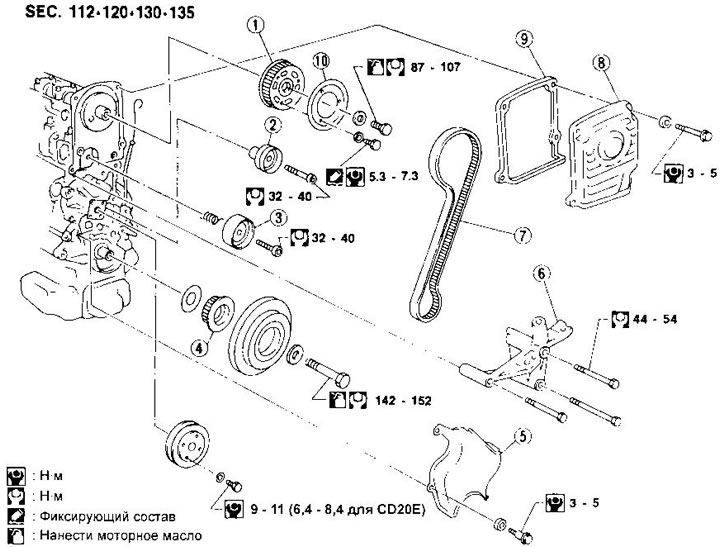
1. Front timing belt pulley
2. Intermediate roller
3. Tension roller
4. Crankshaft toothed pulley
5. Lower timing belt cover
6. Timing belt center cover (engine mount bracket)
7. Toothed belt
8. Upper timing belt cover
9. Gasket
10. Timing belt guide
Removal
1. Drain the coolant from the radiator.
2. Remove the upper radiator hose and upper timing belt cover.
3. Remove the water pump pulley.
4. Set the piston of the first cylinder to TDC of the compression stroke according to the marks on the crankshaft pulley.
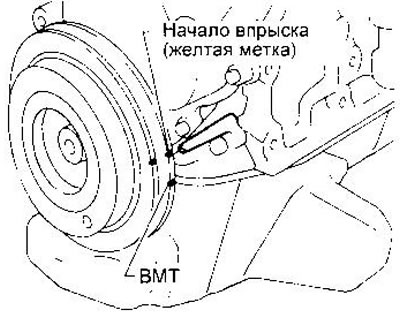
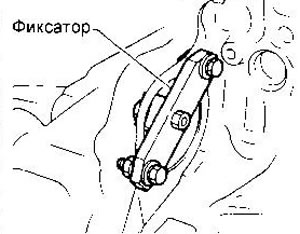
5. Remove the starter and install the flywheel retainer using the released holes in the mounting bolts.
6. Loosen the crankshaft pulley mounting bolts and remove the pulley using a puller. Attach the puller jaws only to the rear of the pulley.
7. Remove the lower timing belt cover.
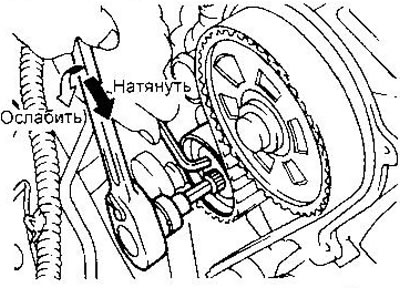
8. Loosen the tension roller bolt, turn the roller counterclockwise and tighten the bolt again. Then remove the timing belt guide from the camshaft pulley.
9. Remove the intermediate roller.
10. Remove the toothed belt together with the crankshaft pulley.
11. Remove the tension roller and return spring.
Checking the timing belt
Visually inspect the condition of the timing belt. If any of the following defects are found, replace the belt.
a) The teeth are broken or have cracks at the base.
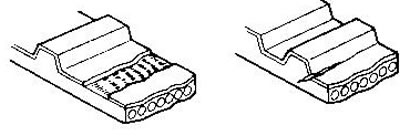
Possible reasons:
- Seized camshaft or distributor
- The crankshaft and/or camshaft seals are damaged
b) The reverse side of the belt is badly worn or has cracks.
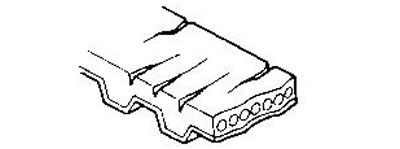
Possible reasons:
- Tension roller jamming
- Engine overheating
- The belt is catching on the lid
c) The side surface of the belt is worn. The edges of the belt are rounded, the cord threads are frayed and protrude outside.
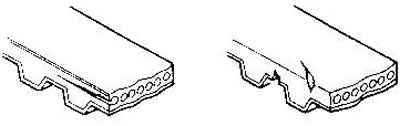
Probable causes:
- Incorrect belt installation
- The belt guide on the toothed pulley of the crankshaft and/or camshaft is faulty
d) Wear of teeth. The outer coating on the thrust surface of the teeth is worn off, the rubber layer underneath is worn and has a whitish color.
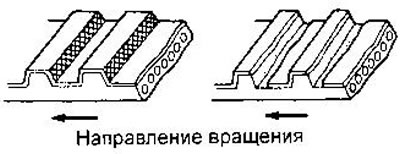
Possible reasons:
- Poor seal on belt cover
- Leak in water pump
- Incorrect operation of the camshaft
- Incorrect operation of the distributor
- Excessive belt tension
e) Oil, coolant or water getting on the belt.
Possible reasons:
- Poor sealing in the oil seals
- Leak in water pump
- Poor seal on belt cover
Installation
1. Install the belt guide onto the crankshaft.
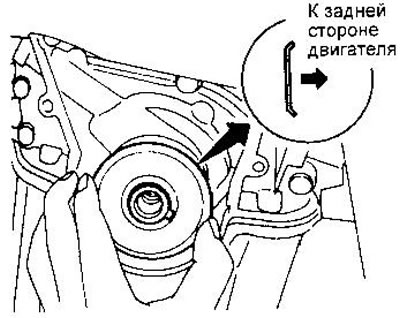
2. Check if the piston of the 1st cylinder is at TDC of the compression stroke (the crankshaft protrusion must be located at the top).
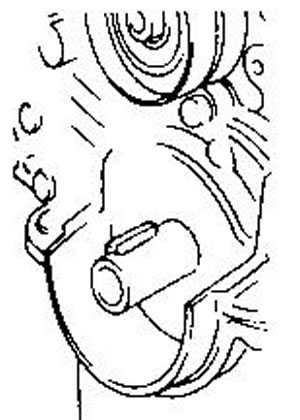
3. Install the tensioner pulley and return spring. Move the pulley outward and temporarily tighten the mounting bolt to secure the pulley in this position.
4. Install the idler roller and tighten the mounting bolt to the specified torque.
5. Install the belt together with the crankshaft toothed pulley.
The white lines on the belt must be aligned with the marks stamped on the crankshaft and camshaft spongy pulleys.
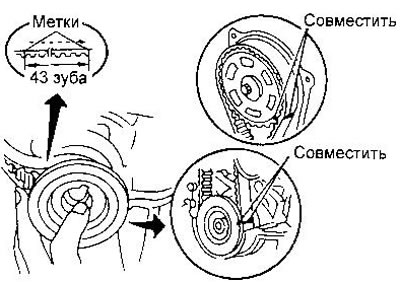
The arrow on the belt should point towards the belt cover.
6. Install the belt guide onto the camshaft pulley and tighten the bolts, after applying a locking compound to their threads.
7. Adjust the timing belt tension as follows:
- a) Loosen the tension roller lock bolt. The required tension will be set automatically.
- b) Turn the crankshaft clockwise two turns to distribute the tension.
- c) Tighten the tension roller lock bolt while holding the roller with another wrench.
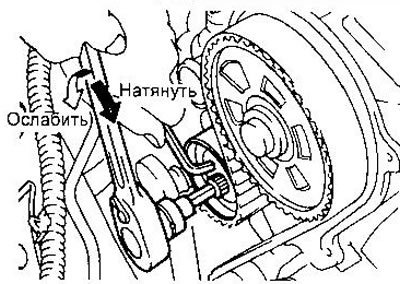
Belt tension: 147.1±24.5 N (15±2.5 kgf).