


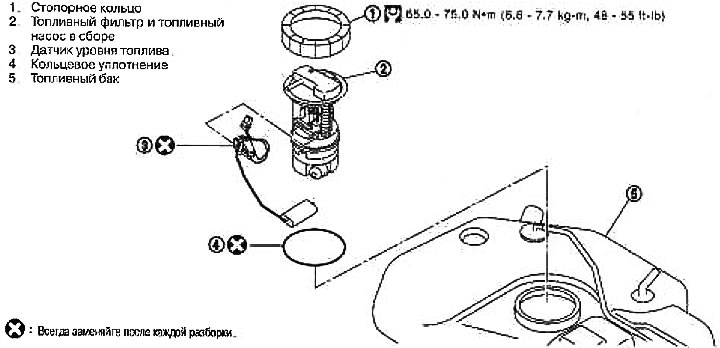
1. Retaining ring; 2. Fuel filter and fuel pump assembly; 3. Fuel level sensor; 4. O-ring seal; 5. Fuel tank
Removal
Warning: Before working on the fuel system, read "General precautions".
1. Check the fuel level, If the indicator shows a level higher than the figure (full or almost full tank), drain the fuel from the tank and bring the gauge reading to the level shown in the figure or less.
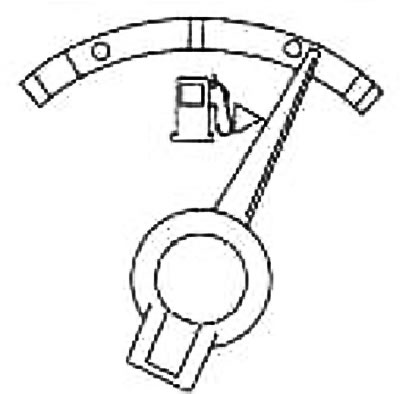
If the fuel pump does not work, insert a hose with a diameter of less than 25 mm into the filler pipe through the hole and drain the fuel from the filler pipe. Disconnect the hose and filler pipe and drain the fuel from the filler hose.
The fuel level will drop to the level shown in the figure or below approximately after draining approximately 7 litres of fuel from the tank
Note: The fuel is drained to avoid spilling fuel when removing the fuel level sensor, fuel filter and fuel pump assembly.
2. Relieve the fuel pressure. See chapter Engine management system.
3. See steps 5-7. Disconnect the connectors from the fuel level sensor, fuel filter and fuel pump assembly.
- a. Start the engine. After it stalls, crank it two or three times and release the pressure in the fuel line.
- b. Open the fuel filler door.
4. Remove the filler cap and release the pressure inside the fuel tank.
5. Remove the rear seat.
6. Remove the cover from the inspection hatch.
Remove the cover by turning the clamps 90° clockwise using a screwdriver.
7. Disconnect the connector and fuel hose from the sending unit.
Note: The sending unit is the location where the electrical connector and fuel hose are connected.
Disconnect the quick release fitting as follows:
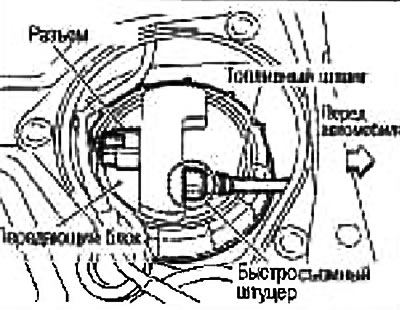
Grasp the fitting on both sides, press the latches and remove the fuel pipe.
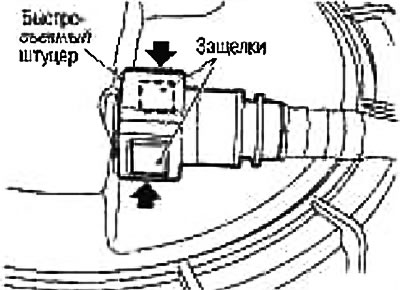
If the nipple is stuck to the tube of the sending unit, wiggle them back and forth a few times until they come free. Then disconnect them by pulling them in different directions.
Attention:
- The tube can be disconnected when the latches are fully recessed.
- Don't twist it more than necessary.
- Do not disconnect the quick release fitting using any tools.
- Protect the plastic tube from heat, especially when welding near the tube.
- Do not allow acidic liquids, such as battery electrolyte, etc., to come into contact with the plastic tube.
- Do not bend or twist the plastic tube when connecting or disconnecting.
To keep the connection area clean and to prevent damage and foreign particles from entering, completely cover it with plastic bags, etc.
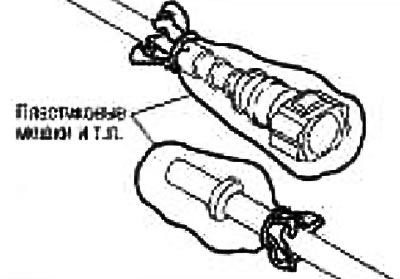
Caution: To avoid damaging the O-ring in the quick release fitting, do not insert plugs.
8. Unscrew the retaining ring using a wrench (special tool: KV993G0010).
Caution: Turn the special tool while pressing the fuel level sensor, fuel filter and fuel pump assembly because there is a spring acting from the inside of the fuel tank outward.
9. Remove the fuel level sensor, fuel filter and fuel tank assembly.
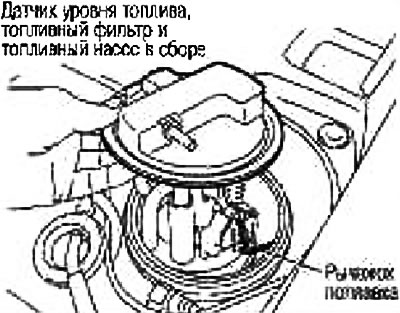
Attention:
- Do not bend the float lever when removing.
- Do not hit or drop components.
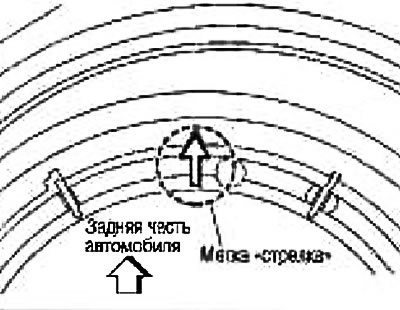
10. Temporarily install the retaining ring by hand tightening it to the stop with maximum force.
Turn the "arrow" mark on the retaining ring towards the rear of the vehicle.
Caution: Do not remove the retaining ring until the fuel level sensor, fuel filter and fuel pump assembly are installed.
11. Remove the fuel level sensor as follows:
- a. Disconnect the connector (brown).
Grasp the connector with your fingers, as there is no latch to release the stopper. Pull downwards at a right angle.
- b. Insert a screwdriver into the gap between the left side of the fuel level sensor and the fastener. Pry the screwdriver in the direction of the arrow.
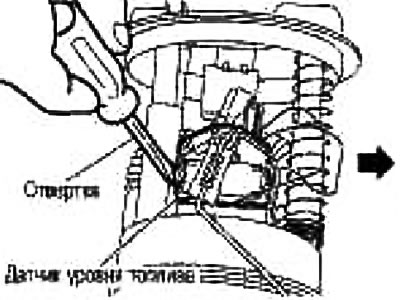
Caution: Do not damage the components.
Once the retaining clip has released, slide the fuel level sensor in the direction of the arrow and remove it.
Attention:
- Do not reuse the removed fuel level sensor.
- Do not disassemble the fuel filter and fuel pump assembly.
Installation
Installation is carried out in the reverse order of removal, taking into account the following:
Installing a fuel level sensor
1. Check for damage to the fuel level indicator fastener on the fuel filter and fuel pump assembly side.
2. Insert the fuel level sensor into the installation groove. Insert the sensor until it stops.
After installation, apply force in the opposite direction (direction of removal). Make sure the sensor does not slip off.
3. Connect the connector. Insert the connector until it stops.
Installing the fuel level sensor, fuel filter and fuel pump assembly
Perform the installation as follows:
1. Unscrew the retaining ring.
2. Place the O-ring on the fuel tank without twisting it.
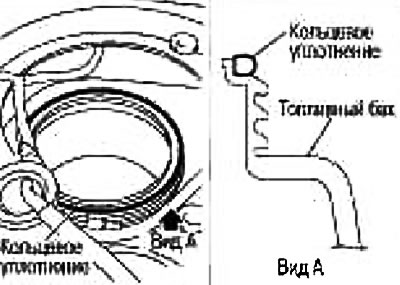
3. Install the fuel level sensor, fuel filter and fuel pump assembly by aligning the tab on the rear of the sending unit with the cutout on the rear of the opening in the fuel tank.
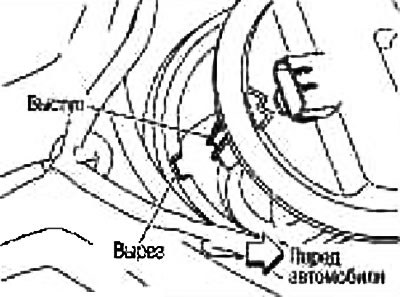
Attention:
- Do not drop the O-ring.
- To prevent the O-ring from falling out (to maintain the state shown in figure p. 2, type A) press the fuel level sensor, fuel filter and fuel pump assembly firmly against the fuel tank opening until step 5 is completed.
4. Turn the "arrow" mark on the retaining ring towards the rear of the vehicle.
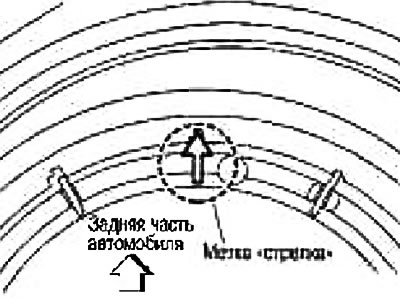
Then turn the locking ring clockwise, tightening it by hand until it stops with maximum force.
Caution: Install the retaining ring horizontally.
5. Tighten the retaining ring to the required torque using a wrench (special tool: KV993G0010).
Installing the fuel hose
Connect the quick release fitting as follows:
1. Check that there is no damage to the joints and that no foreign particles have gotten into them.
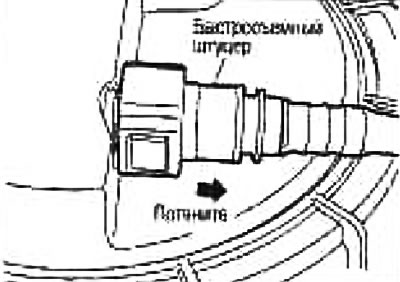
2. Center the nipple with the transmitter unit, then insert the nipple into the tube at a right angle until it clicks into place.
3. After connecting, make sure the connection is secure by pulling the tube and fitting by hand (see fig.).
Post-installation check
Check for fuel leaks by performing the following steps:
1. Turn the ignition key to the "ON" position (without starting the engine). After creating pressure in the fuel lines, check for fuel leaks at the joints.
2. Start the engine. Increase the engine speed and check again for fuel leak loops at the fuel line joints.