


Engine cooling system diagram
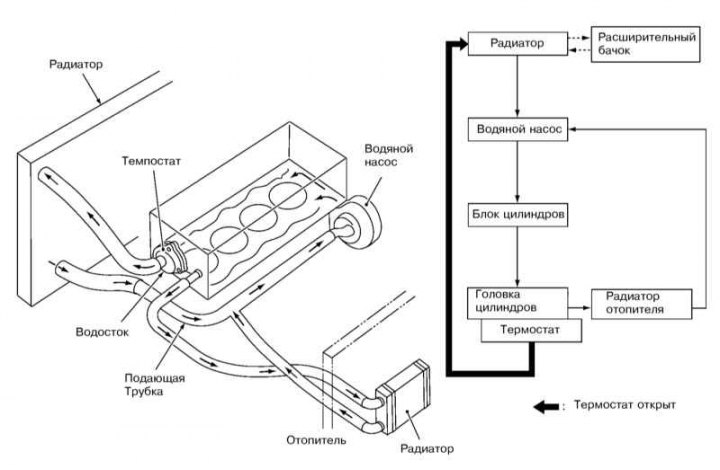
The engine cooling system operates according to the following algorithm. Until the engine is warmed up, the coolant (coolant) is pumped by a constantly operating water pump only in the cylinder head and block, as well as in the heat exchanger of the interior heater. When the coolant temperature rises to a certain level, the thermostat opens a large cooling circuit and the coolant circulates additionally through the radiator, cooling itself with the air passing through it. When the coolant temperature reaches an even higher value, the electric fan of the cooling system turns on, which creates an additional air flow through the radiator fins for more intensive heat removal from it. The water pump is driven by a belt from the crankshaft.
Before working in the engine compartment, especially in the radiator fan area, be sure to disconnect the negative battery cable and the fan wiring connector, as it may turn on due to thermal conductivity even when the ignition is off.
Do not open the coolant expansion tank or radiator cap until the engine has cooled down completely to avoid being burned by hot liquid or its steam.
If you need to open the expansion tank cap when the engine is hot, wrap it with a rag. Remove the cap slowly, gradually reducing the steam pressure.
Descriptions of checking and adjusting the coolant level, replacing the coolant, and some cooling system checks are provided in Sections Checking fluid levels, leak monitoring, Checking the condition and replacing hoses and tubes in the engine compartment, localizing leaks and Replacing the coolant.