


Direct fuel injection system
1. The processor unit processes information from sensors and controls the operation of ignition and fuel injection systems, maintaining a stoichiometric ratio of gasoline and air. The unit also provides system diagnostics and turns on indicator lamps. The unit has a stabilized power source built into it to power various sensors.
2. The crankshaft rotation sensor (photo) generates the main signal for the ECCS unit. It consists of a rotor with a slot structure and a former assembled on an optical pair. There are 2 groups of slots on the rotor - located through 1° (to register rotation) and paired slits located at 120° (to register the rotation of the crankshaft relative to TDC).
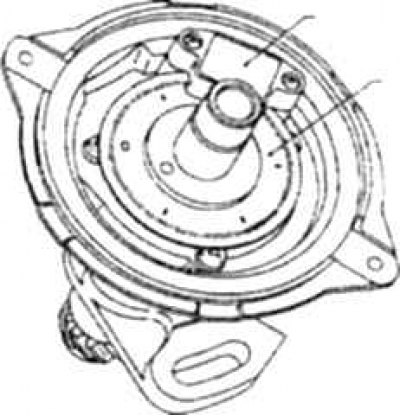
10.2a Crankshaft speed sensor
1. Steering angle sensor; 2. Rotor
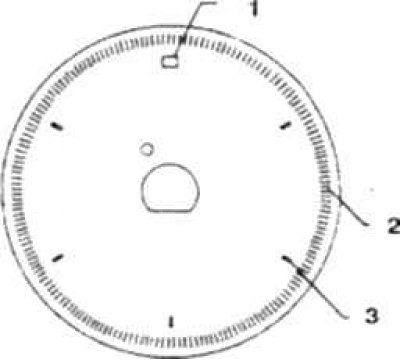
10.2b Slotted structure of the rotor
1. Reference gap for the 1st cylinder; 2. Rotation registration slot; 3. 120° angular displacement signal slot
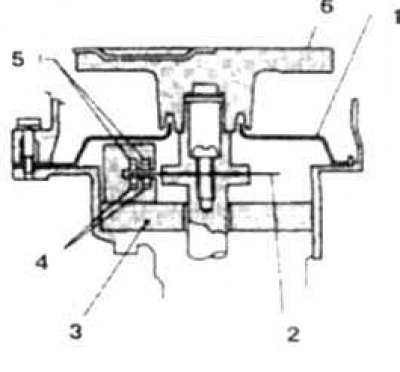
10.2v Crankshaft speed sensor diagram
1. Lid; 2. Rotor; 3. Shaper; 4. Photodiode; 5. LED; 6. Runner
Flow speed sensor
3. Thermoanemometric type sensor, designed to measure the volumetric flow rate of air supplied to the cylinders (photo).
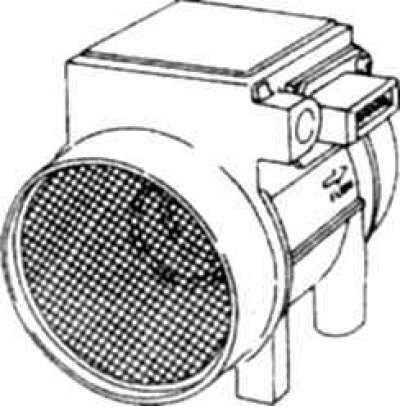
10.3 Air flow speed sensor
Engine temperature sensor
4. The sensor records the temperature of the coolant and is connected to the processor unit (photo).
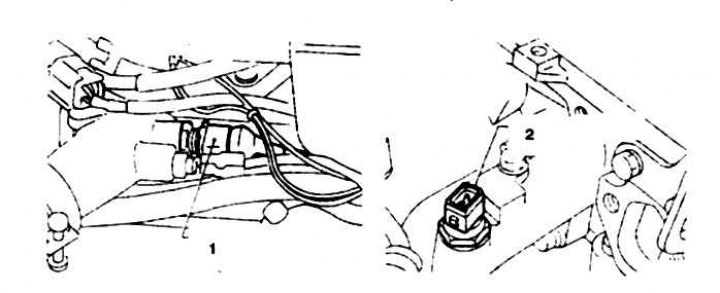
10.4 Engine temperature sensor 1. Sensor connector (on V6 engine) 2. Sensor (on the K24 engine)
Exhaust gas sensor
5. Screwed into the exhaust manifold, designed to monitor the oxygen content in the exhaust gases (photo).
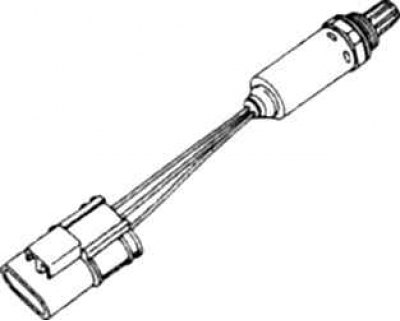
10.5 Exhaust gas sensor
Throttle switch
6. Designed to identify the idle mode. At idle, the sensor contacts are closed; when the throttle pedal is pressed, the contacts open (photo).
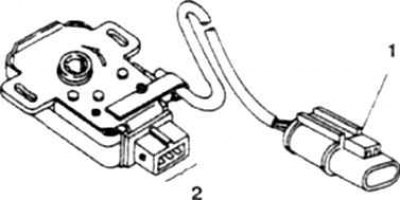
10.6 Throttle Switch
1. Throttle position sensor connector; 2. Switch connector
Vehicle speed sensor (VSS sensor)
7. Designed to generate a vehicle speed signal fed to the processor unit, built into the speedometer. On a pointer speedometer, the sensor is a reed switch, on a digital speedometer, the sensor is made in the form of an optical pair with a pulse generator.
Knock sensor
8. Piezoelectric knock sensor, designed to detect detonation in cylinders (photo).
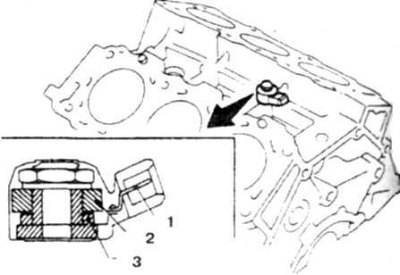
10.8 Knock sensor on V6 engine
1. Conclusion; 2. Counterweight; 3. Piezoelectric element
Nozzle
9. Electromagnetic valve designed to supply fuel to the cylinders. Contains a coil and a needle valve. Operates under the influence of a pulse from the processor unit (photo).
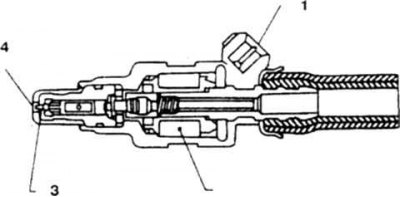
10.9 Injector device
1. Conclusion; 2. Winding; 3. Valve; 4. Nozzle
Power transistor block
10. Designed to amplify ignition signals from the processor unit, switch the primary circuit of the ignition coil and receive high voltage pulses (photo).
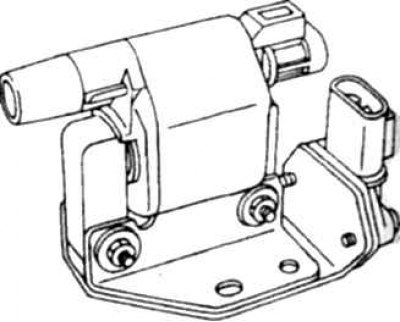
10.10 Ignition coil transistor unit
Ignition coil
11. Designed to obtain high voltage pulses (photo).
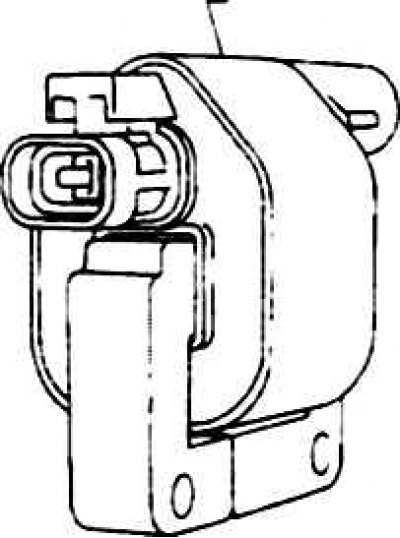
10.11 Ignition coil
Bypass valve (AAS-valve)
12. Regulates the amount of air supplied directly to the cylinders at idle, bypassing the throttle valve. Controlled by the processor unit.
Idle speed stabilizer (IAA unit)
13. Consists of a bypass valve and an adjusting screw. Designed to stabilize idle speed (photo).
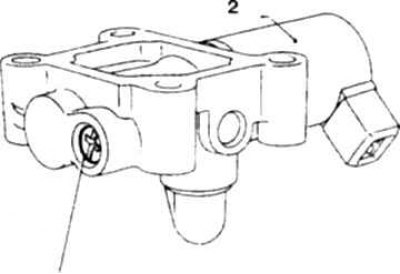
10.13 Idle speed stabilizer
1. Bypass valve; 2. Screw
Pneumatic recirculation valve
14. Controls the amount of exhaust gases entering the intake manifold through a cone valve rigidly connected to a vacuum diaphragm (photo).
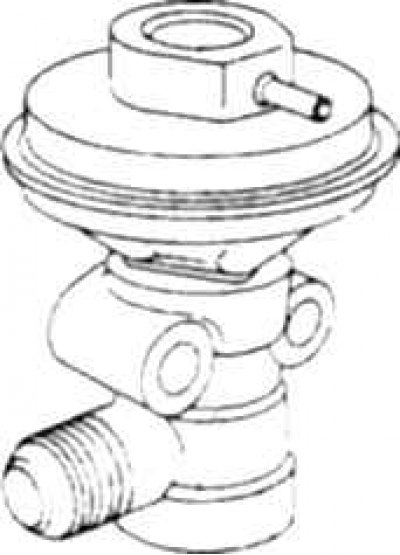
10.14 Pneumatic recirculation valve
Recirculation solenoid valve
15. Closes the vacuum channel of the recirculation pneumatic valve diaphragm in response to interrupt signals from the processor unit (photo). When the solenoid is disconnected, the vacuum from the manifold is supplied to the pneumatic valve. When the solenoid is connected, the valve plunger closes the vacuum channel.
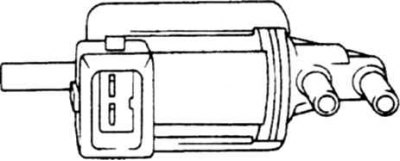
10.15 Recirculation solenoid valve
Fuel pump
16. Submersible type, mounted in a tank (photo).
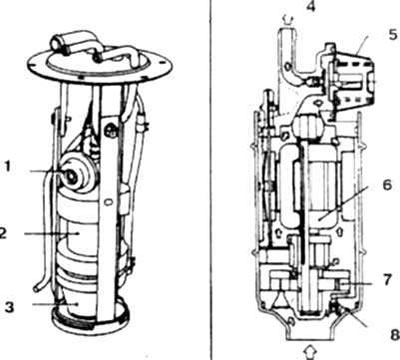
10.16 Fuel pump
1, 5. Damper; 2, 7. Pump; 3. Filter; 4. Exit; 6. Electric motor; 8. Pressure reducing valve; 9. Entrance
Air flow regulator
17. Provides switching of a cold engine to increased idle speed by opening the bypass channel (photo). Consists of a valve with a thermoelectric drive.
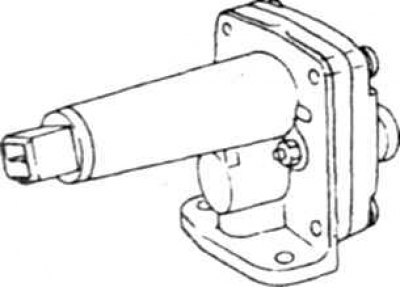
10.17 The air flow regulator redirects the flow to the manifold bypassing the throttle valve
Air ejection valve (AIV valve)
18. Provides air flow into the exhaust manifold due to ejection, which is necessary for afterburning the remains of incompletely burned fuel (photo). When the pressure in the manifold increases, the non-return reed valve is triggered, preventing gases from entering the air filter.
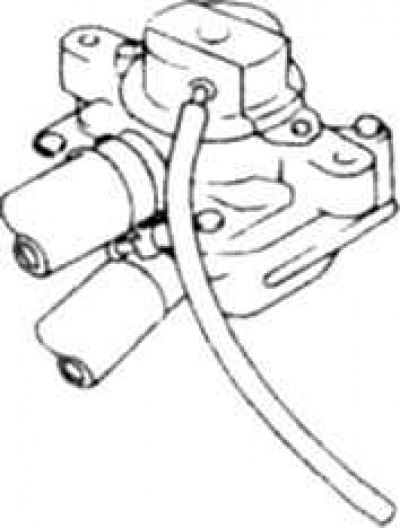
10.18 Air ejection valve
Electro-pneumatic valve controlling the AIV valve
19. It is triggered by the processor unit and ensures the ejection valve is unlocked in response to the appearance of a vacuum in the suction manifold (photo).
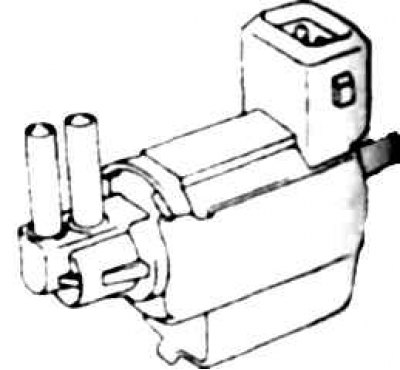
10.19 Electro-pneumatic valve of the exhaust gas oxidation system.
Power steering pressure sensor
20. The sensor is screwed into the high-pressure line of the power steering. The signal from the sensor is used to adjust the idle speed when the power steering is turned on (photo).
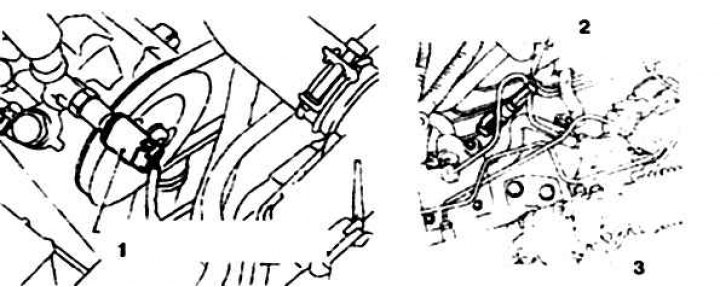
10.20 Power steering pressure sensor
1. Sensor connector; 2. Sensor; 3. Steering mechanism
Air temperature sensor
21. Designed to adjust the ignition timing at elevated air temperatures in the manifold to prevent detonation (photo).
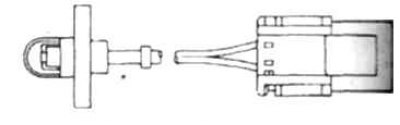
10.21 Air temperature sensor
Pre-mixed fuel injection system
22. The system includes one or two injectors mounted on the throttle body. The injectors are controlled by a processor unit. Many units of this system are similar to units of the direct injection system (photo).
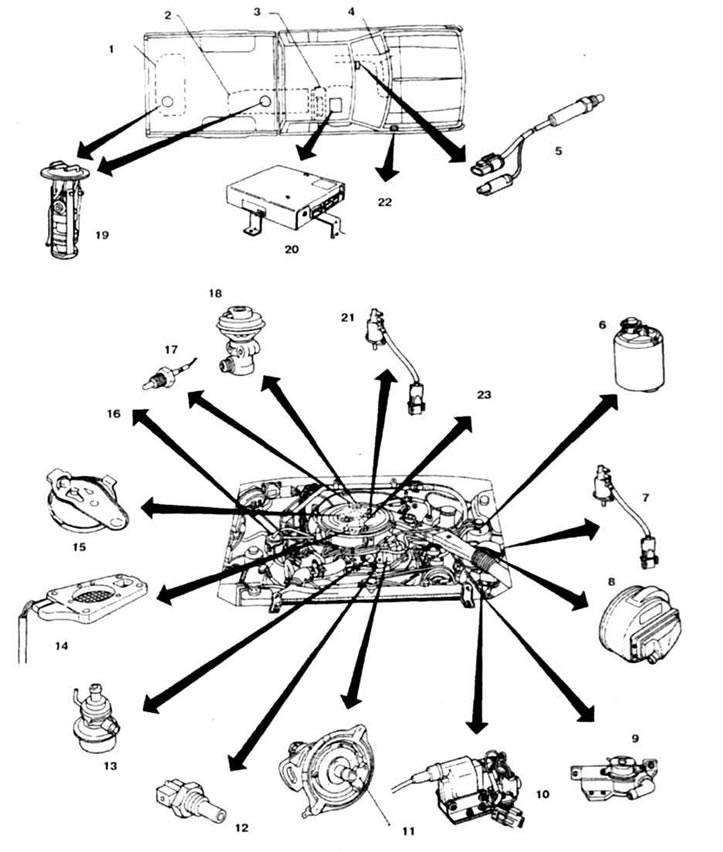
10.22a Location of units of the injection system with preliminary preparation of the combustible mixture on the V6 engine
1. Tank (station wagon); 2. Tank (cargo vehicle); 3. Assistant seat; 4. Exhaust pipe; 5. Exhaust gas sensor; 6. Tank with absorber
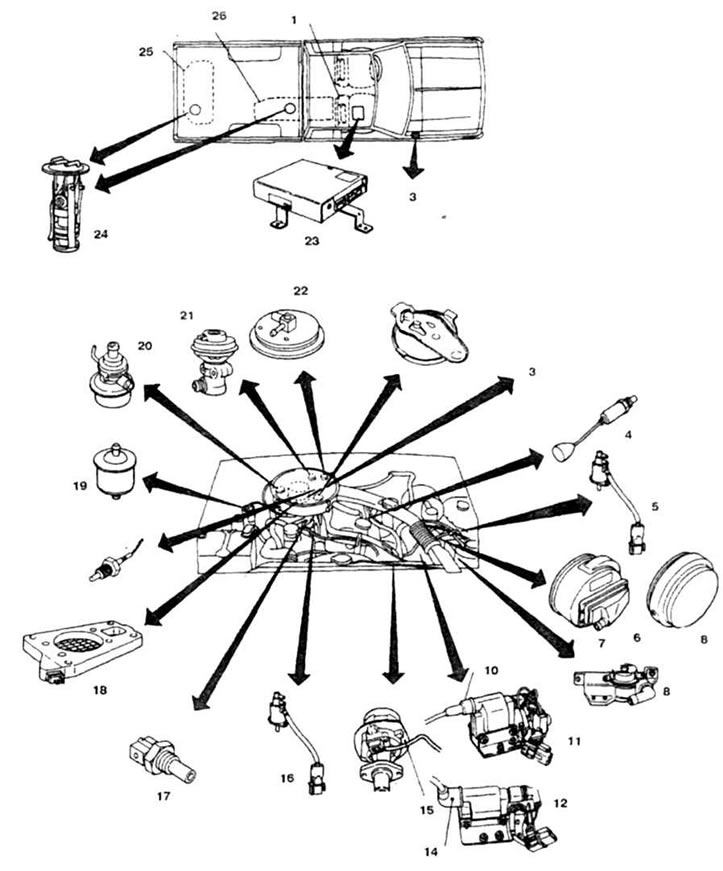
10.22b Location of units of the injection system with preliminary preparation of the combustible mixture on a 4-cylinder engine
1. Assistant seat; 2. Emergency relay; 3. Injection system parts: flow speed sensor, throttle position sensor, idle speed switch
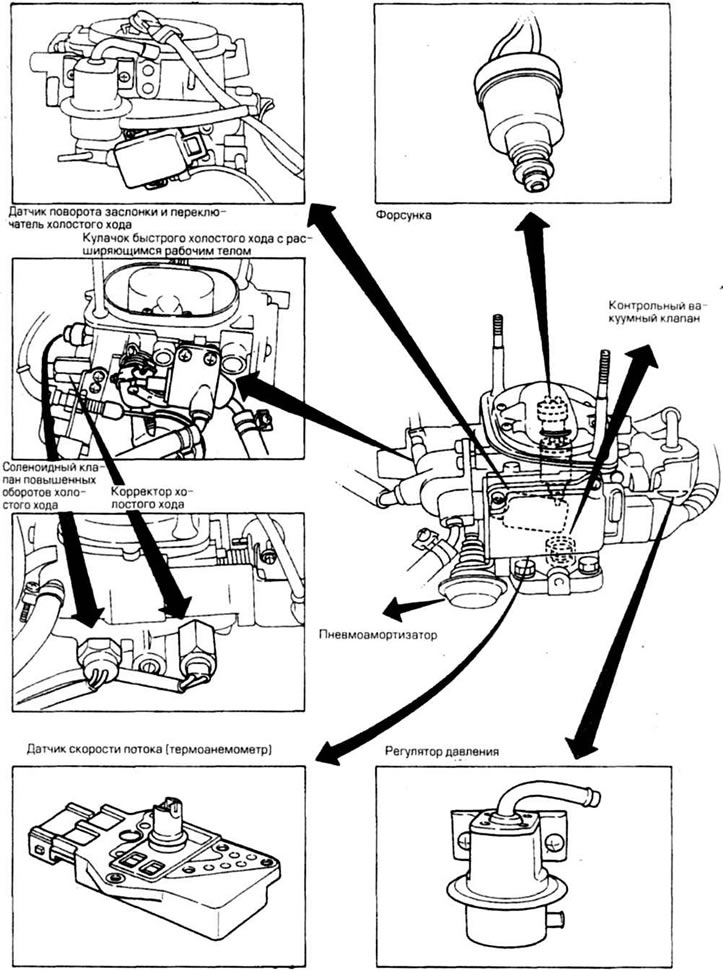
10.22v Throttle body parts (until 1989.)
Information copied from the website NISSANBOOK