


Table of contents: General information ↓ Security measures ↓
General information
The front wheels of the vehicles considered in this Manual are equipped with disc brakes. The brake discs are ventilated. Drum brakes are installed on the rear axle. The anti-lock brake system (ABS) is installed as standard. Instead of a mechanical brake force distributor, an electronic distributor (EBD) is used, operating on the basis of the ABS system.
Hydraulic circuit diagram of auxiliary systems
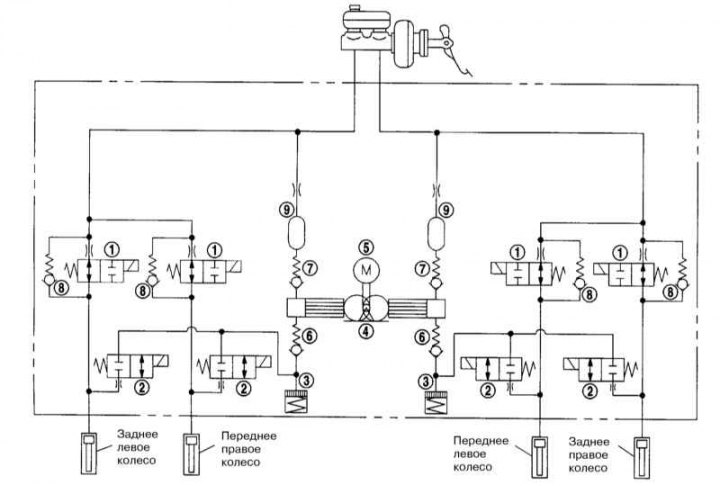
1 - Feed solenoid valves; 2 - Diverter solenoid valves; 3 - Reservoir; 4 - Pump; 5 - Electric motor; 6 - Feed valves; 7 - Diverter valves; 8 - Bypass control valve; 9 - Dampers
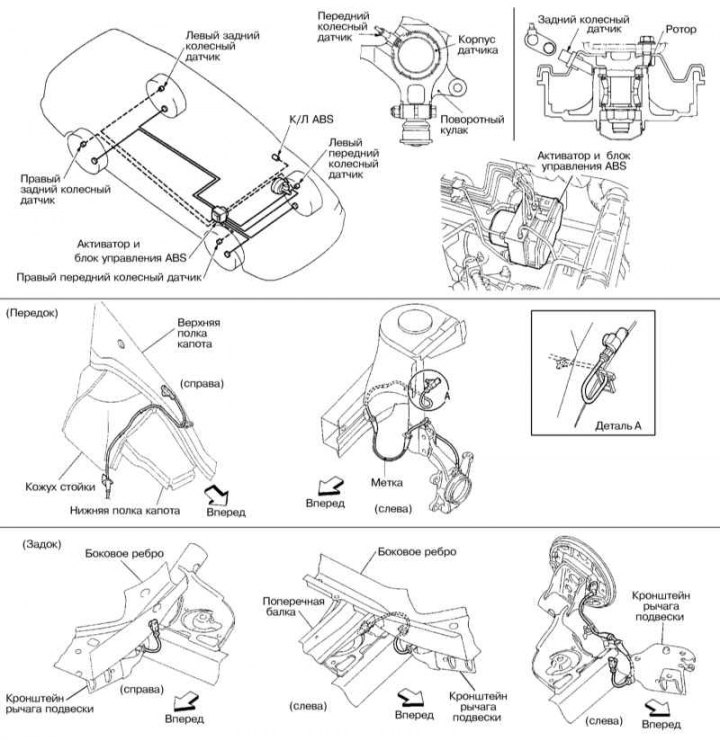
Location of auxiliary system components
The brake system is divided diagonally into two independent hydraulic circuits and consists of a master brake cylinder (MBC), a vacuum booster and brake mechanisms. If one of the circuits fails, (for example, as a result of a breach in the seal) the second continues to function in normal mode, providing adequate braking of the car. The fluid pressure in both circuits is created by a tandem-design master brake cylinder (MBC). The MBC is activated when the service brake pedal is depressed.
The brake fluid reservoir is attached to the master cylinder. The brake booster accumulates part of the vacuum created in the engine intake manifold.
The hand-operated parking brake acts via cables on the shoe assemblies that are part of the rear wheel brake mechanisms.
Bleeding and checking the brake system, replacing the brake fluid and adjusting the brake pedal and parking brake lever are described in Chapter Vehicle settings and routine maintenance.
Security measures
Brake fluid is a highly toxic and chemically aggressive compound and when in contact with body panels it destroys the paintwork.
The dust generated during the wear of brake pads may contain asbestos, which is harmful to human health - do not inhale it under any circumstances when cleaning the brake mechanisms!
Working with the brake system requires special cleanliness and strict adherence to instructions. If you do not have the necessary experience, it is advisable to contact a service station.
Note: When driving on wet roads, periodically press the brake pedal to remove moisture from the brake discs; During the rotation of the wheel, moisture is thrown off the brake discs under the action of centrifugal force, but a film of silicone, rubber abrasion products, grease and other contaminants remain, reducing braking efficiency!
Corroded disc brakes create a shaking effect when braking, which does not disappear over time. In this case, the discs should be replaced.
The burning of dirt onto the surface of the brake pads leads to the formation of grooves on the surface of the brake discs, which leads to a decrease in braking efficiency.